Jefferson City, MO Hail Storm – April 2025
April 20, 2025 hail storm near Jefferson City, MO. Radar-confirmed hail track and contractor lead lists available.
Max Hail
1.5"1" est.
confirmed
Zones
15
NWS alerts
Radar
43
dual-pol hits
Spotter
84
field reports
NWS WARNING AREA · Jefferson City Metro · Apr 20, 2025
Intelligence Platform
StormSnipe Pro
$49/ mo
Cancel anytime · No contracts
›All 50 states
›No zone limits
›No per-event fees
Subscribe to Pro
Pro renews monthly until canceled · Cancel anytime in the billing portal
What's included
Instant delivery
Every storm published within hours of NOAA confirmation.
Interactive Strike Map
Full radar-confirmed hail track on an interactive map.
Address CSV export
Every affected residential address, export-ready.
Smart alerts
Notified when a storm hits your area. Set zones once.
Nationwide coverage
All 50 states. No zone restrictions. No geographic caps.
Live pipeline
NOAA NEXRAD processed and delivered 24/7.
Address data notice
Pro coverage in California, Vermont, and Oregon includes the confirmed hail track and Strike Map only — no address lists. State data-privacy law treats compiled address lists differently in those three states, so we exclude their addresses from extraction and delivery.
NWS WARNING AREAS · 15
This storm generated 15 NWS alert zones. Pro access covers the complete storm track and all addresses across every zone.
ZONE 1NWS LSX
Jefferson City, MO
Spotter Reported
24 addresses in warning area
Alert issued Sun, Apr 20 · 5:38 PM UTC
0.75"
confirmed
1"
est. (NWS)
ZONE 2NWS EAX
Macon, MO
Dual-Pol Radar
Alert issued Sun, Apr 20 · 8:14 PM UTC
0.75"
confirmed
1"
est. (NWS)
ZONE 3NWS SGF
Weaubleau, MO
Dual-Pol Radar
Alert issued Sun, Apr 20 · 8:25 PM UTC
0.75"
confirmed
1"
est. (NWS)
ZONE 4NWS SGF
Springfield, MO
Dual-Pol Radar
3,015 addresses in warning area
Alert issued Sun, Apr 20 · 8:25 PM UTC
0.75"
confirmed
1"
est. (NWS)
ZONE 5NWS SGF
Gravois Mills, MO
Dual-Pol Radar
1,083 addresses in warning area
Alert issued Sun, Apr 20 · 8:58 PM UTC
0.75"
confirmed
1"
est. (NWS)
ZONE 6NWS SGF
Fordland, MO
Dual-Pol Radar
525 addresses in warning area
Alert issued Sun, Apr 20 · 9:09 PM UTC
1.5"
confirmed
1"
est. (NWS)
ZONE 7NWS LSX
Holliday, MO
Spotter Reported
Alert issued Sun, Apr 20 · 10:34 PM UTC
0.75"
confirmed
1"
est. (NWS)
ZONE 8NWS LSX
Warrenton, MO
Spotter Reported
Alert issued Sun, Apr 20 · 10:46 PM UTC
0.75"
confirmed
1"
est. (NWS)
ZONE 9NWS LSX
Cherryville, MO
Dual-Pol Radar
Alert issued Sun, Apr 20 · 11:07 PM UTC
1.25"
confirmed
1"
est. (NWS)
ZONE 10NWS LSX
Palmyra, MO
Spotter Reported
59 addresses in warning area
Alert issued Sun, Apr 20 · 11:15 PM UTC
0.75"
confirmed
1"
est. (NWS)
ZONE 11NWS LSX
Wentzville, MO
NWS Warning
Alert issued Sun, Apr 20 · 11:20 PM UTC
1"
est. (NWS)
ZONE 12NWS LSX
New Salem, IL
Spotter Reported
788 addresses in warning area
Alert issued Sun, Apr 20 · 11:27 PM UTC
0.75"
confirmed
1"
est. (NWS)
ZONE 13NWS LSX
Clarksville, MO
NWS Warning
Alert issued Sun, Apr 20 · 11:40 PM UTC
1"
est. (NWS)
ZONE 14NWS LSX
Grafton, IL
Spotter Reported
366 addresses in warning area
Alert issued Sun, Apr 20 · 11:56 PM UTC
0.75"
confirmed
1"
est. (NWS)
ZONE 15NWS LSX
Ironton, MO
Dual-Pol Radar
2,225 addresses in warning area
Alert issued Sun, Apr 20 · 11:58 PM UTC
1.25"
confirmed
1"
est. (NWS)
What Happened
A severe thunderstorm moved through the Jefferson City, MO metro on April 20, 2025, producing 1-inch hail and a long run of NWS alerts through the afternoon and evening. The first radar-derived hail signal came at 12:38 PM CDT, then later alerts at 5:34 PM, 5:46 PM, 6:07 PM, 6:15 PM, 6:20 PM, 6:27 PM, 6:40 PM, 6:56 PM, and 6:58 PM CDT kept the storm on the map into early evening.
The alert sequence included dual-polarization radar confidence, spotter-reported confidence, radar-plus-spotter verification, and warning-only notifications. Spotter reports in the broader event area showed the storm complex was active and disruptive across central Missouri and into nearby counties. Near Guthrie, one report at 1:34 PM CDT described a roof partially peeled back and 18- to 20-inch branches snapped from multiple trees. In the same storm cycle, an NWS survey team documented EF2 tornado damage northwest of New Bloomfield at 1:31 PM CDT.
Later reports in the regional storm corridor added more wind and tornado damage. At 5:51 PM CDT, a tree came down on State Highway N near Graham Cave State Park. At 5:56 PM CDT, an EF1 tornado was reported just west of Highway MM in north-central Audrain County, where outbuildings were destroyed and smaller grain bins were rolled at a farm. At 6:01 PM CDT, an EF0 tornado was noted near County Rd 396 in northwest Shannon County with uprooted trees and large branches snapped.
Damage Assessment
The Jefferson City hail event did not produce the kind of isolated, high-end hail footprint that stands alone in a report. Instead, the field record shows a broader severe weather day with hail alerts layered over wind and tornado damage across central Missouri and surrounding counties. The verified reports were concentrated on structural and tree damage, with roof loss near Guthrie, snapped branches, downed trees, and multiple tornado survey findings.
That mix matters for the surface picture. In the same storm cycle, one report near Hannibal described multiple damaged trailers near Hannibal Regional Hospital at 6:35 PM CDT. Another at 6:48 PM CDT confirmed EF0 tornado damage in Payson, IL, with a 4.18-mile path and damage largely confined to trees. Additional reports noted power poles down near Hull, IL, a barn destroyed per emergency management, several trees snapped or uprooted, and roof damage to an old school gym. A separate survey at 7:04 PM CDT documented an EF0 tornado path from north of Camp Point to just south of La Prairie, IL, lasting about six minutes and stretching 8.17 miles.
For Jefferson City specifically, the hail alerts stayed locked at 1 inch through the event. The surrounding damage reports suggest a storm system capable of both hail and wind-driven impacts, but the confirmed field damage in the available reports centered on trees, roofs, outbuildings, poles, and bins rather than a single concentrated hail loss zone.
Storm Details
- Start Date
- Sunday, April 20, 2025
- Last Activity
- Sunday, April 20, 2025
- Location
- Jefferson City, MO
- Warning Areas
- 15
- Dual-Pol Radar
- 43
- Spotter Reports
- 84
Preview Strike Map
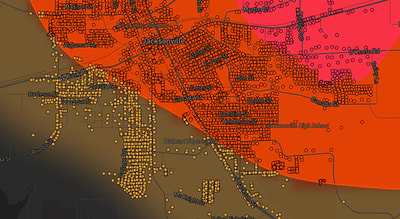
See exactly what you get.
Explore the full Springdale, AR Strike Map free – hail track, address overlay, and CSV download. No account required.
Try the Free Demo →