Green Mountain Falls, CO Hail Storm – May 2025
May 27, 2025 hail storm near Green Mountain Falls, CO. Radar-confirmed hail track and contractor lead lists available.
Max Hail
2"1.25" est.
confirmed
Zones
12
NWS alerts
Radar
401
dual-pol hits
Spotter
8
field reports
NWS WARNING AREA · Green Mountain Falls Metro · May 27, 2025
Intelligence Platform
StormSnipe Pro
$49/ mo
Cancel anytime · No contracts
›All 50 states
›No zone limits
›No per-event fees
Subscribe to Pro
Pro renews monthly until canceled · Cancel anytime in the billing portal
What's included
Instant delivery
Every storm published within hours of NOAA confirmation.
Interactive Strike Map
Full radar-confirmed hail track on an interactive map.
Address CSV export
Every affected residential address, export-ready.
Smart alerts
Notified when a storm hits your area. Set zones once.
Nationwide coverage
All 50 states. No zone restrictions. No geographic caps.
Live pipeline
NOAA NEXRAD processed and delivered 24/7.
Address data notice
Pro coverage in California, Vermont, and Oregon includes the confirmed hail track and Strike Map only — no address lists. State data-privacy law treats compiled address lists differently in those three states, so we exclude their addresses from extraction and delivery.
NWS WARNING AREAS · 12
This storm generated 12 NWS alert zones. Pro access covers the complete storm track and all addresses across every zone.
ZONE 1NWS PUB
Green Mountain Falls, CO
Dual-Pol Radar
3,394 addresses in warning area
Alert issued Tue, May 27 · 10:31 PM UTC
0.75"
confirmed
1"
est. (NWS)
ZONE 2NWS PUB
Peyton, CO
Dual-Pol Radar
43 addresses in warning area
Alert issued Tue, May 27 · 10:33 PM UTC
1.5"
confirmed
1.25"
est. (NWS)
ZONE 3NWS BOU
New Raymer, CO
Dual-Pol Radar
87 addresses in warning area
Alert issued Tue, May 27 · 10:44 PM UTC
1.75"
confirmed
1"
est. (NWS)
ZONE 4NWS BOU
New Raymer, CO
Dual-Pol Radar
Alert issued Tue, May 27 · 10:46 PM UTC
1.75"
confirmed
1"
est. (NWS)
ZONE 5NWS BOU
Arriba, CO
Dual-Pol Radar
Alert issued Tue, May 27 · 10:53 PM UTC
2"
confirmed
1"
est. (NWS)
ZONE 6NWS PUB
Calhan, CO
Dual-Pol Radar
10,167 addresses in warning area
Alert issued Tue, May 27 · 11:00 PM UTC
1.5"
confirmed
1.25"
est. (NWS)
ZONE 7NWS PUB
Yoder, CO
Dual-Pol Radar
49 addresses in warning area
Alert issued Tue, May 27 · 11:31 PM UTC
1.25"
confirmed
1"
est. (NWS)
ZONE 8NWS BOU
Hugo, CO
Dual-Pol Radar
Alert issued Tue, May 27 · 11:43 PM UTC
1.5"
confirmed
1"
est. (NWS)
ZONE 9NWS PUB
Haswell, CO
Dual-Pol Radar
Alert issued Wed, May 28 · 1:35 AM UTC
1.25"
confirmed
1"
est. (NWS)
ZONE 10NWS PUB
McClave, CO
Dual-Pol Radar
Alert issued Wed, May 28 · 2:14 AM UTC
1.5"
confirmed
1"
est. (NWS)
ZONE 11NWS PUB
Hasty, CO
Dual-Pol Radar
901 addresses in warning area
Alert issued Wed, May 28 · 2:59 AM UTC
1.5"
confirmed
1"
est. (NWS)
ZONE 12NWS PUB
Lamar, CO
Dual-Pol Radar
1 addresses in warning area
Alert issued Wed, May 28 · 3:46 AM UTC
0.75"
confirmed
1"
est. (NWS)
What Happened
A hail storm moved through Green Mountain Falls, Colorado, on May 27, 2025, producing confirmed 1.25-inch stones during a multi-round severe weather event. The storm continued into the evening with repeated hail alerts and spotter-verified reports in the late afternoon.
The first hail alert came at 4:31 PM MDT with 1-inch hail indicated by dual-polarization radar. Two minutes later, at 4:33 PM MDT, radar and spotter verification supported a 1.25-inch hail call. A second 1.25-inch alert followed at 5:00 PM MDT, again with radar and spotter support. A spotter report at 5:09 PM MDT described Ping Pong Ball hail at 1.50 inches.
Additional hail alerts were issued at 5:31 PM MDT, 7:35 PM MDT, 8:14 PM MDT, 8:59 PM MDT, and 9:46 PM MDT. Each of those later alerts carried 1-inch hail confidence from dual-polarization radar. The sequence shows a storm that kept producing hail echoes well into the evening hours across the Green Mountain Falls area.
Damage Assessment
Ground reports point to localized surface impact near the time of the 5:09 PM MDT spotter observation. The 1.50-inch report is the largest field-confirmed stone in this event, and it came during the same storm cycle that had already produced radar and spotter-verified 1.25-inch hail two times earlier in the afternoon.
In a mountain town like Green Mountain Falls, hail of this size often concentrates along narrow corridors rather than spreading evenly across every block. The report timing suggests a compact core with short-duration but intense hail near the most affected parts of the storm path. Repeated radar detections later in the evening show the storm remained organized after the main verified hail report.
No field report in the available data lists tree failure, roof punctures, or vehicle glass breakage. The evidence here is centered on hail size, timing, and repeated hail detection, with the strongest ground truth coming from the spotter-verified mPING report at 5:09 PM MDT.
What Contractors Should Know
This event should be treated as a hail inspection lead for Green Mountain Falls and the nearby mountain corridors that feed into the town. The verified 1.25-inch and 1.50-inch reports support inspection priority for roofs, soft metals, gutters, downspouts, ridge vents, and exterior trim on buildings exposed during the late-afternoon window.
The repeated 1-inch radar alerts after 5:31 PM MDT extend the lead pack beyond the first verified report. That makes same-day canvassing less useful than a targeted next-day route focused on the storm path and nearby elevations where hail cores often tighten over short distances. Look at slope-facing roofs, south and west exposures, and parking areas where vehicles were parked during the 4:30 PM to 6:00 PM MDT period.
On this type of mountain storm, hail claims often cluster by street segment rather than by broad neighborhood. Inspectors should document impact marks, edge bruising, and granular loss on asphalt shingles before any cleanup work begins. Crews that work this area should also check metal fascia, HVAC tops, skylight lenses, and window screens where the 1.50-inch report likely produced the most obvious surface impacts.
Storm Details
- Start Date
- Tuesday, May 27, 2025
- Last Activity
- Tuesday, May 27, 2025
- Location
- Green Mountain Falls, CO
- Warning Areas
- 12
- Dual-Pol Radar
- 401
- Spotter Reports
- 8
Preview Strike Map
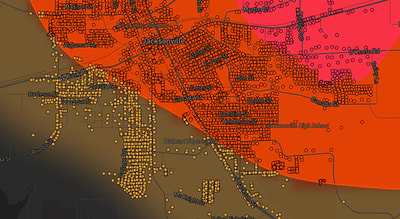
See exactly what you get.
Explore the full Springdale, AR Strike Map free – hail track, address overlay, and CSV download. No account required.
Try the Free Demo →