Spencer, ID Hail Storm – June 2025
June 1, 2025 hail storm near Spencer, ID. Radar-confirmed hail track and contractor lead lists available.
Max Hail
2"1.5" est.
confirmed
Zones
8
NWS alerts
Radar
146
dual-pol hits
Spotter
2
field reports
NWS WARNING AREA · Spencer Metro · Jun 1, 2025
Intelligence Platform
StormSnipe Pro
$49/ mo
Cancel anytime · No contracts
›All 50 states
›No zone limits
›No per-event fees
Subscribe to Pro
Pro renews monthly until canceled · Cancel anytime in the billing portal
What's included
Instant delivery
Every storm published within hours of NOAA confirmation.
Interactive Strike Map
Full radar-confirmed hail track on an interactive map.
Address CSV export
Every affected residential address, export-ready.
Smart alerts
Notified when a storm hits your area. Set zones once.
Nationwide coverage
All 50 states. No zone restrictions. No geographic caps.
Live pipeline
NOAA NEXRAD processed and delivered 24/7.
Address data notice
Pro coverage in California, Vermont, and Oregon includes the confirmed hail track and Strike Map only — no address lists. State data-privacy law treats compiled address lists differently in those three states, so we exclude their addresses from extraction and delivery.
NWS WARNING AREAS · 8
This storm generated 8 NWS alert zones. Pro access covers the complete storm track and all addresses across every zone.
ZONE 1NWS TFX
Spencer, ID
Dual-Pol Radar
47 addresses in warning area
Alert issued Sun, Jun 1 · 9:55 PM UTC
1.5"
confirmed
1"
est. (NWS)
ZONE 2NWS TFX
Cameron, MT
Dual-Pol Radar
46 addresses in warning area
Alert issued Sun, Jun 1 · 10:52 PM UTC
2"
confirmed
1"
est. (NWS)
ZONE 3NWS TFX
West Yellowstone, MT
Dual-Pol Radar
523 addresses in warning area
Alert issued Sun, Jun 1 · 11:14 PM UTC
2"
confirmed
1.5"
est. (NWS)
ZONE 4NWS RIW
Yellowstone National Park, WY
Dual-Pol Radar
Alert issued Sun, Jun 1 · 11:39 PM UTC
1"
confirmed
1.25"
est. (NWS)
ZONE 5NWS RIW
Arminto, WY
Dual-Pol Radar
23 addresses in warning area
Alert issued Mon, Jun 2 · 12:53 AM UTC
1.5"
confirmed
1.25"
est. (NWS)
ZONE 6NWS RIW
Casper, WY
Dual-Pol Radar
7 addresses in warning area
Alert issued Mon, Jun 2 · 1:09 AM UTC
2"
confirmed
1.25"
est. (NWS)
ZONE 7NWS RIW
Kaycee, WY
Dual-Pol Radar
Alert issued Mon, Jun 2 · 1:27 AM UTC
1.25"
confirmed
1"
est. (NWS)
ZONE 8NWS RIW
Casper, WY
Dual-Pol Radar
52 addresses in warning area
Alert issued Mon, Jun 2 · 1:32 AM UTC
1.5"
confirmed
1"
est. (NWS)
What Happened
A severe hail storm moved through the Spencer, Idaho area on June 1, 2025, with peak hail reaching 1.5 inches in the late afternoon. The storm produced multiple hail alerts between 3:55 PM MDT and 5:14 PM MDT as it tracked through the warning area.
The first alert at 3:55 PM MDT called for 1-inch hail on dual-polarization radar confidence. By 4:52 PM MDT, the hail threat remained at 1 inch, this time with radar and spotter verification. The final alert at 5:14 PM MDT increased the hail estimate to 1.5 inches on dual-polarization radar confidence.
Field reports later placed nickel-size hail in the Lakeview area around 6:00 PM MDT, with the timing noted as estimated. That report came in at 0.88 inches and matched the storm’s broader hail footprint as it moved east of Spencer.
The sequence shows a storm that held organized hail production for more than an hour. The strongest hail signal came in the late afternoon, after the initial warning period had already been extended by repeated alerts.
Damage Assessment
The field report from Lakeview is the clearest ground observation tied to this event. Nickel-size hail was reported in the area on Sunday evening, with the report marked as spotter-verified and the time estimated at 6:00 PM MDT. No other ground report in the storm set exceeded that size, but the radar alerts show the storm carried a higher hail threat earlier in the afternoon.
The impact pattern appears concentrated rather than broad. The verified report came from Lakeview, while the warning area covered the larger Spencer corridor through the storm path. Contractors should treat the immediate hail corridor as the first inspection priority, then widen the canvass to nearby rural roads and outlying properties where roof and vehicle hits often show up after the initial report location.
On a storm like this, visible damage may be uneven from one property to the next. Siding strikes, soft metal dents, and roof membrane scarring can show up without large debris fields or obvious structural failure. Check north and west-facing exposures, open lots, and parked vehicle storage areas first, then move to roof slopes and soft metal trim where smaller hail can still leave measurable impact.
The Lakeview report also gives a time anchor for field work. When the only spotter report arrives later than the strongest radar hail signal, the first damage checks should focus on properties that sit downtrack of the late-afternoon core rather than the initial alert area alone.
What Contractors Should Know
Start with the Spencer-to-Lakeview corridor and any properties that sit just outside the town center along the storm path. June hail in this part of Idaho often comes with fast-moving, localized impact. A short roof inspection window can miss scattered bruising, dented vents, and fresh shingle impact marks if crews only work the most obvious address cluster.
Storm Details
- Start Date
- Sunday, June 1, 2025
- Last Activity
- Sunday, June 1, 2025
- Location
- Spencer, ID
- Warning Areas
- 8
- Dual-Pol Radar
- 146
- Spotter Reports
- 2
Preview Strike Map
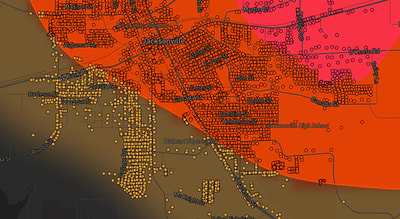
See exactly what you get.
Explore the full Springdale, AR Strike Map free – hail track, address overlay, and CSV download. No account required.
Try the Free Demo →