Cheyenne, WY Hail Storm – June 2025
June 1, 2025 hail storm near Cheyenne, WY. Radar-confirmed hail track and contractor lead lists available.
Max Hail
1.75"1.25" est.
confirmed
Zones
7
NWS alerts
Radar
101
dual-pol hits
Spotter
5
field reports
NWS WARNING AREA · Cheyenne Metro · Jun 1, 2025
Intelligence Platform
StormSnipe Pro
$49/ mo
Cancel anytime · No contracts
›All 50 states
›No zone limits
›No per-event fees
Subscribe to Pro
Pro renews monthly until canceled · Cancel anytime in the billing portal
What's included
Instant delivery
Every storm published within hours of NOAA confirmation.
Interactive Strike Map
Full radar-confirmed hail track on an interactive map.
Address CSV export
Every affected residential address, export-ready.
Smart alerts
Notified when a storm hits your area. Set zones once.
Nationwide coverage
All 50 states. No zone restrictions. No geographic caps.
Live pipeline
NOAA NEXRAD processed and delivered 24/7.
Address data notice
Pro coverage in California, Vermont, and Oregon includes the confirmed hail track and Strike Map only — no address lists. State data-privacy law treats compiled address lists differently in those three states, so we exclude their addresses from extraction and delivery.
NWS WARNING AREAS · 7
This storm generated 7 NWS alert zones. Pro access covers the complete storm track and all addresses across every zone.
ZONE 1NWS CYS
Cheyenne, WY
Dual-Pol Radar
30,655 addresses in warning area
Alert issued Sun, Jun 1 · 10:20 PM UTC
1.75"
confirmed
1.25"
est. (NWS)
ZONE 2NWS BOU
Denver, CO
Dual-Pol Radar
136,010 addresses in warning area
Alert issued Sun, Jun 1 · 10:38 PM UTC
1.25"
confirmed
1"
est. (NWS)
ZONE 3NWS CYS
Cheyenne, WY
Dual-Pol Radar
40 addresses in warning area
Alert issued Sun, Jun 1 · 10:44 PM UTC
1.5"
confirmed
1.25"
est. (NWS)
ZONE 4NWS BOU
Commerce City, CO
Dual-Pol Radar
79,675 addresses in warning area
Alert issued Sun, Jun 1 · 10:57 PM UTC
1.75"
confirmed
1"
est. (NWS)
ZONE 5NWS BOU
Aurora, CO
NWS Warning
Alert issued Sun, Jun 1 · 11:01 PM UTC
1"
est. (NWS)
ZONE 6NWS BOU
Grover, CO
Dual-Pol Radar
39 addresses in warning area
Alert issued Sun, Jun 1 · 11:05 PM UTC
1.25"
confirmed
1"
est. (NWS)
ZONE 7NWS BOU
Hudson, CO
Dual-Pol Radar
124 addresses in warning area
Alert issued Sun, Jun 1 · 11:28 PM UTC
1.75"
confirmed
1"
est. (NWS)
What Happened
A severe hail storm moved through the Cheyenne, WY metro on June 1, 2025, producing verified 1.25-inch hail late in the afternoon. Two NWS alerts carried radar and spotter verification, first at 4:20 PM MDT and again at 4:44 PM MDT.
Field reports lined up with that timing. At 4:30 PM MDT, the NWS Cheyenne office reported accumulating pea to dime sized hail with quarters and half dollars as the largest stones found during measurements. Two additional reports came in at 4:40 PM MDT through mPING, both listing quarter-size hail at 1.00 inch.
The storm remained focused on the Cheyenne metro during the late-afternoon period. Radar confidence stayed high enough for repeat warning coverage, and the field reports confirmed a hail core that was already putting down measurable stones before the second alert window closed.
Damage Assessment
The ground reports point to a short-duration but concentrated hail event with enough stone size to affect exposed roofs, soft metal trim, vehicles, and window screens in the hardest-hit parts of Cheyenne. The NWS office report is the strongest ground-truth point in this event. It documented accumulating hail with the largest stones reaching half-dollar size, which places the storm above routine nuisance hail and into the range where visible surface impact becomes more likely.
The 4:40 PM MDT mPING reports add a second data point from within the same storm window. Both reports listed quarter-size hail at 1.00 inch. That mix of 1.00-inch and 1.25-inch reports suggests a hail core with variation across a small area, which is common when a cell pulses over a metro zone rather than spreading uniform stone size across the full warning area.
For homeowners and adjusters, the most useful field cue is timing. The storm produced verified hail within a narrow afternoon window, and the reports indicate active stone accumulation rather than a brief hail burst that melted on contact. In practical terms, that calls for direct inspection of roofs, gutters, downspouts, siding, AC fins, skylights, and vehicle glass in the specific neighborhoods that sat under the hail core.
What Contractors Should Know
Cheyenne storms can shift across developed areas quickly, and this event did not linger long enough to leave a broad, even footprint. Crews should expect spotty impact patterns. One block may show light cosmetic marks while another, only a short distance away, shows heavier dings and bruising. The report from the NWS office makes that variability worth checking closely in and around the central metro.
Start with steep-slope roofs and metal surfaces. Look for granule loss, bruised shingles, bent vent caps, dented metal flashing, and impact marks on gutters and soft aluminum trim. Vehicles parked outside during the 4:20 PM to 4:44 PM MDT warning period should be reviewed for roof, hood, and mirror damage. Window screens and fence caps also deserve a close look where the hail core passed directly overhead.
Storm Details
- Start Date
- Sunday, June 1, 2025
- Last Activity
- Sunday, June 1, 2025
- Location
- Cheyenne, WY
- Warning Areas
- 7
- Dual-Pol Radar
- 101
- Spotter Reports
- 5
Preview Strike Map
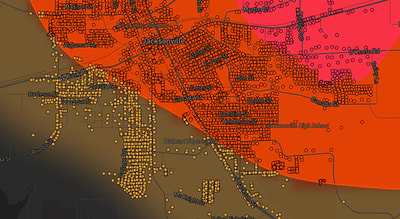
See exactly what you get.
Explore the full Springdale, AR Strike Map free – hail track, address overlay, and CSV download. No account required.
Try the Free Demo →