Cheyenne, WY Hail Storm – June 2025
June 2, 2025 hail storm near Cheyenne, WY. Radar-confirmed hail track and contractor lead lists available.
Max Hail
4"2" est.
confirmed
Zones
16
NWS alerts
Radar
302
dual-pol hits
Spotter
24
field reports
NWS WARNING AREA · Cheyenne Metro · Jun 2, 2025
Intelligence Platform
StormSnipe Pro
$49/ mo
Cancel anytime · No contracts
›All 50 states
›No zone limits
›No per-event fees
Subscribe to Pro
Pro renews monthly until canceled · Cancel anytime in the billing portal
What's included
Instant delivery
Every storm published within hours of NOAA confirmation.
Interactive Strike Map
Full radar-confirmed hail track on an interactive map.
Address CSV export
Every affected residential address, export-ready.
Smart alerts
Notified when a storm hits your area. Set zones once.
Nationwide coverage
All 50 states. No zone restrictions. No geographic caps.
Live pipeline
NOAA NEXRAD processed and delivered 24/7.
Address data notice
Pro coverage in California, Vermont, and Oregon includes the confirmed hail track and Strike Map only — no address lists. State data-privacy law treats compiled address lists differently in those three states, so we exclude their addresses from extraction and delivery.
NWS WARNING AREAS · 16
This storm generated 16 NWS alert zones. Pro access covers the complete storm track and all addresses across every zone.
ZONE 1NWS CYS
Cheyenne, WY
Dual-Pol Radar
2,225 addresses in warning area
Alert issued Mon, Jun 2 · 9:47 PM UTC
2.75"
confirmed
1"
est. (NWS)
ZONE 2NWS CYS
Guernsey, WY
Dual-Pol Radar
Alert issued Mon, Jun 2 · 9:49 PM UTC
3.25"
confirmed
1.25"
est. (NWS)
ZONE 3NWS CYS
Fort Laramie, WY
Dual-Pol Radar
Alert issued Mon, Jun 2 · 10:25 PM UTC
3.25"
confirmed
1.25"
est. (NWS)
ZONE 4NWS CYS
Burns, WY
Dual-Pol Radar
679 addresses in warning area
Alert issued Mon, Jun 2 · 10:38 PM UTC
4"
confirmed
1.75"
est. (NWS)
ZONE 5NWS CYS
Torrington, WY
Dual-Pol Radar
21 addresses in warning area
Alert issued Mon, Jun 2 · 10:47 PM UTC
2.25"
confirmed
1"
est. (NWS)
ZONE 6NWS CYS
Yoder, WY
Dual-Pol Radar
Alert issued Mon, Jun 2 · 10:50 PM UTC
1.75"
confirmed
1.25"
est. (NWS)
ZONE 7NWS CYS
Bushnell, NE
Dual-Pol Radar
25 addresses in warning area
Alert issued Mon, Jun 2 · 11:15 PM UTC
3.5"
confirmed
1.75"
est. (NWS)
ZONE 8NWS BOU
Briggsdale, CO
Dual-Pol Radar
75 addresses in warning area
Alert issued Mon, Jun 2 · 11:52 PM UTC
2"
confirmed
1.5"
est. (NWS)
ZONE 9NWS CYS
Kimball, NE
Dual-Pol Radar
Alert issued Mon, Jun 2 · 11:56 PM UTC
2"
confirmed
1.5"
est. (NWS)
ZONE 10NWS BOU
Briggsdale, CO
Dual-Pol Radar
Alert issued Tue, Jun 3 · 12:26 AM UTC
2"
confirmed
1.25"
est. (NWS)
ZONE 11NWS BOU
Stoneham, CO
Dual-Pol Radar
Alert issued Tue, Jun 3 · 12:39 AM UTC
3"
confirmed
1.5"
est. (NWS)
ZONE 12NWS BOU
Stoneham, CO
Dual-Pol Radar
77 addresses in warning area
Alert issued Tue, Jun 3 · 12:55 AM UTC
3"
confirmed
1.75"
est. (NWS)
ZONE 13NWS BOU
Sterling, CO
Dual-Pol Radar
239 addresses in warning area
Alert issued Tue, Jun 3 · 1:23 AM UTC
3"
confirmed
1.75"
est. (NWS)
ZONE 14NWS BOU
Sterling, CO
Dual-Pol Radar
5,061 addresses in warning area
Alert issued Tue, Jun 3 · 1:44 AM UTC
2"
confirmed
2"
est. (NWS)
ZONE 15NWS BOU
Sterling, CO
NWS Warning
Alert issued Tue, Jun 3 · 2:09 AM UTC
1.25"
est. (NWS)
ZONE 16NWS BOU
Brush, CO
Dual-Pol Radar
Alert issued Tue, Jun 3 · 2:12 AM UTC
1.75"
confirmed
1.75"
est. (NWS)
What Happened
A severe hail storm moved through the Cheyenne, WY metro on June 2, 2025, with radar and spotter reports reaching 1.75-inch hail by late afternoon. The storm produced a series of eight NWS alerts from 3:47 PM MDT through 5:56 PM MDT.
The first alert at 3:47 PM MDT called for 1-inch hail, followed two minutes later by a 1.25-inch alert. By 4:38 PM MDT, radar and spotter confidence had increased to 1.75 inches. Additional alerts followed at 4:47 PM MDT, 4:50 PM MDT, 5:15 PM MDT, and 5:56 PM MDT, with hail sizes ranging from 1 inch to 1.75 inches.
Ground reports matched the rapid storm evolution. A trained spotter reported ping pong ball size hail at 5:39 PM MDT. Earlier, at 3:51 PM MDT, a report called in quarter size hail. Social media photos at 4:27 PM MDT also showed quarter size stones. The sequence points to a storm that kept producing hail across the metro into the evening.
Damage Assessment
The field reports show a storm that reached beyond isolated hailstones. Emergency managers reported down trees and power outages around Torrington at 5:27 PM MDT. Reports near Lingle at 5:51 PM MDT described creeks overflowing their banks. Those locations are outside the Cheyenne metro, but they place the broader storm complex in a zone of repeated severe impacts through eastern Wyoming.
In Cheyenne itself, the early reports centered on quarter size hail before larger stones were confirmed later in the afternoon. That progression suggests multiple pulses within the same storm line rather than a single short burst. The 5:39 PM MDT trained spotter report of ping pong ball size hail fits that later intensification.
The radar-derived alerts also showed a persistent hail threat. The sequence moved from 1 inch to 1.25 inches, then to 1.75 inches, then back through 1 inch, 1.25 inches, and 1.5 inches as the storm evolved. For property owners, that pattern points to repeated exposure across the warning area rather than a one-time pass.
No single report in this set describes structural loss in Cheyenne. The available evidence does show hail large enough to break soft roofing materials, dent exposed vehicles, and leave visible impact on siding, screens, and landscaping where the stones fell directly.
What Contractors Should Know
This event favors a targeted roof and exterior sweep across the Cheyenne metro, with the earliest attention on properties hit during the 3:47 PM to 4:50 PM MDT window. The quarter size hail reports came first. The larger radar-confirmed alerts followed later in the afternoon. Roofs with prior wear, ridge exposure, or marginal shingle adhesion should get priority.
Crew staging should account for a long-lived storm sequence, not a single impact point. When hail escalates from 1 inch to 1.75 inches across the same afternoon, claim volume often comes in waves. Properties with vehicle damage, screen damage, and minor siding impacts may surface before roof leaks are obvious. Document exterior impact early.
Storm Details
- Start Date
- Monday, June 2, 2025
- Last Activity
- Monday, June 2, 2025
- Location
- Cheyenne, WY
- Warning Areas
- 16
- Dual-Pol Radar
- 302
- Spotter Reports
- 24
Preview Strike Map
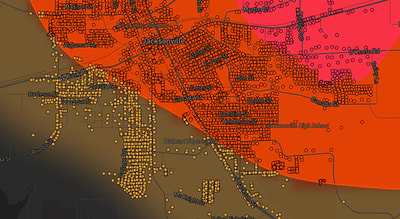
See exactly what you get.
Explore the full Springdale, AR Strike Map free – hail track, address overlay, and CSV download. No account required.
Try the Free Demo →