Cheyenne, WY Hail Storm – June 2025
June 4, 2025 hail storm near Cheyenne, WY. Radar-confirmed hail track and contractor lead lists available.
Max Hail
1.5"1" est.
confirmed
Zones
4
NWS alerts
Radar
2
dual-pol hits
Spotter
2
field reports
NWS WARNING AREA · Cheyenne Metro · Jun 4, 2025
Intelligence Platform
StormSnipe Pro
$49/ mo
Cancel anytime · No contracts
›All 50 states
›No zone limits
›No per-event fees
Subscribe to Pro
Pro renews monthly until canceled · Cancel anytime in the billing portal
What's included
Instant delivery
Every storm published within hours of NOAA confirmation.
Interactive Strike Map
Full radar-confirmed hail track on an interactive map.
Address CSV export
Every affected residential address, export-ready.
Smart alerts
Notified when a storm hits your area. Set zones once.
Nationwide coverage
All 50 states. No zone restrictions. No geographic caps.
Live pipeline
NOAA NEXRAD processed and delivered 24/7.
Address data notice
Pro coverage in California, Vermont, and Oregon includes the confirmed hail track and Strike Map only — no address lists. State data-privacy law treats compiled address lists differently in those three states, so we exclude their addresses from extraction and delivery.
NWS WARNING AREAS · 4
This storm generated 4 NWS alert zones. Pro access covers the complete storm track and all addresses across every zone.
ZONE 1NWS CYS
Cheyenne, WY
Spotter Reported
3,181 addresses in warning area
Alert issued Wed, Jun 4 · 8:05 PM UTC
1"
confirmed
1"
est. (NWS)
ZONE 2NWS CYS
Cheyenne, WY
NWS Warning
Alert issued Wed, Jun 4 · 8:43 PM UTC
1"
est. (NWS)
ZONE 3NWS BOU
Grover, CO
NWS Warning
Alert issued Wed, Jun 4 · 8:51 PM UTC
1"
est. (NWS)
ZONE 4NWS BOU
Grover, CO
Dual-Pol Radar
8 addresses in warning area
Alert issued Wed, Jun 4 · 10:17 PM UTC
1.5"
confirmed
1"
est. (NWS)
What Happened
A hail storm crossed the Cheyenne, WY metro on June 4, 2025, with spotter-verified reports of 1-inch hail and a peak verified size of 1 inch. The storm produced two NWS alerts, first at 2:05 PM MDT and again at 2:43 PM MDT, both pointing to a hail threat over the city.
The earliest field report came at 2:06 PM MDT, when an mPING observation reported quarter-size hail at 1.00 inch. Four minutes later, at 2:10 PM MDT, an NWS employee reported 1-inch hail with a mix of accumulating peas and pennies. Those reports placed ground truth near the start of the event, before the second alert came through later in the hour.
The first alert carried dual-polarization radar confidence and lined up with the observed hail size. The later alert held to the same 1-inch estimate, but with warning-based confidence only. The sequence shows a storm that maintained a damaging hail threat across the Cheyenne metro through mid-afternoon.
Damage Assessment
The field reports point to a storm that put measurable hail on the ground in at least two separate observations near Cheyenne. The mPING report and the NWS employee measurement both confirmed 1-inch stones within minutes of each other. The note about peas and pennies accumulating with the hail shows a surface impact that was not isolated to a single brief burst.
No widespread damage report was included in the source set, so the available evidence stays centered on verified hail size and timing. The storm did not need larger stones to create concern in exposed vehicles, roofs, gutters, and soft exterior finishes across the metro. A 1-inch hail report in a populated area also raises the likelihood of scattered claims where the hail core tracked.
The radar and spotter record fit a storm with a narrow but real impact path through the city. The first alert arrived before the verified field reports, and the second alert kept the hail threat in place late in the event window. That timing matters for jobs already underway outdoors, especially in neighborhoods and commercial corridors exposed during the 2 PM hour.
What Contractors Should Know
Crews working the Cheyenne metro should treat this event as a confirmed 1-inch hail case with two near-simultaneous ground reports. That means siding checks, roof slope inspections, and vehicle damage scans should stay focused on the time window around 2 PM MDT and the immediate path through the city.
Look first at flat and low-slope surfaces, soft metals, and north-facing elevations where hail marks often show up after a short-lived but concentrated burst. On residential roofs, document bruising, granule loss, and denting around exposed accessories before assumptions are made about replacement scope. On commercial jobs, check roof edges, HVAC housings, and gutter lines for impact marks that may not be obvious from the ground.
Storm Details
- Start Date
- Wednesday, June 4, 2025
- Last Activity
- Wednesday, June 4, 2025
- Location
- Cheyenne, WY
- Warning Areas
- 4
- Dual-Pol Radar
- 2
- Spotter Reports
- 2
Preview Strike Map
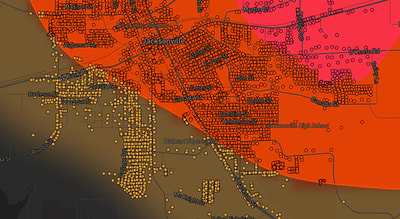
See exactly what you get.
Explore the full Springdale, AR Strike Map free – hail track, address overlay, and CSV download. No account required.
Try the Free Demo →