Model, CO Hail Storm – June 2025
June 4, 2025 hail storm near Model, CO. Radar-confirmed hail track and contractor lead lists available.
Max Hail
1.5"1" est.
confirmed
Zones
3
NWS alerts
Radar
15
dual-pol hits
Spotter
2
field reports
NWS WARNING AREA · Model Metro · Jun 4, 2025
Intelligence Platform
StormSnipe Pro
$49/ mo
Cancel anytime · No contracts
›All 50 states
›No zone limits
›No per-event fees
Subscribe to Pro
Pro renews monthly until canceled · Cancel anytime in the billing portal
What's included
Instant delivery
Every storm published within hours of NOAA confirmation.
Interactive Strike Map
Full radar-confirmed hail track on an interactive map.
Address CSV export
Every affected residential address, export-ready.
Smart alerts
Notified when a storm hits your area. Set zones once.
Nationwide coverage
All 50 states. No zone restrictions. No geographic caps.
Live pipeline
NOAA NEXRAD processed and delivered 24/7.
Address data notice
Pro coverage in California, Vermont, and Oregon includes the confirmed hail track and Strike Map only — no address lists. State data-privacy law treats compiled address lists differently in those three states, so we exclude their addresses from extraction and delivery.
NWS WARNING AREAS · 3
This storm generated 3 NWS alert zones. Pro access covers the complete storm track and all addresses across every zone.
ZONE 1NWS PUB
Model, CO
Dual-Pol Radar
Alert issued Wed, Jun 4 · 10:59 PM UTC
1"
confirmed
1"
est. (NWS)
ZONE 2NWS PUB
Lamar, CO
Spotter Reported
Alert issued Thu, Jun 5 · 12:48 AM UTC
0.75"
confirmed
1"
est. (NWS)
ZONE 3NWS PUB
Lamar, CO
Dual-Pol Radar
Alert issued Thu, Jun 5 · 1:03 AM UTC
1.5"
confirmed
1"
est. (NWS)
On June 4, 2025, Model, CO saw a concluded severe hail event with a maximum confirmed hail size of 1 inch. The storm produced three hail alerts from late afternoon into early evening.
What Happened
The first alert came at 4:59 PM MDT, with dual-polarization radar support for 1-inch hail. A second alert followed at 6:48 PM MDT after a spotter reported 1-inch hail. The final alert arrived at 7:03 PM MDT with radar and spotter verification for 1-inch hail.
The sequence shows a storm that held organized hail potential across multiple scans and field observations. The alert progression stayed at the same hail size, with confidence moving from radar-derived detection to spotter report and then to combined radar and spotter verification.
Damage Assessment
A 1-inch hail report sits at the threshold where exterior damage can start to show on vulnerable surfaces. Soft metals, older shingles, thin roof coverings, gutters, downspouts, and exposed vehicle surfaces are the first items to check.
In a multi-zone storm report like this one, impact can vary sharply across short distances. One roof segment may show bruising while another nearby address shows only spatter and scattered dings. Contractors should expect a narrow hail footprint with uneven results from one block to the next.
For post-storm inspections, focus on roof slopes that face the incoming track, ridge caps, vents, flashing, window screens, and condensers. Any report of 1-inch hail should also trigger a close look at painted trim, fence caps, skylights, and vehicle panels parked outdoors during the storm window.
What Contractors Should Know
Model, CO had three hail alerts on June 4, 2025, all tied to 1-inch hail. That kind of repeat sizing is useful in the field because it supports a consistent hail threat across the storm path, rather than a single isolated report.
Crews should document each address by roof plane, not just by neighborhood. Use side-by-side photos of impact marks, fractured asphalt granules, dented soft metals, and any collateral hits on vents or AC fins. If the claim file includes multiple structures, inspect detached garages, sheds, and outbuildings with the same standard as the main dwelling. Small accessory roofs often show the clearest hail marks.
In the field, separate hail from wind-only debris. Count the impacts. Measure the spacing. Check for fresh fractures around edges, penetrations, and downflow points where hail usually leaves the most visible marks. If the roof has one-inch hail exposure, ask whether the surface is aging, brittle, or already patched, since those conditions often affect what shows up during the inspection.
Keep the timeline tight. The first alert at 4:59 PM MDT, then the later 6:48 PM MDT and 7:03 PM MDT alerts, gives a clear window for witness statements, vehicle exposure questions, and deployment planning. Match each inspection to the time the storm passed and the side of the structure most likely to have taken the hits.
Storm Details
- Start Date
- Wednesday, June 4, 2025
- Last Activity
- Wednesday, June 4, 2025
- Location
- Model, CO
- Warning Areas
- 3
- Dual-Pol Radar
- 15
- Spotter Reports
- 2
Preview Strike Map
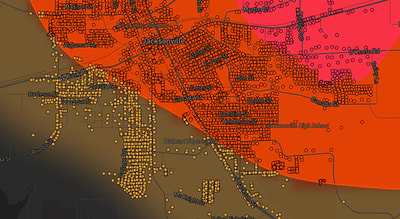
See exactly what you get.
Explore the full Springdale, AR Strike Map free – hail track, address overlay, and CSV download. No account required.
Try the Free Demo →