Montrose, CO Hail Storm – June 2025
June 6, 2025 hail storm near Montrose, CO. Radar-confirmed hail track and contractor lead lists available.
Max Hail
2.25"1.5" est.
confirmed
Zones
8
NWS alerts
Radar
42
dual-pol hits
Spotter
22
field reports
NWS WARNING AREA · Montrose Metro · Jun 6, 2025
Intelligence Platform
StormSnipe Pro
$49/ mo
Cancel anytime · No contracts
›All 50 states
›No zone limits
›No per-event fees
Subscribe to Pro
Pro renews monthly until canceled · Cancel anytime in the billing portal
What's included
Instant delivery
Every storm published within hours of NOAA confirmation.
Interactive Strike Map
Full radar-confirmed hail track on an interactive map.
Address CSV export
Every affected residential address, export-ready.
Smart alerts
Notified when a storm hits your area. Set zones once.
Nationwide coverage
All 50 states. No zone restrictions. No geographic caps.
Live pipeline
NOAA NEXRAD processed and delivered 24/7.
Address data notice
Pro coverage in California, Vermont, and Oregon includes the confirmed hail track and Strike Map only — no address lists. State data-privacy law treats compiled address lists differently in those three states, so we exclude their addresses from extraction and delivery.
NWS WARNING AREAS · 8
This storm generated 8 NWS alert zones. Pro access covers the complete storm track and all addresses across every zone.
ZONE 1NWS GJT
Montrose, CO
Dual-Pol Radar
118 addresses in warning area
Alert issued Fri, Jun 6 · 6:08 PM UTC
1.5"
confirmed
1"
est. (NWS)
ZONE 2NWS GJT
Moab, UT
Dual-Pol Radar
Alert issued Fri, Jun 6 · 8:04 PM UTC
1.5"
confirmed
1"
est. (NWS)
ZONE 3NWS GJT
Mack, CO
NWS Warning
Alert issued Fri, Jun 6 · 8:29 PM UTC
1"
est. (NWS)
ZONE 4NWS SLC
Sunnyside, UT
Dual-Pol Radar
974 addresses in warning area
Alert issued Fri, Jun 6 · 8:57 PM UTC
1.75"
confirmed
1"
est. (NWS)
ZONE 5NWS SLC
Green River, UT
Dual-Pol Radar
Alert issued Fri, Jun 6 · 10:09 PM UTC
1.75"
confirmed
1"
est. (NWS)
ZONE 6NWS GJT
Fruita, CO
Dual-Pol Radar
59,425 addresses in warning area
Alert issued Fri, Jun 6 · 11:14 PM UTC
2.25"
confirmed
1.25"
est. (NWS)
ZONE 7NWS GJT
Grand Junction, CO
Dual-Pol Radar
Alert issued Fri, Jun 6 · 11:33 PM UTC
2.25"
confirmed
1.5"
est. (NWS)
ZONE 8NWS GJT
Whitewater, CO
Dual-Pol Radar
9,971 addresses in warning area
Alert issued Fri, Jun 6 · 11:59 PM UTC
2"
confirmed
1.25"
est. (NWS)
What Happened
A severe hail storm crossed the Montrose, CO metro on June 6, 2025, with verified hail reaching 1.5 inches by late afternoon. The event produced six NWS alerts through the day, with the strongest hail report coming at 5:33 PM MDT.
The first alert came at 12:08 PM MDT with 1-inch hail, backed by radar and spotter verification. A ground report at 12:20 PM MDT from CO Hwy 145 noted a mudslide and 0.75-inch hail, giving the first clear field confirmation of impacts near the route corridor.
Additional alerts followed in the early afternoon. At 2:04 PM MDT, dual-polarization radar supported a 1-inch hail threat. At 2:29 PM MDT, the warning area again carried a 1-inch hail call, this time on NWS warning information alone.
The storm strengthened again in the late afternoon. At 5:14 PM MDT, radar and spotter reports supported 1.25-inch hail. The peak came 19 minutes later, when a 1.5-inch hail alert was issued at 5:33 PM MDT with radar and spotter verification. A final alert at 5:59 PM MDT kept hail near 1.25 inches as the storm continued through the area.
Damage Assessment
The field report near CO Hwy 145 showed direct surface impact early in the event. A spotter-verified mudslide was reported at 12:20 PM MDT, along with 0.75-inch hail. That report places the storm on a road corridor where runoff and debris movement were already underway during the first round of convection.
The radar and spotter sequence later in the day showed a broader and more intense hail threat across the Montrose metro. The afternoon run of verified alerts moved from 1-inch hail to 1.25-inch hail, then to 1.5 inches at peak intensity. The confirmed escalation points to more concentrated hail cores in the warning area by late afternoon.
No additional field report was provided in the data beyond the CO Hwy 145 observation, so the damage picture is limited to the verified road impact and the hail sizes tracked by the alerts. The available record supports a storm with localized but real surface effects rather than a clean pass-through event.
What Contractors Should Know
Montrose deserves a ground check after a storm sequence like this. The first verified report came from a highway corridor, and the strongest hail arrived later in the day after several warning updates. Roofs, soft metals, and exposed HVAC equipment in the metro should be treated as candidates for inspection, especially where afternoon hail coincided with runoff or debris movement.
Pay attention to areas near travel routes and lower drainage points. The CO Hwy 145 report shows the storm was capable of producing both hail and slope or runoff issues in the same period. Crews should document exterior impacts before cleanup starts, including gutters, downspouts, window wraps, vents, and vehicle lots where hail can leave scattered but measurable marks.
Storm Details
- Start Date
- Friday, June 6, 2025
- Last Activity
- Friday, June 6, 2025
- Location
- Montrose, CO
- Warning Areas
- 8
- Dual-Pol Radar
- 42
- Spotter Reports
- 22
Preview Strike Map
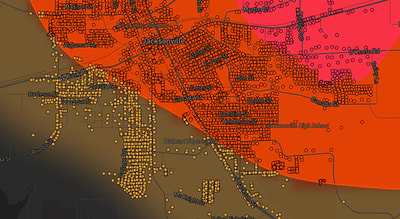
See exactly what you get.
Explore the full Springdale, AR Strike Map free – hail track, address overlay, and CSV download. No account required.
Try the Free Demo →