Cheyenne, WY Hail Storm – June 2025
June 6, 2025 hail storm near Cheyenne, WY. Radar-confirmed hail track and contractor lead lists available.
Max Hail
1"1" est.
confirmed
Zones
1
NWS alerts
Radar
–
dual-pol hits
Spotter
1
field reports
NWS WARNING AREA · Cheyenne Metro · Jun 6, 2025
Intelligence Platform
StormSnipe Pro
$49/ mo
Cancel anytime · No contracts
›All 50 states
›No zone limits
›No per-event fees
Subscribe to Pro
Pro renews monthly until canceled · Cancel anytime in the billing portal
What's included
Instant delivery
Every storm published within hours of NOAA confirmation.
Interactive Strike Map
Full radar-confirmed hail track on an interactive map.
Address CSV export
Every affected residential address, export-ready.
Smart alerts
Notified when a storm hits your area. Set zones once.
Nationwide coverage
All 50 states. No zone restrictions. No geographic caps.
Live pipeline
NOAA NEXRAD processed and delivered 24/7.
Address data notice
Pro coverage in California, Vermont, and Oregon includes the confirmed hail track and Strike Map only — no address lists. State data-privacy law treats compiled address lists differently in those three states, so we exclude their addresses from extraction and delivery.
NWS WARNING AREA
NWS CYS
Cheyenne, WY
Spotter Reported
142 addresses in warning area
Alert issued Fri, Jun 6 · 8:55 PM UTC
1"
confirmed
1"
est. (NWS)
Cheyenne, WY saw a concluded hail storm on June 6, 2025, with verified hail reaching 1 inch across the metro area. The storm moved through the warning area in the afternoon and produced a narrow hail swath.
What Happened
The only NWS alert tied to this event came in at 2:55 PM MDT on June 6. It called for 1-inch hail over Cheyenne and nearby parts of the warning area. Dual-polarization radar added confidence to the hail signal.
The storm did not remain active after the alert window. By late afternoon, the event had ended and no further hail reports were added to this single-zone storm report.
Damage Assessment
Hail at 1 inch reaches the range where roof impact becomes more likely on older shingles, soft metal trim, and exposed accessories. Vehicle damage is also possible, especially on cars parked outside during the strongest part of the storm. Window screens, vents, and light exterior fixtures can take direct strikes when hail falls in a tight core.
In Cheyenne, a 1-inch hail report calls for a close look at asphalt roofs, skylights, gutters, and downspouts. Granule loss can be limited to scattered areas or spread across slopes that took the heaviest stones. Impact marks on siding and paint may be isolated rather than widespread, depending on the storm path through the metro.
For contractors, the first pass should focus on the hail-bearing side of the property and on elevations that faced the strongest wind during the storm. Photographs should document roof slope, soft metals, HVAC fins, and any broken screens or cracked accessories. On commercial sites, inspect metal awnings, parapet caps, downspouts, and rooftop mechanical units where 1-inch hail can leave visible dents.
What Contractors Should Know
The alert at 2:55 PM MDT gives a clear starting point for canvass timing. Crews should treat the storm as a short-duration hail event with a localized footprint. That means damage can change block by block, even within the same warning area. A street with visible hail reports may sit close to another with no impact at all.
Field teams should separate roof symptoms from cosmetic marks on siding, trim, and vehicles. On the ground, size estimates matter, but so do roof age, slope, and material type. A 1-inch hail event in Cheyenne can produce light to moderate repair volume without uniform losses across the entire metro. Adjust inspection routes to the strongest part of the storm path first, then expand outward if field evidence supports it.
Use the Strike Map for precise hail track data across the damage zone.
Storm Details
- Start Date
- Friday, June 6, 2025
- Last Activity
- Friday, June 6, 2025
- Location
- Cheyenne, WY
- Warning Areas
- 1
- Dual-Pol Radar
- --
- Spotter Reports
- 1
Preview Strike Map
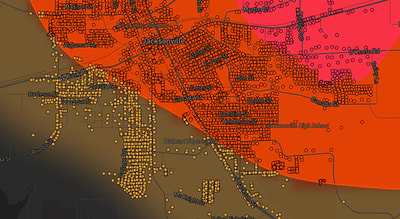
See exactly what you get.
Explore the full Springdale, AR Strike Map free – hail track, address overlay, and CSV download. No account required.
Try the Free Demo →