Silver Lake, OR Hail Storm – June 2025
June 10, 2025 hail storm near Silver Lake, OR. Radar-confirmed hail track and contractor lead lists available.
Max Hail
1.5"1" est.
confirmed
Zones
5
NWS alerts
Radar
57
dual-pol hits
Spotter
–
field reports
NWS WARNING AREA · Silver Lake Metro · Jun 10, 2025
Intelligence Platform
StormSnipe Pro
$49/ mo
Cancel anytime · No contracts
›All 50 states
›No zone limits
›No per-event fees
Subscribe to Pro
Pro renews monthly until canceled · Cancel anytime in the billing portal
What's included
Instant delivery
Every storm published within hours of NOAA confirmation.
Interactive Strike Map
Full radar-confirmed hail track on an interactive map.
Address CSV export
Every affected residential address, export-ready.
Smart alerts
Notified when a storm hits your area. Set zones once.
Nationwide coverage
All 50 states. No zone restrictions. No geographic caps.
Live pipeline
NOAA NEXRAD processed and delivered 24/7.
Address data notice
Pro coverage in California, Vermont, and Oregon includes the confirmed hail track and Strike Map only — no address lists. State data-privacy law treats compiled address lists differently in those three states, so we exclude their addresses from extraction and delivery.
NWS WARNING AREAS · 5
This storm generated 5 NWS alert zones. Pro access covers the complete storm track and all addresses across every zone.
ZONE 1NWS MFR
Silver Lake, OR
Dual-Pol Radar
Alert issued Tue, Jun 10 · 9:29 PM UTC
0.75"
confirmed
1"
est. (NWS)
ZONE 2NWS MFR
Montague, CA
Dual-Pol Radar
Alert issued Tue, Jun 10 · 11:27 PM UTC
1.5"
confirmed
1"
est. (NWS)
ZONE 3NWS MFR
Montague, CA
Dual-Pol Radar
Alert issued Tue, Jun 10 · 11:57 PM UTC
1.5"
confirmed
1"
est. (NWS)
ZONE 4NWS MFR
Sprague River, OR
Dual-Pol Radar
Alert issued Wed, Jun 11 · 12:42 AM UTC
1"
confirmed
1"
est. (NWS)
ZONE 5NWS MFR
Montague, CA
Dual-Pol Radar
Alert issued Wed, Jun 11 · 4:05 AM UTC
1"
confirmed
1"
est. (NWS)
On June 10, 2025, Silver Lake, OR saw a concluded hail storm with a maximum confirmed hail size of 1 inch. Five NWS alert areas were issued through the afternoon and evening.
What Happened
The storm developed across the Silver Lake, OR area on June 10 and produced repeated 1-inch hail alerts from dual-polarization radar confidence. The first alert came at 2:29 PM PDT, with additional alerts at 4:27 PM PDT, 4:57 PM PDT, 5:42 PM PDT, and 9:05 PM PDT.
The sequence points to a storm that persisted through much of the day, with the most concentrated hail risk during late afternoon and early evening. Each alert carried the same 1-inch hail estimate, which kept the event in the same size class from the first detection through the final warning period.
All five alerts were tied to dual-polarization radar analysis. The storm is now concluded.
Damage Assessment
A 1-inch hail event places the storm in a range that can affect roofing, soft metals, gutters, downspouts, vents, skylights, siding, and vehicle surfaces. In a multi-alert event like this one, repeated hail signals often line up with a broader hail swath rather than a single brief burst.
For inspections, that means crews should expect uneven field conditions across the affected area. One roof may show scattered bruising or granule loss while a nearby structure has more visible impact at ridge caps, valleys, or exposed metal trim. Vehicles parked outdoors may show dents on horizontal surfaces, mirror housings, and hood panels.
Surface damage may not be obvious from the street. Crews should check soft metal, shingles, roof penetrations, and drainage components closely in the neighborhoods covered by the alert area. If reporting from the field, separate confirmed impact marks from older wear and pre-existing defects.
What Contractors Should Know
This event produced five hail alerts across the same day, so contractor teams should treat Silver Lake as a multi-pass inspection area. Prioritize roofs with shallow slopes, aging shingles, and exposed metal details. Look for granule displacement, fractured tabs, torn seal strips, and impact marks on vents and flashing. On metal roofs, check seams, fasteners, and ridge components for cosmetic dents and functional separation.
Ground teams should also document collateral exposure. Gutters, window screens, exterior trim, AC fins, and fence caps often show the clearest hail evidence after a 1-inch event. Use photo pairs that show the full elevation and a close-up of the impact point. For claims and repair estimates, note whether the damage is concentrated on one side of the structure or spread across multiple exposures.
Because the storm issued repeated alerts through late afternoon and evening, contractors should expect variable hail coverage inside the warning area. Some properties may show only light impact while others in the same corridor have broader roof and exterior loss. Assign canvass routes to capture both roof and exterior components in the same visit.
Storm Details
- Start Date
- Tuesday, June 10, 2025
- Last Activity
- Tuesday, June 10, 2025
- Location
- Silver Lake, OR
- Warning Areas
- 5
- Dual-Pol Radar
- 57
- Spotter Reports
- --
Preview Strike Map
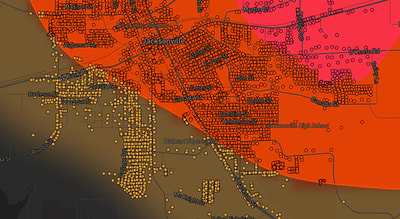
See exactly what you get.
Explore the full Springdale, AR Strike Map free – hail track, address overlay, and CSV download. No account required.
Try the Free Demo →