Spring Branch, TX Hail Storm – June 2025
June 12, 2025 hail storm near Spring Branch, TX. Radar-confirmed hail track and contractor lead lists available.
Max Hail
3.75"2" est.
confirmed
Zones
11
NWS alerts
Radar
673
dual-pol hits
Spotter
10
field reports
Map requires hardware acceleration
NWS WARNING AREA · Spring Branch Metro · Jun 12, 2025 · Click a zone to highlight
Intelligence Platform
StormSnipe Pro
$49/ mo
Cancel anytime · No contracts
›All 50 states
›No zone limits
›No per-event fees
Subscribe to Pro
Billed monthly · Cancel anytime
What's included
Instant delivery
Every storm published within hours of NOAA confirmation.
Interactive Strike Map
Full radar-confirmed hail track on an interactive map.
Address CSV export
Every affected residential address, export-ready.
Smart alerts
Notified when a storm hits your area. Set zones once.
Nationwide coverage
All 50 states. No zone restrictions. No geographic caps.
Live pipeline
NOAA NEXRAD processed and delivered 24/7.
NWS WARNING AREAS · 11
This storm generated 11 NWS alert zones. Pro access covers the complete storm track and all addresses across every zone.
ZONE 1NWS EWX
Spring Branch, TX
Dual-Pol Radar
19,050 addresses in warning area
Alert issued Thu, Jun 12 · 3:54 AM UTC
2.25"
confirmed
1"
est. (NWS)
ZONE 2NWS EWX
San Antonio, TX
Dual-Pol Radar
146,974 addresses in warning area
Alert issued Thu, Jun 12 · 4:40 AM UTC
2.25"
confirmed
1"
est. (NWS)
ZONE 3NWS EWX
Leon Valley, TX
Dual-Pol Radar
7,361 addresses in warning area
Alert issued Thu, Jun 12 · 4:51 AM UTC
2.25"
confirmed
1"
est. (NWS)
ZONE 4NWS HGX
Port Lavaca, TX
Dual-Pol Radar
526 addresses in warning area
Alert issued Thu, Jun 12 · 5:45 AM UTC
3.5"
confirmed
2"
est. (NWS)
ZONE 5NWS EWX
Weimar, TX
Dual-Pol Radar
3,429 addresses in warning area
Alert issued Thu, Jun 12 · 6:41 AM UTC
3"
confirmed
1.25"
est. (NWS)
ZONE 6NWS HGX
Weimar, TX
Dual-Pol Radar
3,069 addresses in warning area
Alert issued Thu, Jun 12 · 6:46 AM UTC
3"
confirmed
1.25"
est. (NWS)
ZONE 7NWS HGX
Palacios, TX
Dual-Pol Radar
Alert issued Thu, Jun 12 · 7:01 AM UTC
3"
confirmed
1.75"
est. (NWS)
ZONE 8NWS HGX
Blessing, TX
Dual-Pol Radar
7,003 addresses in warning area
Alert issued Thu, Jun 12 · 7:43 AM UTC
2.25"
confirmed
1"
est. (NWS)
ZONE 9NWS HGX
Palacios, TX
Dual-Pol Radar
11,787 addresses in warning area
Alert issued Thu, Jun 12 · 8:44 AM UTC
2.5"
confirmed
1"
est. (NWS)
ZONE 10NWS HGX
Livingston, TX
Dual-Pol Radar
9,974 addresses in warning area
Alert issued Thu, Jun 12 · 9:41 AM UTC
3.75"
confirmed
1.5"
est. (NWS)
ZONE 11NWS HGX
Groveton, TX
Dual-Pol Radar
206 addresses in warning area
Alert issued Thu, Jun 12 · 10:25 AM UTC
2.25"
confirmed
1"
est. (NWS)
Spring Branch, TX saw a concluded hail storm on June 12, 2025, with a peak confirmed hail size of 1.25 inches. Four NWS alerts tracked the event through the night.
What Happened
The first alert came at 10:54 PM CDT with 1-inch hail indicated by dual-polarization radar. A second alert followed at 11:40 PM CDT with 1-inch hail and radar plus spotter verification. A third alert came at 11:51 PM CDT with the same 1-inch hail size and spotter support. The final alert came at 1:41 AM CDT with 1.25-inch hail indicated by dual-polarization radar.
The storm held a narrow hail core through the late-night period. The hail signal started at 1 inch and later increased to 1.25 inches. The alert sequence points to repeated hail activity across the Spring Branch area rather than a single short burst.
Damage Assessment
Hail in the 1-inch to 1.25-inch range can affect roofs, gutters, vents, window screens, soft metals, and vehicle panels. Asphalt shingles may show bruising, granule loss, or displaced tabs. Metal components can show dents on exposed edges and fixture faces. Roof slopes with direct storm exposure need closer field review than shaded or partially sheltered areas.
For property managers, the range matters because the event includes both 1-inch and 1.25-inch hail indications. That puts the storm above the threshold where exterior inspections often find visible impact on common building materials. Crews should check roof surfaces, ridge lines, penetrations, HVAC fins, downspouts, and any vehicles parked in open lots during the alert window.
What Contractors Should Know
The event covered four alerts across roughly three hours. That timing supports a longer inspection window, not a single-point strike. Contractors should organize canvass routes around the late-night alert sequence and document which structures were exposed during each phase of the storm. Start with the largest hail signal and work outward through adjacent blocks and roof slopes.
For roofing teams, focus on impact patterns that match the reported hail sizes. On shingle roofs, look for bruising, circular granule loss, soft spots, creased tabs, and exposed mat on slopes facing the storm path. On metal roofs and exterior trim, check for consistent denting across ridges, panels, vents, and flashing. On vehicles and outdoor assets, inspect hoods, roof panels, condensers, and skylight covers.
Field notes should stay tied to address-level observations, roof pitch, material type, and exposure during the warning area. Separate the 1-inch alerts from the 1.25-inch alert in your review notes. That helps keep inspection records aligned with the progression of the storm.
If you are building a bid set or claim packet, document the earliest alert time, the later 1.25-inch indication, and the property conditions seen on site. Use photos with clear orientation and close-range impact shots. Keep repair estimates matched to the specific material damage present at each address.
Storm Details
- Start Date
- Wednesday, June 11, 2025
- Last Activity
- Thursday, June 12, 2025
- Location
- Spring Branch, TX
- Warning Areas
- 11
- Dual-Pol Radar
- 673
- Spotter Reports
- 10
Preview Strike Map
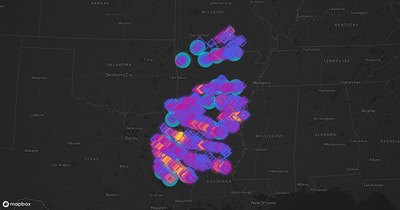
See exactly what you get.
Explore the full Springdale, AR Strike Map free – hail track, address overlay, and CSV download. No account required.
Try the Free Demo →