Floydada, TX Hail Storm – June 2025
June 17, 2025 hail storm near Floydada, TX. Radar-confirmed hail track and contractor lead lists available.
Max Hail
4"2" est.
confirmed
Zones
11
NWS alerts
Radar
1,558
dual-pol hits
Spotter
51
field reports
NWS WARNING AREA · Floydada Metro · Jun 17, 2025
Intelligence Platform
StormSnipe Pro
$49/ mo
Cancel anytime · No contracts
›All 50 states
›No zone limits
›No per-event fees
Subscribe to Pro
Pro renews monthly until canceled · Cancel anytime in the billing portal
What's included
Instant delivery
Every storm published within hours of NOAA confirmation.
Interactive Strike Map
Full radar-confirmed hail track on an interactive map.
Address CSV export
Every affected residential address, export-ready.
Smart alerts
Notified when a storm hits your area. Set zones once.
Nationwide coverage
All 50 states. No zone restrictions. No geographic caps.
Live pipeline
NOAA NEXRAD processed and delivered 24/7.
Address data notice
Pro coverage in California, Vermont, and Oregon includes the confirmed hail track and Strike Map only — no address lists. State data-privacy law treats compiled address lists differently in those three states, so we exclude their addresses from extraction and delivery.
NWS WARNING AREAS · 11
This storm generated 11 NWS alert zones. Pro access covers the complete storm track and all addresses across every zone.
ZONE 1NWS LUB
Floydada, TX
Dual-Pol Radar
93 addresses in warning area
Alert issued Tue, Jun 17 · 11:25 PM UTC
4"
confirmed
2"
est. (NWS)
ZONE 2NWS LUB
Ropesville, TX
Dual-Pol Radar
213 addresses in warning area
Alert issued Tue, Jun 17 · 11:35 PM UTC
2.5"
confirmed
1.5"
est. (NWS)
ZONE 3NWS LUB
Wolfforth, TX
Dual-Pol Radar
Alert issued Wed, Jun 18 · 12:07 AM UTC
2.5"
confirmed
1.75"
est. (NWS)
ZONE 4NWS LUB
Roaring Springs, TX
Dual-Pol Radar
59 addresses in warning area
Alert issued Wed, Jun 18 · 12:12 AM UTC
4"
confirmed
1.5"
est. (NWS)
ZONE 5NWS LUB
Lubbock, TX
Dual-Pol Radar
7,842 addresses in warning area
Alert issued Wed, Jun 18 · 12:15 AM UTC
2.5"
confirmed
1.75"
est. (NWS)
ZONE 6NWS LUB
Slaton, TX
Dual-Pol Radar
26,048 addresses in warning area
Alert issued Wed, Jun 18 · 12:42 AM UTC
3.5"
confirmed
1.75"
est. (NWS)
ZONE 7NWS LUB
McAdoo, TX
Dual-Pol Radar
780 addresses in warning area
Alert issued Wed, Jun 18 · 12:59 AM UTC
4"
confirmed
1.75"
est. (NWS)
ZONE 8NWS LUB
Post, TX
Dual-Pol Radar
110 addresses in warning area
Alert issued Wed, Jun 18 · 1:27 AM UTC
3.5"
confirmed
1.75"
est. (NWS)
ZONE 9NWS LUB
Dickens, TX
Dual-Pol Radar
20 addresses in warning area
Alert issued Wed, Jun 18 · 1:44 AM UTC
3.5"
confirmed
1"
est. (NWS)
ZONE 10NWS LUB
Wilson, TX
Dual-Pol Radar
1,845 addresses in warning area
Alert issued Wed, Jun 18 · 2:00 AM UTC
3.5"
confirmed
1.25"
est. (NWS)
ZONE 11NWS LUB
Post, TX
Dual-Pol Radar
694 addresses in warning area
Alert issued Wed, Jun 18 · 2:43 AM UTC
2"
confirmed
1.25"
est. (NWS)
Floydada, TX saw multiple rounds of severe hail on June 17, 2025, with the largest verified stones reaching 2 inches. The event unfolded through the evening and concluded after a final hail alert at 9:43 PM CDT.
What Happened
The first verified hail alert came at 6:25 PM CDT with 2-inch hail. That was followed by 1.5-inch hail at 6:35 PM CDT, then a series of 1.75-inch alerts at 7:07 PM CDT, 7:15 PM CDT, 7:42 PM CDT, and 7:59 PM CDT. Radar and spotter verification supported the early and mid-event alerts.
Later in the evening, dual-polarization radar detection added more hail signals at 8:27 PM CDT and 8:44 PM CDT, with hail sizes of 1.75 inches and 1 inch. A final pair of alerts came at 9:00 PM CDT and 9:43 PM CDT, both reporting 1.25-inch hail. The warning sequence covered 11 total alerts across more than three hours.
The hail threat peaked early, then continued in repeated bursts through late evening. The alert chain showed a mix of radar-derived and spotter-verified reports, with the largest stone size logged at the start of the event.
Damage Assessment
Hail in the 1 to 2 inch range can damage roofs, siding, gutters, vents, window screens, and vehicles. In Floydada, the 2-inch report at 6:25 PM CDT stands out as the highest verified size in the sequence, with multiple later alerts still producing hail large enough to affect exposed surfaces.
For contractors, the range of sizes matters. A 1-inch hail report can mark widespread cosmetic loss on soft metals and asphalt shingles. Hail from 1.5 to 2 inches raises the chance of bruising on shingles, cracked skylight covers, fractured vinyl components, and broken vehicle glass on exposed property. Repeated alerts over several hours also point to multiple impact passes, not a single brief burst.
Roofing crews should expect mixed surface conditions across the same neighborhood. One home may show only granule loss while a nearby structure carries visible impact marks on ridge caps, pipe boots, or gutter faces. Vehicle inspections should include horizontal surfaces, mirrors, and plastic trim. Ground-level checks should not stop at the first visible dent.
What Contractors Should Know
Start with exterior triage in the hardest-hit blocks near the first verified alert times. The event began at 6:25 PM CDT and continued into the night, so damage patterns may vary by timing as well as location. Document roof slope, elevation, and any impact marks on metal accessories before tarping or replacement work begins.
Use size bands to set inspection priority. Properties exposed to the 2-inch and 1.75-inch alerts should move first, followed by areas tied to the 1.5-inch and 1.25-inch reports. Pay close attention to vents, flashing, skylights, and soft metal trim. Crews should also check for secondary water intrusion after the storm window closed.
Storm Details
- Start Date
- Tuesday, June 17, 2025
- Last Activity
- Tuesday, June 17, 2025
- Location
- Floydada, TX
- Warning Areas
- 11
- Dual-Pol Radar
- 1,558
- Spotter Reports
- 51
Preview Strike Map
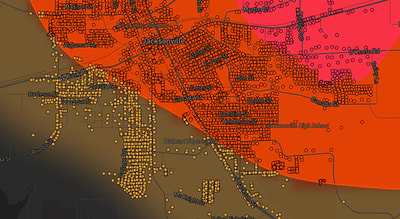
See exactly what you get.
Explore the full Springdale, AR Strike Map free – hail track, address overlay, and CSV download. No account required.
Try the Free Demo →