Lawton, OK Hail Storm – June 2025
June 18, 2025 hail storm near Lawton, OK. Radar-confirmed hail track and contractor lead lists available.
Max Hail
3"1.75" est.
confirmed
Zones
13
NWS alerts
Radar
964
dual-pol hits
Spotter
11
field reports
NWS WARNING AREA · Lawton Metro · Jun 18, 2025
Intelligence Platform
StormSnipe Pro
$49/ mo
Cancel anytime · No contracts
›All 50 states
›No zone limits
›No per-event fees
Subscribe to Pro
Pro renews monthly until canceled · Cancel anytime in the billing portal
What's included
Instant delivery
Every storm published within hours of NOAA confirmation.
Interactive Strike Map
Full radar-confirmed hail track on an interactive map.
Address CSV export
Every affected residential address, export-ready.
Smart alerts
Notified when a storm hits your area. Set zones once.
Nationwide coverage
All 50 states. No zone restrictions. No geographic caps.
Live pipeline
NOAA NEXRAD processed and delivered 24/7.
Address data notice
Pro coverage in California, Vermont, and Oregon includes the confirmed hail track and Strike Map only — no address lists. State data-privacy law treats compiled address lists differently in those three states, so we exclude their addresses from extraction and delivery.
NWS WARNING AREAS · 13
This storm generated 13 NWS alert zones. Pro access covers the complete storm track and all addresses across every zone.
ZONE 1NWS OUN
Lawton, OK
Dual-Pol Radar
Alert issued Wed, Jun 18 · 10:16 PM UTC
2"
confirmed
1.25"
est. (NWS)
ZONE 2NWS OUN
Lawton, OK
Dual-Pol Radar
Alert issued Wed, Jun 18 · 10:50 PM UTC
2"
confirmed
1.75"
est. (NWS)
ZONE 3NWS OUN
Indiahoma, OK
Dual-Pol Radar
7 addresses in warning area
Alert issued Wed, Jun 18 · 11:08 PM UTC
1.5"
confirmed
1"
est. (NWS)
ZONE 4NWS OUN
Olustee, OK
Dual-Pol Radar
3 addresses in warning area
Alert issued Wed, Jun 18 · 11:24 PM UTC
1.75"
confirmed
1"
est. (NWS)
ZONE 5NWS OUN
Lawton, OK
Dual-Pol Radar
Alert issued Wed, Jun 18 · 11:27 PM UTC
2"
confirmed
1.75"
est. (NWS)
ZONE 6NWS OUN
Geronimo, OK
Dual-Pol Radar
Alert issued Wed, Jun 18 · 11:59 PM UTC
1.5"
confirmed
1"
est. (NWS)
ZONE 7NWS OUN
Elmer, OK
Dual-Pol Radar
11 addresses in warning area
Alert issued Thu, Jun 19 · 12:10 AM UTC
2.75"
confirmed
1"
est. (NWS)
ZONE 8NWS OUN
Altus, OK
Dual-Pol Radar
262 addresses in warning area
Alert issued Thu, Jun 19 · 12:37 AM UTC
2.5"
confirmed
1"
est. (NWS)
ZONE 9NWS OUN
Gotebo, OK
Dual-Pol Radar
69 addresses in warning area
Alert issued Thu, Jun 19 · 1:15 AM UTC
1.75"
confirmed
1.25"
est. (NWS)
ZONE 10NWS OUN
Quanah, TX
Dual-Pol Radar
Alert issued Thu, Jun 19 · 1:17 AM UTC
3"
confirmed
1.5"
est. (NWS)
ZONE 11NWS LUB
Childress, TX
Dual-Pol Radar
95 addresses in warning area
Alert issued Thu, Jun 19 · 1:20 AM UTC
2.5"
confirmed
1"
est. (NWS)
ZONE 12NWS OUN
Quanah, TX
Dual-Pol Radar
62 addresses in warning area
Alert issued Thu, Jun 19 · 1:59 AM UTC
3"
confirmed
1"
est. (NWS)
ZONE 13NWS LUB
Quanah, TX
Dual-Pol Radar
80 addresses in warning area
Alert issued Thu, Jun 19 · 2:09 AM UTC
2.5"
confirmed
1"
est. (NWS)
What Happened
A severe hail storm moved through Lawton, OK, on June 18, 2025, with peak stones of 1.75 inches and a long sequence of NWS alert areas through the evening. The most intense phase came in the late afternoon and early evening, with repeated radar and spotter verification across the metro.
The first alert came at 5:16 PM CDT with 1.25-inch hail. The largest verified stone followed at 5:50 PM CDT, also supported by radar and spotter confidence. A spotter report at 6:01 PM CDT from mPING described half-dollar hail at 1.25 inches, matching the earlier field signal. Later alerts held the storm in the 1-inch to 1.75-inch range, including another 1.75-inch reading at 6:27 PM CDT and multiple radar-derived alerts into the night.
By 6:24 PM CDT and 6:59 PM CDT, additional reports kept hail embedded in the storm core. Dual-polarization radar continued to detect hail through 8:59 PM CDT, with 1-inch, 1.25-inch, and 1.5-inch signals mapped across the event window. The storm remained a hail producer for several hours rather than a single brief burst.
Damage Assessment
The field reports show a concentrated hail event in and around Lawton, with spotter-verified 1.25-inch hail confirming surface impact during the strongest part of the storm. Two identical mPING reports at 6:01 PM CDT point to a confirmed ground observation during the main hail core.
The alert sequence shows repeated hail production after the first verified report. That pattern points to more than one round of stone fall within the warning area. Roof slopes, soft metal trim, vents, vehicle finishes, and exposed outdoor equipment would have taken the first direct impacts where the core passed.
No ground report in the provided data documents a larger verified stone than 1.75 inches, but the radar and spotter mix supports a hail swath with pockets of heavier impact. Areas hit during the 5:50 PM CDT and 6:27 PM CDT peaks would be the first places to inspect for dents on vehicles, bruised shingles, and impacts on siding or window screens.
Crews working this event should expect uneven surface findings. One block may show clean hail signatures on radar with little visible loss, while another nearby property carries clear impact marks from the same storm cell. In Lawton, the repeated alerts suggest that kind of scattered, block-by-block field pattern rather than one uniform damage strip.
What Contractors Should Know
Start with roofing and vehicle exposure in the highest-confidence parts of the hail path. The strongest verified intervals came between 5:50 PM CDT and 6:27 PM CDT, with radar-detected hail continuing well after that. Contractors should prioritize slopes facing the storm approach, soft metal accessories, skylights, condensers, and parked vehicles in those neighborhoods before moving outward.
Use the local report timing to narrow canvass routes. The 6:01 PM CDT spotter report sits between the first 1.75-inch alert and the later 1-inch returns, which suggests a core that held together while moving across the metro. That makes adjacent streets and nearby subdivisions worth a direct look, especially where vehicles were exposed or roofs already had older wear.
Storm Details
- Start Date
- Wednesday, June 18, 2025
- Last Activity
- Wednesday, June 18, 2025
- Location
- Lawton, OK
- Warning Areas
- 13
- Dual-Pol Radar
- 964
- Spotter Reports
- 11
Preview Strike Map
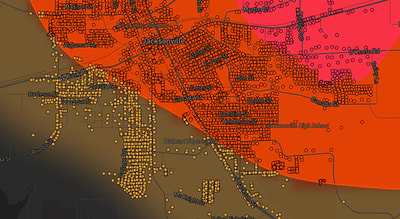
See exactly what you get.
Explore the full Springdale, AR Strike Map free – hail track, address overlay, and CSV download. No account required.
Try the Free Demo →