Calhan, CO Hail Storm – June 2025
June 25, 2025 hail storm near Calhan, CO. Radar-confirmed hail track and contractor lead lists available.
Max Hail
3"1.25" est.
confirmed
Zones
5
NWS alerts
Radar
54
dual-pol hits
Spotter
2
field reports
NWS WARNING AREA · Calhan Metro · Jun 25, 2025
Intelligence Platform
StormSnipe Pro
$49/ mo
Cancel anytime · No contracts
›All 50 states
›No zone limits
›No per-event fees
Subscribe to Pro
Pro renews monthly until canceled · Cancel anytime in the billing portal
What's included
Instant delivery
Every storm published within hours of NOAA confirmation.
Interactive Strike Map
Full radar-confirmed hail track on an interactive map.
Address CSV export
Every affected residential address, export-ready.
Smart alerts
Notified when a storm hits your area. Set zones once.
Nationwide coverage
All 50 states. No zone restrictions. No geographic caps.
Live pipeline
NOAA NEXRAD processed and delivered 24/7.
Address data notice
Pro coverage in California, Vermont, and Oregon includes the confirmed hail track and Strike Map only — no address lists. State data-privacy law treats compiled address lists differently in those three states, so we exclude their addresses from extraction and delivery.
NWS WARNING AREAS · 5
This storm generated 5 NWS alert zones. Pro access covers the complete storm track and all addresses across every zone.
ZONE 1NWS PUB
Calhan, CO
Dual-Pol Radar
1,799 addresses in warning area
Alert issued Wed, Jun 25 · 7:30 PM UTC
1.25"
confirmed
1.25"
est. (NWS)
ZONE 2NWS BOU
Nunn, CO
Dual-Pol Radar
157 addresses in warning area
Alert issued Wed, Jun 25 · 8:21 PM UTC
3"
confirmed
1.25"
est. (NWS)
ZONE 3NWS PUB
Branson, CO
Dual-Pol Radar
Alert issued Thu, Jun 26 · 12:37 AM UTC
2.25"
confirmed
1"
est. (NWS)
ZONE 4NWS BOU
Denver, CO
Dual-Pol Radar
74,227 addresses in warning area
Alert issued Thu, Jun 26 · 1:53 AM UTC
2"
confirmed
1"
est. (NWS)
ZONE 5NWS BOU
Aurora, CO
NWS Warning
Alert issued Thu, Jun 26 · 2:21 AM UTC
1"
est. (NWS)
Calhan, CO hail storm on June 25, 2025 reached 1.25 inches
Calhan, CO saw a concluded hail storm on June 25, 2025. The peak confirmed hail size reached 1.25 inches.
What Happened
The first storm alert came at 1:30 PM MDT, with spotter-verified hail of 1.25 inches. A second alert followed at 6:37 PM MDT with 1 inch hail, also spotter-reported. The event produced two separate hail periods across the Calhan area.
The sequence points to a multi-zone hail event rather than a single brief burst. The earlier round delivered the larger stones. The later round added another round of damaging hail before the storm concluded.
Radar and spotter reports both supported the hail call. The 1.25-inch report set the peak size for the event. The second alert held at 1 inch, which kept the storm in the severe hail range through the evening cycle.
Damage Assessment
Hail in the 1 to 1.25 inch range can affect roofs, gutters, siding, vents, window screens, and soft metal trim. Asphalt shingles may show bruising or granule loss. Modified bitumen and older roof systems can show more visible impact marks. Vehicle panels often carry dents, especially on horizontal surfaces.
The larger 1.25-inch hail report raises the likelihood of inspection findings on exposed roofing and exterior finishes. The later 1-inch hail round can widen the field of claims if it crossed the same neighborhoods or adjacent blocks. On homes with older roof materials, the difference between 1 inch and 1.25 inches can change the scope of visible impact.
Commercial properties in the path should check flat roofs, rooftop equipment, condensate lines, and painted metal components. Warehouses, schools, and light industrial sites often show impacts first on HVAC covers, skylights, and perimeter trim. Fencing, signage, and outdoor fixtures may also show isolated hail marks.
What Contractors Should Know
Start with the roof surface and move to the perimeter. Inspect slopes that face the storm path, then check gutters, downspouts, ridge caps, and penetrations. Photograph impact marks, disturbed granules, and collateral damage on soft metals. If the property has recent repairs, document those areas separately so older wear does not get mixed into the storm loss.
Use the hail size range to set the inspection plan. The 1.25-inch peak supports a closer review of steep-slope roofing and vulnerable accessories. The 1-inch round later in the day supports a broader canvass, especially if the storm passed over more than one zone in Calhan. Multi-zone hail often produces uneven damage patterns from one block to the next.
Check vehicle lots, carports, and exterior storage areas before weathering changes the evidence. Look at skylights, turbine vents, soft metals, and roof-mounted equipment. On post-storm calls, note the time of each reported hail round and the material type in the field. That helps separate the earlier larger hail from the later 1-inch round.
Storm Details
- Start Date
- Wednesday, June 25, 2025
- Last Activity
- Wednesday, June 25, 2025
- Location
- Calhan, CO
- Warning Areas
- 5
- Dual-Pol Radar
- 54
- Spotter Reports
- 2
Preview Strike Map
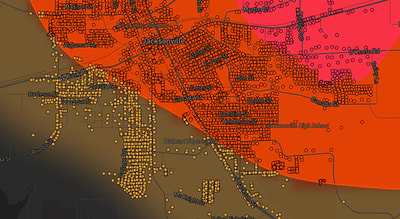
See exactly what you get.
Explore the full Springdale, AR Strike Map free – hail track, address overlay, and CSV download. No account required.
Try the Free Demo →