Colorado Springs, CO Hail Storm – July 2025
July 4, 2025 hail storm near Colorado Springs, CO. Radar-confirmed hail track and contractor lead lists available.
Max Hail
2.5"1.5" est.
confirmed
Zones
15
NWS alerts
Radar
477
dual-pol hits
Spotter
3
field reports
NWS WARNING AREA · Colorado Springs Metro · Jul 4, 2025
Intelligence Platform
StormSnipe Pro
$49/ mo
Cancel anytime · No contracts
›All 50 states
›No zone limits
›No per-event fees
Subscribe to Pro
Pro renews monthly until canceled · Cancel anytime in the billing portal
What's included
Instant delivery
Every storm published within hours of NOAA confirmation.
Interactive Strike Map
Full radar-confirmed hail track on an interactive map.
Address CSV export
Every affected residential address, export-ready.
Smart alerts
Notified when a storm hits your area. Set zones once.
Nationwide coverage
All 50 states. No zone restrictions. No geographic caps.
Live pipeline
NOAA NEXRAD processed and delivered 24/7.
Address data notice
Pro coverage in California, Vermont, and Oregon includes the confirmed hail track and Strike Map only — no address lists. State data-privacy law treats compiled address lists differently in those three states, so we exclude their addresses from extraction and delivery.
NWS WARNING AREAS · 15
This storm generated 15 NWS alert zones. Pro access covers the complete storm track and all addresses across every zone.
ZONE 1NWS PUB
Colorado Springs, CO
Dual-Pol Radar
11,911 addresses in warning area
Alert issued Fri, Jul 4 · 6:20 PM UTC
1"
confirmed
1"
est. (NWS)
ZONE 2NWS PUB
Eads, CO
Dual-Pol Radar
Alert issued Fri, Jul 4 · 9:57 PM UTC
1"
confirmed
1"
est. (NWS)
ZONE 3NWS GLD
Quinter, KS
Dual-Pol Radar
26 addresses in warning area
Alert issued Fri, Jul 4 · 11:16 PM UTC
2"
confirmed
1.5"
est. (NWS)
ZONE 4NWS DDC
Syracuse, KS
Dual-Pol Radar
4 addresses in warning area
Alert issued Fri, Jul 4 · 11:34 PM UTC
2.5"
confirmed
1"
est. (NWS)
ZONE 5NWS GLD
Tribune, KS
Dual-Pol Radar
130 addresses in warning area
Alert issued Fri, Jul 4 · 11:36 PM UTC
2.25"
confirmed
1"
est. (NWS)
ZONE 6NWS DDC
Syracuse, KS
Dual-Pol Radar
2 addresses in warning area
Alert issued Sat, Jul 5 · 12:04 AM UTC
2"
confirmed
1"
est. (NWS)
ZONE 7NWS GLD
Tribune, KS
Dual-Pol Radar
30 addresses in warning area
Alert issued Sat, Jul 5 · 12:14 AM UTC
2.25"
confirmed
1"
est. (NWS)
ZONE 8NWS DDC
Syracuse, KS
Dual-Pol Radar
1,338 addresses in warning area
Alert issued Sat, Jul 5 · 12:17 AM UTC
2"
confirmed
1"
est. (NWS)
ZONE 9NWS DDC
Kendall, KS
Dual-Pol Radar
3,613 addresses in warning area
Alert issued Sat, Jul 5 · 12:28 AM UTC
2.5"
confirmed
1"
est. (NWS)
ZONE 10NWS GLD
Grinnell, KS
Dual-Pol Radar
25 addresses in warning area
Alert issued Sat, Jul 5 · 12:36 AM UTC
2.25"
confirmed
1.5"
est. (NWS)
ZONE 11NWS GLD
Quinter, KS
Dual-Pol Radar
Alert issued Sat, Jul 5 · 1:11 AM UTC
2"
confirmed
1"
est. (NWS)
ZONE 12NWS GLD
Gove, KS
Dual-Pol Radar
77 addresses in warning area
Alert issued Sat, Jul 5 · 1:24 AM UTC
2"
confirmed
1"
est. (NWS)
ZONE 13NWS DDC
Ulysses, KS
Dual-Pol Radar
440 addresses in warning area
Alert issued Sat, Jul 5 · 1:29 AM UTC
2.5"
confirmed
1"
est. (NWS)
ZONE 14NWS DDC
Healy, KS
Dual-Pol Radar
Alert issued Sat, Jul 5 · 1:43 AM UTC
1.25"
confirmed
1"
est. (NWS)
ZONE 15NWS DDC
Dighton, KS
Dual-Pol Radar
219 addresses in warning area
Alert issued Sat, Jul 5 · 2:05 AM UTC
1.25"
confirmed
1"
est. (NWS)
Colorado Springs, CO was hit by a multi-zone hail storm on July 4, 2025. The concluded event produced a maximum confirmed hail size of 1 inch.
What Happened
The storm produced two NWS alert areas over Colorado Springs on Friday. The first came at 12:20 PM MDT with 1-inch hail, backed by radar and spotter verification. The second followed at 3:57 PM MDT with 1-inch hail, supported by dual-polarization radar and a confidence reading tied to the hail detection.
The first round developed around midday. The second round came back in the late afternoon. Both alerts carried the same peak hail size, which kept the event within the 1-inch range across the metro area.
This was a concluded storm event. No further alerts were issued after the second round on July 4.
Damage Assessment
1-inch hail can leave visible marks on exposed property. Roof impacts often show up on asphalt shingles, vents, flashing, skylights, and soft metal trim. Vehicles parked outdoors can show denting and chipped glass. Siding, fence caps, and patio covers can also show strike points where hail hit at close range.
In a metro area like Colorado Springs, the damage pattern is often uneven. One block can show only light impact while another sees repeated hits on the same roof slope or vehicle row. Hail of this size can also push homeowners and property managers into a closer inspection window, especially when the storm came in more than one round.
Commercial sites with flat roofs, HVAC units, and rooftop drainage hardware should be checked for impact marks and debris. Exterior storage yards, apartment parking lots, and retail centers are common places where the hail signature appears first.
What Contractors Should Know
The first priority is exposure mapping. Focus on the neighborhoods and roof corridors that sat inside the NWS warning areas during the two alert periods. The midday alert and the late-afternoon alert should be treated as separate inspection windows, since the storm did not arrive as a single pass.
Look for fresh impact marks on shingles, broken tabs, dented gutters, split ridge caps, and bruised vents. On metal systems, check seams, exposed fasteners, and soft accessories such as pipe boots and condensers. On vehicle-heavy properties, note windshield chips, hood dents, and roof dings before equipment or traffic moves the evidence.
Field teams should document the timing against each site visit. For this event, 12:20 PM MDT and 3:57 PM MDT are the anchor points. Pair those times with address-level observations, photo sets, and any tenant or homeowner notes that place the hail inside a specific round.
For multi-zone storms, avoid treating the city as one uniform field. A single metro can carry different hit patterns across separate alert areas, and the second round may produce a tighter or more scattered footprint than the first. Crews should compare roof slopes, parking exposure, and tree canopy cover from one section of the city to the next.
Storm Details
- Start Date
- Friday, July 4, 2025
- Last Activity
- Friday, July 4, 2025
- Location
- Colorado Springs, CO
- Warning Areas
- 15
- Dual-Pol Radar
- 477
- Spotter Reports
- 3
Preview Strike Map
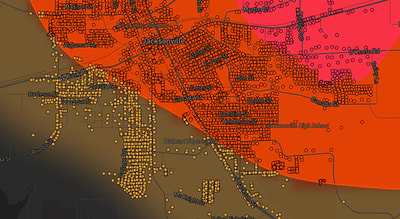
See exactly what you get.
Explore the full Springdale, AR Strike Map free – hail track, address overlay, and CSV download. No account required.
Try the Free Demo →