Upton, WY Hail Storm – July 2025
July 4, 2025 hail storm near Upton, WY. Radar-confirmed hail track and contractor lead lists available.
Max Hail
2"1" est.
confirmed
Zones
2
NWS alerts
Radar
11
dual-pol hits
Spotter
–
field reports
NWS WARNING AREA · Upton Metro · Jul 4, 2025
Intelligence Platform
StormSnipe Pro
$49/ mo
Cancel anytime · No contracts
›All 50 states
›No zone limits
›No per-event fees
Subscribe to Pro
Pro renews monthly until canceled · Cancel anytime in the billing portal
What's included
Instant delivery
Every storm published within hours of NOAA confirmation.
Interactive Strike Map
Full radar-confirmed hail track on an interactive map.
Address CSV export
Every affected residential address, export-ready.
Smart alerts
Notified when a storm hits your area. Set zones once.
Nationwide coverage
All 50 states. No zone restrictions. No geographic caps.
Live pipeline
NOAA NEXRAD processed and delivered 24/7.
Address data notice
Pro coverage in California, Vermont, and Oregon includes the confirmed hail track and Strike Map only — no address lists. State data-privacy law treats compiled address lists differently in those three states, so we exclude their addresses from extraction and delivery.
NWS WARNING AREAS · 2
This storm generated 2 NWS alert zones. Pro access covers the complete storm track and all addresses across every zone.
ZONE 1NWS UNR
Upton, WY
Dual-Pol Radar
66 addresses in warning area
Alert issued Fri, Jul 4 · 10:18 PM UTC
2"
confirmed
1"
est. (NWS)
ZONE 2NWS UNR
Lusk, WY
Dual-Pol Radar
Alert issued Sat, Jul 5 · 2:45 AM UTC
1.5"
confirmed
1"
est. (NWS)
Upton, WY saw two confirmed hail alerts on July 4, 2025, with peak hail at 1 inch. The storm has concluded.
What Happened
The first alert came at 4:18 PM MDT, with dual-polarization radar confidence for 1-inch hail. A second alert followed at 8:45 PM MDT, also carrying 1-inch hail confidence from dual-polarization radar.
Both alerts point to a hail-producing storm that held organized enough structure to produce repeat hail signals over the course of the day. The event was not a single isolated report. It was a multi-zone storm sequence across the Upton area.
The local timing places the first hail threat in the late afternoon and the second in the evening. That pattern matches a storm that remained capable of hail production after the first round had passed.
Damage Assessment
One-inch hail is a threshold size for roof, siding, vehicle, and exterior trim claims. The most common field impacts include bruised shingles, minor granule loss, cracked soft metals, and dents in gutters, vents, and roof accessories. Vehicles parked in the open can show roof and hood dimpling, with higher exposure on east- and west-facing sides depending on storm approach.
In a town like Upton, property damage often depends on the storm path through individual streets, not just the alert area. Houses on the fringe of the warning area may see little or no hail. Properties under the core hail path can show visible exterior marks even when the hail size stays near 1 inch.
Contractors should expect mixed loss patterns. A neighborhood can have roof claims without widespread siding damage. Another block can show vehicle impacts with little roof concern. Hail at this size does not usually produce the severe loss profile seen with larger stones, but it is large enough to trigger a detailed exterior inspection.
For adjusters and roof crews, the priority is separating superficial impact from functional damage. Check for soft metal deformation, collateral hits on gutters and flashing, and any slope-specific wear on shingles that may not be visible from the ground.
What Contractors Should Know
Field teams should treat this as a localized hail inspection job with two separate timing windows. Start with the first alert period around 4:18 PM MDT and then look again near 8:45 PM MDT for second-pass impacts. Properties with no obvious damage after the first round may still show signs from the later hail burst.
Focus on roofs, vehicle lots, and light-gauge exterior components. One-inch hail can leave limited but measurable impact on ridge caps, pipe boots, vents, condensers, window screens, and exposed trim. On steep roofs, test for bruising and mat fracture near ridge, eave, and slope transitions. On flatter surfaces, check for membrane hits and soft-metal dents that are easy to miss from street level.
Storm Details
- Start Date
- Friday, July 4, 2025
- Last Activity
- Friday, July 4, 2025
- Location
- Upton, WY
- Warning Areas
- 2
- Dual-Pol Radar
- 11
- Spotter Reports
- --
Preview Strike Map
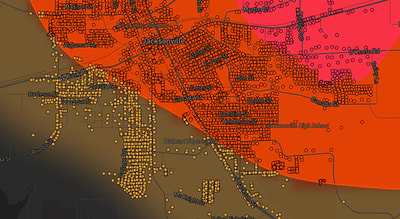
See exactly what you get.
Explore the full Springdale, AR Strike Map free – hail track, address overlay, and CSV download. No account required.
Try the Free Demo →