White Sands Missile Range, NM Hail Storm – July 2025
July 8, 2025 hail storm near White Sands Missile Range, NM. Radar-confirmed hail track and contractor lead lists available.
Max Hail
1.5"1" est.
confirmed
Zones
3
NWS alerts
Radar
21
dual-pol hits
Spotter
5
field reports
NWS WARNING AREA · White Sands Missile Range Metro · Jul 8, 2025
Intelligence Platform
StormSnipe Pro
$49/ mo
Cancel anytime · No contracts
›All 50 states
›No zone limits
›No per-event fees
Subscribe to Pro
Pro renews monthly until canceled · Cancel anytime in the billing portal
What's included
Instant delivery
Every storm published within hours of NOAA confirmation.
Interactive Strike Map
Full radar-confirmed hail track on an interactive map.
Address CSV export
Every affected residential address, export-ready.
Smart alerts
Notified when a storm hits your area. Set zones once.
Nationwide coverage
All 50 states. No zone restrictions. No geographic caps.
Live pipeline
NOAA NEXRAD processed and delivered 24/7.
Address data notice
Pro coverage in California, Vermont, and Oregon includes the confirmed hail track and Strike Map only — no address lists. State data-privacy law treats compiled address lists differently in those three states, so we exclude their addresses from extraction and delivery.
NWS WARNING AREAS · 3
This storm generated 3 NWS alert zones. Pro access covers the complete storm track and all addresses across every zone.
ZONE 1NWS EPZ
White Sands Missile Range, NM
Dual-Pol Radar
334 addresses in warning area
Alert issued Tue, Jul 8 · 8:47 PM UTC
1.5"
confirmed
1"
est. (NWS)
ZONE 2NWS EPZ
El Paso, TX
Dual-Pol Radar
15,289 addresses in warning area
Alert issued Tue, Jul 8 · 10:40 PM UTC
0.75"
confirmed
1"
est. (NWS)
ZONE 3NWS EPZ
San Lorenzo, NM
Dual-Pol Radar
105 addresses in warning area
Alert issued Tue, Jul 8 · 10:49 PM UTC
1"
confirmed
1"
est. (NWS)
What Happened
A severe storm crossed White Sands Missile Range, NM, on July 8, 2025, producing 1-inch hail in multiple warning areas and later radar-detected hail near 4:49 PM MDT. The storm remained active from mid-afternoon into early evening.
The first alert came at 2:47 PM MDT with 1-inch hail potential and radar plus spotter verification. A second alert followed at 4:40 PM MDT with the same hail size and confidence. A third alert at 4:49 PM MDT again carried 1-inch hail, this time tied to dual-polarization radar detection.
Field reports filled in the ground picture as the storm moved through the region. Around 3:20 PM MDT, a WSMR meteorology employee reported running water over Baylor Canyon Road, south of Organ. At 4:01 PM MDT, NASA Emergency Management reported deep water over NASA Road. By 4:45 PM MDT, a social media post in the area showed multiple spots of standing and flowing water on roadways. Another report at 5:00 PM MDT, with time and location estimated, described similar water impacts. A separate 4:30 PM MDT report noted downed power lines at Ft. Bliss, with timing approximated from peak gusts at KBIF.
The storm stayed in the hail-producing range through the afternoon. Radar and spotter input aligned on repeated 1-inch hail risk, while the surface reports showed water-covered roads across parts of the corridor.
Damage Assessment
The clearest impact from this storm was water on roads and localized utility disruption near the metro edge. Baylor Canyon Road had running water reported south of Organ. NASA Road had deep water by mid-afternoon. Later reports described standing and flowing water on multiple roadways, which points to rapid runoff across low spots and travel routes near the range.
The Ft. Bliss report adds a separate damage note. Downed power lines were observed there around 4:30 PM MDT, based on an estimated time tied to local wind conditions. The report does not describe a widespread outage pattern, but it does place utility damage in the same storm period.
No hail size above 1 inch was reported in the material provided. The field reports instead show a storm with repeated hail potential and several water-related impacts across different locations in and around the White Sands Missile Range area. The sequence suggests a storm that kept enough structure to produce repeated warning-level hail while also dumping water onto roadways.
What Contractors Should Know
White Sands Missile Range sits in open country with long drives between work sites, access roads, and support facilities. After a storm like this, crews should check low-lying road segments first, especially routes that funnel runoff near canyons, drainage cuts, and paved connectors with limited shoulder elevation. Baylor Canyon Road and NASA Road both showed water impacts in the same event window.
Storm Details
- Start Date
- Tuesday, July 8, 2025
- Last Activity
- Tuesday, July 8, 2025
- Location
- White Sands Missile Range, NM
- Warning Areas
- 3
- Dual-Pol Radar
- 21
- Spotter Reports
- 5
Preview Strike Map
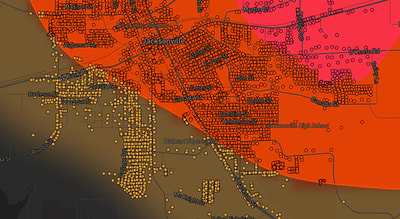
See exactly what you get.
Explore the full Springdale, AR Strike Map free – hail track, address overlay, and CSV download. No account required.
Try the Free Demo →