Roanoke, VA Hail Storm – July 2025
July 9, 2025 hail storm near Roanoke, VA. Radar-confirmed hail track and contractor lead lists available.
Max Hail
1.25"1" est.
confirmed
Zones
1
NWS alerts
Radar
7
dual-pol hits
Spotter
3
field reports
NWS WARNING AREA · Roanoke Metro · Jul 9, 2025
Intelligence Platform
StormSnipe Pro
$49/ mo
Cancel anytime · No contracts
›All 50 states
›No zone limits
›No per-event fees
Subscribe to Pro
Pro renews monthly until canceled · Cancel anytime in the billing portal
What's included
Instant delivery
Every storm published within hours of NOAA confirmation.
Interactive Strike Map
Full radar-confirmed hail track on an interactive map.
Address CSV export
Every affected residential address, export-ready.
Smart alerts
Notified when a storm hits your area. Set zones once.
Nationwide coverage
All 50 states. No zone restrictions. No geographic caps.
Live pipeline
NOAA NEXRAD processed and delivered 24/7.
Address data notice
Pro coverage in California, Vermont, and Oregon includes the confirmed hail track and Strike Map only — no address lists. State data-privacy law treats compiled address lists differently in those three states, so we exclude their addresses from extraction and delivery.
NWS WARNING AREA
NWS RNK
Roanoke, VA
Dual-Pol Radar
16,874 addresses in warning area
Alert issued Wed, Jul 9 · 12:16 AM UTC
1.25"
confirmed
1"
est. (NWS)
What Happened
A severe thunderstorm crossed the Roanoke, VA metro on July 9, 2025, producing 1-inch hail and a radar- and spotter-verified warning at 8:16 PM EDT. The storm moved through the area in the early evening, then continued to generate spotter-reported wind damage after the hail threat had already been identified.
The alert covered the Roanoke metro with confidence supported by dual-polarization radar and spotter verification. Field reports came in shortly after, showing a narrow corridor of wind damage along local roads in the city. At 8:42 PM EDT, a spotter reported a power line down near Catawba Road and Etzler Road. One minute later, another report placed a downed power line near Catawba Road and Glebe Road. At 8:46 PM EDT, a third report noted a power line down near Glebe Road and Orchard Lake Drive.
The hail and wind reports did not arrive as separate, isolated events. They lined up within a short window on the same evening, with the warning area already in place before the ground reports came in. The storm tracked through a built-up part of Roanoke, where the road network and utility lines put the impacts close to residential and commercial corridors.
Damage Assessment
The field reports show a compact surface impact focused on utility infrastructure rather than broad structural damage. Three separate spotter-verified observations placed downed power lines along a small set of intersections in west and central Roanoke, all within four minutes of each other. The locations clustered near Catawba Road, Glebe Road, Etzler Road, and Orchard Lake Drive.
That pattern points to a localized wind swath crossing the metro with enough force to affect overhead lines. The reports describe the same type of damage each time. They do not show scattered debris fields or widespread roof loss. They do show a consistent line of power line failures in the same part of the city, which places the storm’s ground impact close to the reported path.
For hail, the verified size reached 1 inch. The radar and spotter combination supported that estimate in the warning area, but the field reports available for this event were wind-focused. No additional spotter note in the data described hail accumulation, roof strikes, or broken windows tied to a specific address. The strongest documented ground impact in the report set was the utility damage near the three intersections.
This storm stayed on the lighter end of hail severity, but the sequence still mattered for field crews. A 1-inch hail core plus downed lines creates a mixed response picture. Roofers, adjusters, and utility crews may all receive calls from the same neighborhoods, but the documented damage points here are tied to power distribution along the Catawba and Glebe Road corridor.
What Contractors Should Know
Crews working Roanoke after this event should focus first on the intersections named in the reports. Catawba Road at Etzler Road, Catawba Road at Glebe Road, and Glebe Road at Orchard Lake Drive are the specific nodes tied to verified line damage. That is the best starting point for canvass routing, utility coordination, and photo documentation.
Storm Details
- Start Date
- Tuesday, July 8, 2025
- Last Activity
- Tuesday, July 8, 2025
- Location
- Roanoke, VA
- Warning Areas
- 1
- Dual-Pol Radar
- 7
- Spotter Reports
- 3
Preview Strike Map
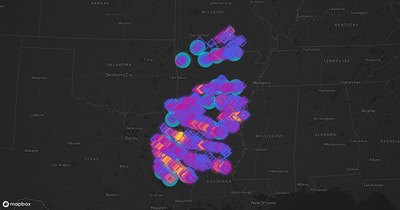
See exactly what you get.
Explore the full Springdale, AR Strike Map free – hail track, address overlay, and CSV download. No account required.
Try the Free Demo →