Mescalero, NM Hail Storm – July 2025
July 13, 2025 hail storm near Mescalero, NM. Radar-confirmed hail track and contractor lead lists available.
Max Hail
2.75"1.25" est.
confirmed
Zones
16
NWS alerts
Radar
376
dual-pol hits
Spotter
13
field reports
NWS WARNING AREA · Mescalero Metro · Jul 13, 2025
Intelligence Platform
StormSnipe Pro
$49/ mo
Cancel anytime · No contracts
›All 50 states
›No zone limits
›No per-event fees
Subscribe to Pro
Pro renews monthly until canceled · Cancel anytime in the billing portal
What's included
Instant delivery
Every storm published within hours of NOAA confirmation.
Interactive Strike Map
Full radar-confirmed hail track on an interactive map.
Address CSV export
Every affected residential address, export-ready.
Smart alerts
Notified when a storm hits your area. Set zones once.
Nationwide coverage
All 50 states. No zone restrictions. No geographic caps.
Live pipeline
NOAA NEXRAD processed and delivered 24/7.
Address data notice
Pro coverage in California, Vermont, and Oregon includes the confirmed hail track and Strike Map only — no address lists. State data-privacy law treats compiled address lists differently in those three states, so we exclude their addresses from extraction and delivery.
NWS WARNING AREAS · 16
This storm generated 16 NWS alert zones. Pro access covers the complete storm track and all addresses across every zone.
ZONE 1NWS EPZ
Mescalero, NM
Dual-Pol Radar
2,279 addresses in warning area
Alert issued Sun, Jul 13 · 7:52 PM UTC
2"
confirmed
1"
est. (NWS)
ZONE 2NWS EPZ
Winston, NM
Dual-Pol Radar
5 addresses in warning area
Alert issued Sun, Jul 13 · 8:24 PM UTC
2.25"
confirmed
1"
est. (NWS)
ZONE 3NWS EPZ
Mimbres, NM
Dual-Pol Radar
73 addresses in warning area
Alert issued Sun, Jul 13 · 8:26 PM UTC
2"
confirmed
1"
est. (NWS)
ZONE 4NWS EPZ
Mescalero, NM
Dual-Pol Radar
Alert issued Sun, Jul 13 · 8:30 PM UTC
2"
confirmed
1"
est. (NWS)
ZONE 5NWS EPZ
El Paso, TX
Dual-Pol Radar
123 addresses in warning area
Alert issued Sun, Jul 13 · 9:51 PM UTC
2"
confirmed
1"
est. (NWS)
ZONE 6NWS EPZ
Las Cruces, NM
Dual-Pol Radar
6,700 addresses in warning area
Alert issued Sun, Jul 13 · 10:13 PM UTC
1.5"
confirmed
1"
est. (NWS)
ZONE 7NWS EPZ
Truth or Consequences, NM
Dual-Pol Radar
5 addresses in warning area
Alert issued Sun, Jul 13 · 10:18 PM UTC
2.75"
confirmed
1"
est. (NWS)
ZONE 8NWS TWC
Duncan, AZ
Dual-Pol Radar
118 addresses in warning area
Alert issued Sun, Jul 13 · 10:26 PM UTC
1.5"
confirmed
1"
est. (NWS)
ZONE 9NWS EPZ
Animas, NM
Dual-Pol Radar
11 addresses in warning area
Alert issued Sun, Jul 13 · 10:32 PM UTC
2.25"
confirmed
1.25"
est. (NWS)
ZONE 10NWS TWC
Fort Huachuca, AZ
Dual-Pol Radar
2,075 addresses in warning area
Alert issued Sun, Jul 13 · 10:41 PM UTC
1"
confirmed
1"
est. (NWS)
ZONE 11NWS EPZ
El Paso, TX
Dual-Pol Radar
7,685 addresses in warning area
Alert issued Sun, Jul 13 · 10:53 PM UTC
0.75"
confirmed
1"
est. (NWS)
ZONE 12NWS EPZ
Rincon, NM
Dual-Pol Radar
1,433 addresses in warning area
Alert issued Sun, Jul 13 · 11:22 PM UTC
2.25"
confirmed
1.25"
est. (NWS)
ZONE 13NWS TWC
Willcox, AZ
Dual-Pol Radar
423 addresses in warning area
Alert issued Sun, Jul 13 · 11:24 PM UTC
2.5"
confirmed
1"
est. (NWS)
ZONE 14NWS EPZ
Fort Hancock, TX
Dual-Pol Radar
770 addresses in warning area
Alert issued Sun, Jul 13 · 11:28 PM UTC
1.5"
confirmed
1"
est. (NWS)
ZONE 15NWS TWC
San Simon, AZ
Dual-Pol Radar
218 addresses in warning area
Alert issued Sun, Jul 13 · 11:34 PM UTC
2"
confirmed
1"
est. (NWS)
ZONE 16NWS TWC
Tombstone, AZ
Dual-Pol Radar
217 addresses in warning area
Alert issued Mon, Jul 14 · 1:14 AM UTC
1.5"
confirmed
1"
est. (NWS)
What Happened
A severe hail storm moved through Mescalero, New Mexico, on July 13, 2025, with peak hail verified at 1.25 inches. The storm produced repeated warning areas through the afternoon and early evening, with radar and spotter confidence tightening around the strongest cores.
The first alert came at 1:52 PM MDT for 1-inch hail, supported by radar and a spotter report. Additional 1-inch hail alerts followed at 2:24 PM MDT, 2:26 PM MDT, and 2:30 PM MDT, then again at 3:51 PM MDT, 4:13 PM MDT, 4:18 PM MDT, 4:53 PM MDT, and 5:28 PM MDT. Two later alerts, at 4:32 PM MDT and 5:22 PM MDT, raised hail size to 1.25 inches on dual-polarization radar.
A spotter report at 2:00 PM MDT described hail covering the ground up to 4 inches deep and verified 1.25-inch stones. That report lines up with the strongest early phase of the storm, when the warning pattern began to show repeated pulses rather than a single short-lived burst.
The sequence stayed active for more than three hours. The hail signal held through midafternoon, then rebuilt again late in the day with another pair of 1.25-inch alerts before tapering back to 1-inch hail by 5:28 PM MDT.
Damage Assessment
Ground conditions in and around Mescalero supported a real hail impact, not just a radar-detected threat. The spotter report of 4 inches of hail accumulation on the ground points to repeated stones falling in the same area, with enough volume to build a visible layer by 2:00 PM MDT.
The report did not describe broken windows or roof loss, but the surface accumulation alone signals a concentrated hail swath. In mountain and high-desert settings like Mescalero, that kind of hail depth often shows up first on open ground, driveways, and exposed vehicle surfaces before it is obvious on structures.
The storm’s repeated 1-inch and 1.25-inch alerts suggest more than one heavy core crossed the same general corridor. For field crews, that usually means damage checks should not stop at the first visible hit. Repeated passes can leave uneven impact across roofs, siding, soft metals, and vehicles within the same warning area.
Because the strongest verified report came early, crews should expect the most obvious evidence to be clustered near the initial impact zone rather than spread evenly across the entire storm path. Late-afternoon alerts still matter, but the spotter-verified accumulation gives the clearest surface confirmation in this event.
What Contractors Should Know
This storm fits a pattern that deserves close canvass work in Mescalero and nearby exposed properties. The hail size reached 1.25 inches, and the storm maintained warning activity across the afternoon, which means a single drive-through inspection may miss the hardest-hit pockets.
Start with homes and businesses that had direct exposure during the early afternoon pulse. Open lots, unshaded roofs, parked vehicles, and north- and west-facing surfaces are common places to find the first visible impacts after a storm like this. The 4-inch ground accumulation reported at 2:00 PM MDT suggests hail fell long enough in one location to leave a clear field mark.
Storm Details
- Start Date
- Sunday, July 13, 2025
- Last Activity
- Sunday, July 13, 2025
- Location
- Mescalero, NM
- Warning Areas
- 16
- Dual-Pol Radar
- 376
- Spotter Reports
- 13
Preview Strike Map
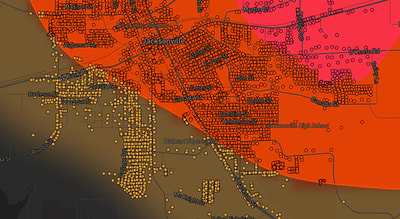
See exactly what you get.
Explore the full Springdale, AR Strike Map free – hail track, address overlay, and CSV download. No account required.
Try the Free Demo →