Victor, CO Hail Storm – July 2025
July 14, 2025 hail storm near Victor, CO. Radar-confirmed hail track and contractor lead lists available.
Max Hail
3"1.5" est.
confirmed
Zones
13
NWS alerts
Radar
475
dual-pol hits
Spotter
4
field reports
NWS WARNING AREA · Victor Metro · Jul 14, 2025
Intelligence Platform
StormSnipe Pro
$49/ mo
Cancel anytime · No contracts
›All 50 states
›No zone limits
›No per-event fees
Subscribe to Pro
Pro renews monthly until canceled · Cancel anytime in the billing portal
What's included
Instant delivery
Every storm published within hours of NOAA confirmation.
Interactive Strike Map
Full radar-confirmed hail track on an interactive map.
Address CSV export
Every affected residential address, export-ready.
Smart alerts
Notified when a storm hits your area. Set zones once.
Nationwide coverage
All 50 states. No zone restrictions. No geographic caps.
Live pipeline
NOAA NEXRAD processed and delivered 24/7.
Address data notice
Pro coverage in California, Vermont, and Oregon includes the confirmed hail track and Strike Map only — no address lists. State data-privacy law treats compiled address lists differently in those three states, so we exclude their addresses from extraction and delivery.
NWS WARNING AREAS · 13
This storm generated 13 NWS alert zones. Pro access covers the complete storm track and all addresses across every zone.
ZONE 1NWS PUB
Victor, CO
Dual-Pol Radar
482 addresses in warning area
Alert issued Mon, Jul 14 · 7:57 PM UTC
1.5"
confirmed
1"
est. (NWS)
ZONE 2NWS BOU
Ramah, CO
Dual-Pol Radar
324 addresses in warning area
Alert issued Mon, Jul 14 · 9:46 PM UTC
2.5"
confirmed
1"
est. (NWS)
ZONE 3NWS BOU
Byers, CO
Dual-Pol Radar
1,246 addresses in warning area
Alert issued Mon, Jul 14 · 10:04 PM UTC
1.5"
confirmed
1"
est. (NWS)
ZONE 4NWS PUB
Calhan, CO
Dual-Pol Radar
1,473 addresses in warning area
Alert issued Mon, Jul 14 · 10:15 PM UTC
2.25"
confirmed
1"
est. (NWS)
ZONE 5NWS BOU
Simla, CO
Dual-Pol Radar
1,215 addresses in warning area
Alert issued Mon, Jul 14 · 10:25 PM UTC
2.5"
confirmed
1.25"
est. (NWS)
ZONE 6NWS CYS
Carpenter, WY
Dual-Pol Radar
635 addresses in warning area
Alert issued Mon, Jul 14 · 10:33 PM UTC
2.5"
confirmed
1.5"
est. (NWS)
ZONE 7NWS BOU
Grover, CO
Dual-Pol Radar
165 addresses in warning area
Alert issued Mon, Jul 14 · 10:35 PM UTC
3"
confirmed
1.25"
est. (NWS)
ZONE 8NWS PUB
Pueblo, CO
Dual-Pol Radar
241 addresses in warning area
Alert issued Mon, Jul 14 · 10:42 PM UTC
2.25"
confirmed
1"
est. (NWS)
ZONE 9NWS PUB
Yoder, CO
Dual-Pol Radar
792 addresses in warning area
Alert issued Mon, Jul 14 · 10:45 PM UTC
2.25"
confirmed
1"
est. (NWS)
ZONE 10NWS BOU
Grover, CO
Dual-Pol Radar
3 addresses in warning area
Alert issued Mon, Jul 14 · 11:09 PM UTC
3"
confirmed
1"
est. (NWS)
ZONE 11NWS PUB
Yoder, CO
Dual-Pol Radar
Alert issued Mon, Jul 14 · 11:15 PM UTC
2.25"
confirmed
1"
est. (NWS)
ZONE 12NWS BOU
Briggsdale, CO
Dual-Pol Radar
205 addresses in warning area
Alert issued Mon, Jul 14 · 11:46 PM UTC
2.25"
confirmed
1"
est. (NWS)
ZONE 13NWS PUB
Olney Springs, CO
Dual-Pol Radar
30 addresses in warning area
Alert issued Tue, Jul 15 · 12:33 AM UTC
1.25"
confirmed
1"
est. (NWS)
Victor, CO saw a concluded hail event on July 14, 2025, with a peak confirmed hail size of 1.25 inches. The storm produced repeated hail alerts through the afternoon and early evening.
What Happened
The storm began sending hail signals by 1:57 PM MDT, when dual-polarization radar detected 1-inch hail in the Victor area. Additional alerts followed at 3:46 PM, 4:04 PM, and 4:15 PM, with radar and spotter verification on two of those alerts.
Hail intensity increased around 4:25 PM MDT, when the reported size reached 1.25 inches. Radar detection confirmed the same size again at 4:35 PM MDT. After that, the storm continued to produce repeated 1-inch hail alerts at 4:42 PM, 4:45 PM, 5:09 PM, 5:15 PM, 5:46 PM, and 6:33 PM MDT.
The alert sequence shows a long-lived hail core with multiple verified passes through the warning area. The event remained focused on hail rather than wind, with the larger hail signal arriving in the middle of the storm cycle.
Damage Assessment
Hail between 1 inch and 1.25 inches is large enough to break weak roof components, mark soft metals, and dent vehicles. In Victor, the strongest confirmed hail likely affected the most exposed surfaces first, including roofs, gutters, flashing, skylight frames, and parked cars.
Fields, siding, and older roof systems are the most likely to show visible impact after a storm of this size. Fresh damage can be subtle from the ground. Creased shingles, scattered granule loss, and edge damage often show up before leaks develop. Metal trim and HVAC fins can also carry clear hail strikes after repeated impacts.
The repeated 1-inch alerts matter for inspection planning. A storm that sustains hail at that level for several hours can leave uneven impact patterns across the warning area. One block may show only minor marks while another section carries heavier roof and vehicle damage.
What Contractors Should Know
Start with the parts of the property that take direct overhead exposure. Roof slopes facing the storm path, ridge caps, valleys, soft metal vents, gutters, downspouts, and window wraps should be checked first. On vehicles, look for round dents on horizontal panels and breakage around mirrors, moldings, and glass edges.
Use the timeline to prioritize canvass routes. The first hail signals came in mid-afternoon, and the strongest verified size appeared around 4:25 PM MDT. That window helps narrow which neighborhoods likely took the hardest hit first. Properties that saw the 4:25 PM to 4:45 PM sequence should receive early attention because the storm carried both radar-derived and spotter-verified hail during that period.
Keep notes tied to the local time of impact. For insurance-backed inspections, document roof type, slope direction, metal accessories, and any visible bruising or fracture lines. If the property is in the Victor metro area, compare the reported hail timing against the storm path before scheduling follow-up work.
Storm Details
- Start Date
- Monday, July 14, 2025
- Last Activity
- Monday, July 14, 2025
- Location
- Victor, CO
- Warning Areas
- 13
- Dual-Pol Radar
- 475
- Spotter Reports
- 4
Preview Strike Map
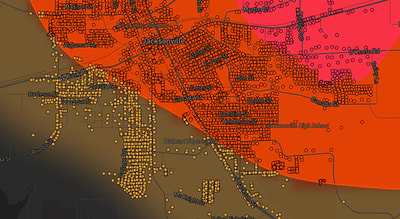
See exactly what you get.
Explore the full Springdale, AR Strike Map free – hail track, address overlay, and CSV download. No account required.
Try the Free Demo →