Colorado Springs, CO Hail Storm – July 2025
July 16, 2025 hail storm near Colorado Springs, CO. Radar-confirmed hail track and contractor lead lists available.
Max Hail
4"2.75" est.
confirmed
Zones
24
NWS alerts
Radar
639
dual-pol hits
Spotter
19
field reports
NWS WARNING AREA · Colorado Springs Metro · Jul 16, 2025
Intelligence Platform
StormSnipe Pro
$49/ mo
Cancel anytime · No contracts
›All 50 states
›No zone limits
›No per-event fees
Subscribe to Pro
Pro renews monthly until canceled · Cancel anytime in the billing portal
What's included
Instant delivery
Every storm published within hours of NOAA confirmation.
Interactive Strike Map
Full radar-confirmed hail track on an interactive map.
Address CSV export
Every affected residential address, export-ready.
Smart alerts
Notified when a storm hits your area. Set zones once.
Nationwide coverage
All 50 states. No zone restrictions. No geographic caps.
Live pipeline
NOAA NEXRAD processed and delivered 24/7.
Address data notice
Pro coverage in California, Vermont, and Oregon includes the confirmed hail track and Strike Map only — no address lists. State data-privacy law treats compiled address lists differently in those three states, so we exclude their addresses from extraction and delivery.
NWS WARNING AREAS · 24
This storm generated 24 NWS alert zones. Pro access covers the complete storm track and all addresses across every zone.
ZONE 1NWS PUB
Colorado Springs, CO
Dual-Pol Radar
4,914 addresses in warning area
Alert issued Wed, Jul 16 · 8:02 PM UTC
1.75"
confirmed
1"
est. (NWS)
ZONE 2NWS ABQ
Raton, NM
Dual-Pol Radar
22 addresses in warning area
Alert issued Wed, Jul 16 · 8:22 PM UTC
3.5"
confirmed
1.5"
est. (NWS)
ZONE 3NWS PUB
Colorado Springs, CO
Dual-Pol Radar
Alert issued Wed, Jul 16 · 8:31 PM UTC
1.75"
confirmed
1"
est. (NWS)
ZONE 4NWS BOU
Arvada, CO
Dual-Pol Radar
2,206 addresses in warning area
Alert issued Wed, Jul 16 · 8:47 PM UTC
1.5"
confirmed
1"
est. (NWS)
ZONE 5NWS ABQ
Raton, NM
Dual-Pol Radar
16 addresses in warning area
Alert issued Wed, Jul 16 · 8:57 PM UTC
3.5"
confirmed
1.75"
est. (NWS)
ZONE 6NWS BOU
Castle Rock, CO
Dual-Pol Radar
19,256 addresses in warning area
Alert issued Wed, Jul 16 · 9:01 PM UTC
1.5"
confirmed
1"
est. (NWS)
ZONE 7NWS PUB
Branson, CO
Dual-Pol Radar
Alert issued Wed, Jul 16 · 9:45 PM UTC
2"
confirmed
1"
est. (NWS)
ZONE 8NWS ABQ
Des Moines, NM
Dual-Pol Radar
237 addresses in warning area
Alert issued Wed, Jul 16 · 9:57 PM UTC
3.25"
confirmed
1.75"
est. (NWS)
ZONE 9NWS PUB
Fountain, CO
Dual-Pol Radar
11,406 addresses in warning area
Alert issued Wed, Jul 16 · 10:11 PM UTC
3.25"
confirmed
2"
est. (NWS)
ZONE 10NWS ABQ
Raton, NM
Dual-Pol Radar
24 addresses in warning area
Alert issued Wed, Jul 16 · 10:12 PM UTC
2.5"
confirmed
1.5"
est. (NWS)
ZONE 11NWS PUB
Westcliffe, CO
Dual-Pol Radar
982 addresses in warning area
Alert issued Wed, Jul 16 · 10:20 PM UTC
4"
confirmed
1"
est. (NWS)
ZONE 12NWS PUB
Calhan, CO
Dual-Pol Radar
842 addresses in warning area
Alert issued Wed, Jul 16 · 10:21 PM UTC
0.75"
confirmed
1"
est. (NWS)
ZONE 13NWS BOU
New Raymer, CO
Dual-Pol Radar
25 addresses in warning area
Alert issued Wed, Jul 16 · 10:22 PM UTC
1.75"
confirmed
1"
est. (NWS)
ZONE 14NWS PUB
Fountain, CO
Dual-Pol Radar
Alert issued Wed, Jul 16 · 10:38 PM UTC
3.25"
confirmed
2"
est. (NWS)
ZONE 15NWS PUB
Calhan, CO
Dual-Pol Radar
975 addresses in warning area
Alert issued Wed, Jul 16 · 10:46 PM UTC
3.25"
confirmed
2"
est. (NWS)
ZONE 16NWS PUB
Wetmore, CO
Dual-Pol Radar
897 addresses in warning area
Alert issued Wed, Jul 16 · 10:49 PM UTC
4"
confirmed
2"
est. (NWS)
ZONE 17NWS PUB
Beulah, CO
Dual-Pol Radar
1,467 addresses in warning area
Alert issued Wed, Jul 16 · 11:05 PM UTC
4"
confirmed
2.75"
est. (NWS)
ZONE 18NWS BOU
Merino, CO
Dual-Pol Radar
81 addresses in warning area
Alert issued Wed, Jul 16 · 11:14 PM UTC
4"
confirmed
1.75"
est. (NWS)
ZONE 19NWS PUB
Rye, CO
Dual-Pol Radar
3 addresses in warning area
Alert issued Wed, Jul 16 · 11:27 PM UTC
3.25"
confirmed
1.5"
est. (NWS)
ZONE 20NWS PUB
Yoder, CO
Dual-Pol Radar
29 addresses in warning area
Alert issued Wed, Jul 16 · 11:28 PM UTC
3.25"
confirmed
1"
est. (NWS)
ZONE 21NWS PUB
Pueblo, CO
Dual-Pol Radar
Alert issued Wed, Jul 16 · 11:45 PM UTC
4"
confirmed
1.5"
est. (NWS)
ZONE 22NWS PUB
Walsenburg, CO
Dual-Pol Radar
254 addresses in warning area
Alert issued Wed, Jul 16 · 11:56 PM UTC
4"
confirmed
2.5"
est. (NWS)
ZONE 23NWS PUB
Fowler, CO
Dual-Pol Radar
1 addresses in warning area
Alert issued Thu, Jul 17 · 12:28 AM UTC
2"
confirmed
1.5"
est. (NWS)
ZONE 24NWS ABQ
Solano, NM
Dual-Pol Radar
7 addresses in warning area
Alert issued Thu, Jul 17 · 1:02 AM UTC
1.25"
confirmed
1"
est. (NWS)
What Happened
A severe hail storm moved across Colorado Springs, CO on July 16, 2025, with hail reaching 2.75 inches during the late afternoon. The event produced 15 NWS hail alerts from 2:02 PM MDT through 6:28 PM MDT, with the strongest reports clustering between 4 PM and 6 PM.
Early alerts near 2:02 PM and 2:31 PM called for 1-inch hail. By 3:45 PM, dual-polarization radar was still supporting 1-inch hail detection. The storm intensified after 4 PM. At 4:11 PM, a radar and spotter-verified alert raised hail to 2 inches. Similar 2-inch alerts followed at 4:38 PM, 4:46 PM, and 4:49 PM, with radar confidence holding through the core of the storm.
The peak came at 5:05 PM MDT, when hail reached 2.75 inches in a radar and spotter-verified alert. Additional alerts held hail in the 1.5-inch to 2.5-inch range through early evening, including a 2.5-inch alert at 5:56 PM and a final 1.5-inch dual-polarization radar alert at 6:28 PM.
Ground reports during the storm described standing and flowing water at the RV Park and nearby roads around Oak Place and Manitou Avenue. The same report noted evacuations at the RV Park, City Hall, and nearby businesses at 2:53 PM MDT.
Damage Assessment
The surface impacts were tied to water and traffic disruption more than a broad damage field in the available reports. At 2:53 PM MDT, spotter-verified reports described standing and flowing water at the RV Park and nearby roads near Oak Place and Manitou Avenue. The same report said the RV Park, City Hall, and other local businesses were evacuated.
No additional field reports were provided in the data, so the confirmed ground truth for this event is limited to water accumulation and evacuation activity in the central Colorado Springs area. The radar alerts show a storm that strengthened through mid- to late afternoon, with repeated hail signatures above 2 inches and one peak report at 2.75 inches. The report record does not include documented tree damage, vehicle damage, or roof impact in the source material provided here.
The timing matters for field teams because the strongest hail threat came after the first 1-inch alerts and before the final evening taper. The heaviest reported size arrived during a window when streets near the RV Park, Oak Place, and Manitou Avenue were already dealing with water on the ground.
What Contractors Should Know
This storm affected a dense metro corridor in Colorado Springs rather than a single isolated suburb. The report location around Oak Place and Manitou Avenue puts response crews in a mixed-use area with businesses, public buildings, and residential access routes close together. Access checks should start with the road network around the RV Park and City Hall, then move outward through the nearby commercial blocks.
The source material points to two operational issues. First, water was already standing and flowing in the report area at 2:53 PM MDT. Second, evacuations were underway at the RV Park, City Hall, and nearby businesses. Crews entering the area after the storm should expect temporary access limits, blocked curb lines, and delayed customer contact at facilities that cleared people during the event.
Storm Details
- Start Date
- Wednesday, July 16, 2025
- Last Activity
- Wednesday, July 16, 2025
- Location
- Colorado Springs, CO
- Warning Areas
- 24
- Dual-Pol Radar
- 639
- Spotter Reports
- 19
Preview Strike Map
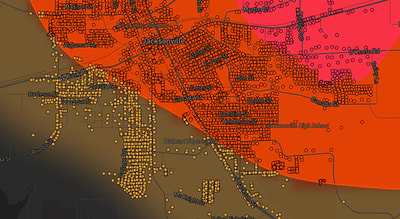
See exactly what you get.
Explore the full Springdale, AR Strike Map free – hail track, address overlay, and CSV download. No account required.
Try the Free Demo →