Gildford, MT Hail Storm – July 2025
July 17, 2025 hail storm near Gildford, MT. Radar-confirmed hail track and contractor lead lists available.
Max Hail
4"2" est.
confirmed
Zones
17
NWS alerts
Radar
447
dual-pol hits
Spotter
16
field reports
NWS WARNING AREA · Gildford Metro · Jul 17, 2025
Intelligence Platform
StormSnipe Pro
$49/ mo
Cancel anytime · No contracts
›All 50 states
›No zone limits
›No per-event fees
Subscribe to Pro
Pro renews monthly until canceled · Cancel anytime in the billing portal
What's included
Instant delivery
Every storm published within hours of NOAA confirmation.
Interactive Strike Map
Full radar-confirmed hail track on an interactive map.
Address CSV export
Every affected residential address, export-ready.
Smart alerts
Notified when a storm hits your area. Set zones once.
Nationwide coverage
All 50 states. No zone restrictions. No geographic caps.
Live pipeline
NOAA NEXRAD processed and delivered 24/7.
Address data notice
Pro coverage in California, Vermont, and Oregon includes the confirmed hail track and Strike Map only — no address lists. State data-privacy law treats compiled address lists differently in those three states, so we exclude their addresses from extraction and delivery.
NWS WARNING AREAS · 17
This storm generated 17 NWS alert zones. Pro access covers the complete storm track and all addresses across every zone.
ZONE 1NWS TFX
Gildford, MT
Dual-Pol Radar
226 addresses in warning area
Alert issued Thu, Jul 17 · 9:39 PM UTC
1.75"
confirmed
1"
est. (NWS)
ZONE 2NWS TFX
Conrad, MT
Dual-Pol Radar
198 addresses in warning area
Alert issued Thu, Jul 17 · 9:48 PM UTC
2.25"
confirmed
1"
est. (NWS)
ZONE 3NWS TFX
Chinook, MT
Dual-Pol Radar
86 addresses in warning area
Alert issued Thu, Jul 17 · 10:05 PM UTC
2.5"
confirmed
1.75"
est. (NWS)
ZONE 4NWS TFX
Chester, MT
Dual-Pol Radar
1 addresses in warning area
Alert issued Thu, Jul 17 · 10:29 PM UTC
1.5"
confirmed
1"
est. (NWS)
ZONE 5NWS TFX
Dutton, MT
Dual-Pol Radar
93 addresses in warning area
Alert issued Thu, Jul 17 · 10:34 PM UTC
2.25"
confirmed
1"
est. (NWS)
ZONE 6NWS TFX
Chinook, MT
Dual-Pol Radar
30 addresses in warning area
Alert issued Thu, Jul 17 · 10:53 PM UTC
3"
confirmed
1.75"
est. (NWS)
ZONE 7NWS TFX
Dodson, MT
Dual-Pol Radar
10 addresses in warning area
Alert issued Thu, Jul 17 · 11:38 PM UTC
3"
confirmed
1.75"
est. (NWS)
ZONE 8NWS GGW
Zortman, MT
Dual-Pol Radar
32 addresses in warning area
Alert issued Thu, Jul 17 · 11:47 PM UTC
3"
confirmed
1.75"
est. (NWS)
ZONE 9NWS TFX
Winifred, MT
Dual-Pol Radar
223 addresses in warning area
Alert issued Fri, Jul 18 · 12:19 AM UTC
3"
confirmed
1"
est. (NWS)
ZONE 10NWS GGW
Zortman, MT
Dual-Pol Radar
66 addresses in warning area
Alert issued Fri, Jul 18 · 12:42 AM UTC
4"
confirmed
1.25"
est. (NWS)
ZONE 11NWS TFX
Grass Range, MT
Dual-Pol Radar
273 addresses in warning area
Alert issued Fri, Jul 18 · 1:09 AM UTC
3.5"
confirmed
1"
est. (NWS)
ZONE 12NWS GGW
Jordan, MT
Dual-Pol Radar
Alert issued Fri, Jul 18 · 1:42 AM UTC
4"
confirmed
2"
est. (NWS)
ZONE 13NWS GGW
Winnett, MT
Dual-Pol Radar
24 addresses in warning area
Alert issued Fri, Jul 18 · 1:47 AM UTC
4"
confirmed
1.25"
est. (NWS)
ZONE 14NWS GGW
Mosby, MT
Dual-Pol Radar
239 addresses in warning area
Alert issued Fri, Jul 18 · 2:42 AM UTC
4"
confirmed
1.75"
est. (NWS)
ZONE 15NWS GGW
Angela, MT
Dual-Pol Radar
64 addresses in warning area
Alert issued Fri, Jul 18 · 2:45 AM UTC
2.5"
confirmed
1"
est. (NWS)
ZONE 16NWS BYZ
Melstone, MT
Dual-Pol Radar
82 addresses in warning area
Alert issued Fri, Jul 18 · 2:56 AM UTC
3.25"
confirmed
1.75"
est. (NWS)
ZONE 17NWS GGW
Terry, MT
Dual-Pol Radar
27 addresses in warning area
Alert issued Fri, Jul 18 · 3:44 AM UTC
2"
confirmed
1"
est. (NWS)
What Happened
A severe hail storm moved through Gildford, Montana, on July 17, 2025, with verified hail up to 1.75 inches and repeated NWS alerts through the afternoon and evening. The storm produced spotter-confirmed hail reports and radar-derived hail detections across a long-lived warning area.
The first field report came at 3:38 PM MDT, when a spotter reported hail accumulated to 2 inches in depth and estimated stones near 7/8 inch. Minutes later, at 3:39 PM MDT, an NWS alert called for 1-inch hail with radar and spotter verification. A second alert followed at 3:48 PM MDT with the same hail size and confidence.
By 4:05 PM MDT, dual-polarization radar detected 1.75-inch hail. Additional radar-derived alerts at 4:29 PM MDT and 4:34 PM MDT kept the hail threat near 1 inch, then another 1.75-inch detection came at 4:53 PM MDT. The storm held together into the evening. Alerts at 5:38 PM MDT, 6:19 PM MDT, and 7:09 PM MDT continued to show hail in the warning area, with spotter-verified 1-inch hail later in the event.
A second spotter report at 4:13 PM MDT described nickel-size hail and a 52 mph wind gust that broke a tree branch 6 to 12 inches in diameter. The report placed wind and hail impacts in the same storm core during the late afternoon phase.
Damage Assessment
The field reports show a mixed hail and wind event, not just a brief hail pass. One report noted hail accumulation to 2 inches in depth. Another described nickel-size hail along with a 52 mph gust strong enough to break a substantial tree branch. The storm produced both surface accumulation and wind-driven debris in the same general time window.
The hail size in the spotter reports ran below the 1.75-inch radar peak, but the reports still confirm a storm capable of repeated hail production over several hours. The 3:38 PM MDT observation and the 4:13 PM MDT wind report bracket the main impact period in Gildford. That timing matches the sequence of NWS alerts that kept the area under hail threat from mid-afternoon into early evening.
For roofing and exterior inspections, the first pass should focus on north- and west-facing slopes, vents, gutters, window screens, and siding at impact height. The storm produced multiple hail indications, so contractors should expect a patchy damage pattern rather than a single uniform swath. On properties with older shingles, check for bruising, displaced granules, and soft strikes near ridges and edges.
The wind report adds another layer. A branch break of that size points to enough localized force to send debris across yards, fences, and rooflines. Crews should document limb impacts, denting on soft metals, and collateral damage where falling branches may have struck structures, vehicles, or outbuildings. In rural settings around Gildford, outbuildings, grain bins, and metal trim often show the cleanest evidence of the storm path.
Storm Details
- Start Date
- Thursday, July 17, 2025
- Last Activity
- Thursday, July 17, 2025
- Location
- Gildford, MT
- Warning Areas
- 17
- Dual-Pol Radar
- 447
- Spotter Reports
- 16
Preview Strike Map
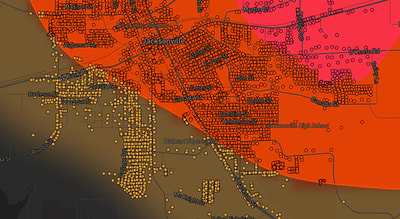
See exactly what you get.
Explore the full Springdale, AR Strike Map free – hail track, address overlay, and CSV download. No account required.
Try the Free Demo →