Ekalaka, MT Hail Storm – July 2025
July 19, 2025 hail storm near Ekalaka, MT. Radar-confirmed hail track and contractor lead lists available.
Max Hail
4"2.5" est.
confirmed
Zones
24
NWS alerts
Radar
358
dual-pol hits
Spotter
33
field reports
NWS WARNING AREA · Ekalaka Metro · Jul 19, 2025
Intelligence Platform
StormSnipe Pro
$49/ mo
Cancel anytime · No contracts
›All 50 states
›No zone limits
›No per-event fees
Subscribe to Pro
Pro renews monthly until canceled · Cancel anytime in the billing portal
What's included
Instant delivery
Every storm published within hours of NOAA confirmation.
Interactive Strike Map
Full radar-confirmed hail track on an interactive map.
Address CSV export
Every affected residential address, export-ready.
Smart alerts
Notified when a storm hits your area. Set zones once.
Nationwide coverage
All 50 states. No zone restrictions. No geographic caps.
Live pipeline
NOAA NEXRAD processed and delivered 24/7.
Address data notice
Pro coverage in California, Vermont, and Oregon includes the confirmed hail track and Strike Map only — no address lists. State data-privacy law treats compiled address lists differently in those three states, so we exclude their addresses from extraction and delivery.
NWS WARNING AREAS · 24
This storm generated 24 NWS alert zones. Pro access covers the complete storm track and all addresses across every zone.
ZONE 1NWS BYZ
Ekalaka, MT
Dual-Pol Radar
10 addresses in warning area
Alert issued Sat, Jul 19 · 10:24 PM UTC
2.75"
confirmed
2"
est. (NWS)
ZONE 2NWS GGW
Circle, MT
Dual-Pol Radar
181 addresses in warning area
Alert issued Sat, Jul 19 · 10:40 PM UTC
4"
confirmed
1.75"
est. (NWS)
ZONE 3NWS BYZ
Ekalaka, MT
Dual-Pol Radar
22 addresses in warning area
Alert issued Sat, Jul 19 · 11:03 PM UTC
2.75"
confirmed
1"
est. (NWS)
ZONE 4NWS BYZ
Hammond, MT
Dual-Pol Radar
10 addresses in warning area
Alert issued Sat, Jul 19 · 11:29 PM UTC
2.75"
confirmed
1.25"
est. (NWS)
ZONE 5NWS GGW
Lindsay, MT
Dual-Pol Radar
13 addresses in warning area
Alert issued Sat, Jul 19 · 11:43 PM UTC
4"
confirmed
2.5"
est. (NWS)
ZONE 6NWS GGW
Terry, MT
Dual-Pol Radar
7 addresses in warning area
Alert issued Sat, Jul 19 · 11:44 PM UTC
3"
confirmed
1.5"
est. (NWS)
ZONE 7NWS BYZ
Ismay, MT
Dual-Pol Radar
28 addresses in warning area
Alert issued Sat, Jul 19 · 11:50 PM UTC
3"
confirmed
2"
est. (NWS)
ZONE 8NWS BYZ
Ismay, MT
Dual-Pol Radar
Alert issued Sun, Jul 20 · 12:30 AM UTC
3"
confirmed
2"
est. (NWS)
ZONE 9NWS UNR
Hill City, SD
Dual-Pol Radar
Alert issued Sun, Jul 20 · 12:39 AM UTC
2"
confirmed
1.5"
est. (NWS)
ZONE 10NWS GGW
Fallon, MT
Dual-Pol Radar
613 addresses in warning area
Alert issued Sun, Jul 20 · 12:44 AM UTC
2.25"
confirmed
2"
est. (NWS)
ZONE 11NWS GGW
Peerless, MT
Dual-Pol Radar
5 addresses in warning area
Alert issued Sun, Jul 20 · 1:00 AM UTC
0.75"
confirmed
1"
est. (NWS)
ZONE 12NWS UNR
Rapid City, SD
Dual-Pol Radar
Alert issued Sun, Jul 20 · 1:17 AM UTC
2.25"
confirmed
1.25"
est. (NWS)
ZONE 13NWS BYZ
Plevna, MT
NWS Warning
Alert issued Sun, Jul 20 · 1:22 AM UTC
1.75"
est. (NWS)
ZONE 14NWS GGW
Larslan, MT
Dual-Pol Radar
16 addresses in warning area
Alert issued Sun, Jul 20 · 1:30 AM UTC
2.75"
confirmed
1"
est. (NWS)
ZONE 15NWS UNR
Rapid City, SD
Dual-Pol Radar
Alert issued Sun, Jul 20 · 1:52 AM UTC
2"
confirmed
1.5"
est. (NWS)
ZONE 16NWS BYZ
Ismay, MT
Dual-Pol Radar
Alert issued Sun, Jul 20 · 1:59 AM UTC
1"
confirmed
1"
est. (NWS)
ZONE 17NWS UNR
New Underwood, SD
Dual-Pol Radar
Alert issued Sun, Jul 20 · 2:02 AM UTC
1"
confirmed
1"
est. (NWS)
ZONE 18NWS BYZ
Baker, MT
Dual-Pol Radar
21 addresses in warning area
Alert issued Sun, Jul 20 · 2:12 AM UTC
2.5"
confirmed
1"
est. (NWS)
ZONE 19NWS UNR
Hermosa, SD
Dual-Pol Radar
Alert issued Sun, Jul 20 · 2:23 AM UTC
4"
confirmed
1.25"
est. (NWS)
ZONE 20NWS UNR
Scenic, SD
Dual-Pol Radar
Alert issued Sun, Jul 20 · 3:08 AM UTC
4"
confirmed
2.5"
est. (NWS)
ZONE 21NWS BYZ
Ekalaka, MT
Dual-Pol Radar
Alert issued Sun, Jul 20 · 3:14 AM UTC
2.5"
confirmed
1.5"
est. (NWS)
ZONE 22NWS UNR
Buffalo, SD
Dual-Pol Radar
Alert issued Sun, Jul 20 · 3:29 AM UTC
1.5"
confirmed
1.5"
est. (NWS)
ZONE 23NWS UNR
Kyle, SD
Dual-Pol Radar
Alert issued Sun, Jul 20 · 3:59 AM UTC
3.25"
confirmed
2.5"
est. (NWS)
ZONE 24NWS UNR
Interior, SD
Dual-Pol Radar
Alert issued Sun, Jul 20 · 4:51 AM UTC
3"
confirmed
1.5"
est. (NWS)
What Happened
A severe hail storm moved through Ekalaka, MT on 2025-07-19 and produced confirmed 2-inch hail during the late afternoon and evening. Nine NWS alerts tracked the storm from 4:24 PM MDT through 9:14 PM MDT, with radar confidence levels shifting from dual-polarization detections to spotter-verified reports.
The first alert at 4:24 PM MDT noted 2-inch hail. Later alerts held near the 1-inch to 2-inch range, including 1.25-inch hail at 5:29 PM MDT and repeat 2-inch hail at 5:50 PM MDT and 6:30 PM MDT. A 7:22 PM MDT alert listed 1.75-inch hail on warning-based confidence alone, followed by dual-polarization radar detections of 1-inch hail at 7:59 PM MDT. By 8:12 PM MDT and again at 9:14 PM MDT, the storm carried radar plus spotter verification.
Field reports matched the storm structure. At 9:38 PM MDT, a spotter reported, "Mostly peas with a few golf balls." That report came in at 1.75 inches and was logged twice in the ground-truth feed. The sequence shows a storm that maintained hail production into the evening, with the most reliable observations arriving near the end of the event.
Damage Assessment
The ground reports point to mixed hail at the surface. The spotter account of mostly pea-sized hail with a few golf balls indicates a narrow band of larger stones within a broader field of smaller hail. That pattern fits the alert sequence, which held several 1-inch to 2-inch readings across the event window.
In Ekalaka, the likely impact varied block by block. Roofs, soft metal surfaces, vents, and exposed plastics would have taken the brunt of the larger stones where the golf ball hail fell. Vehicles left outside during the strongest bursts were exposed to denting on hoods, roofs, mirrors, and trim. Smaller hail fell around the larger stones, so some locations likely saw scattered damage while others stayed near nuisance-level impact.
The most important detail for field crews is the spread between the radar alerts and the spotter report. The alerts show repeated hail detection over several hours. The report at 9:38 PM MDT shows larger stones reaching the surface after the earlier radar detections. For contractors, that means the event cannot be treated as a single-size hail swath. The same storm produced more than one hail regime across the evening.
What Contractors Should Know
Start with the late-afternoon to evening window. The storm produced verified hail from 4:24 PM MDT through 9:14 PM MDT, so canvass crews should focus on properties that were exposed during that span. Homes, shops, farm buildings, and parked vehicles in and around Ekalaka may show different damage profiles depending on when the larger stones passed overhead.
Roof inspections should not stop at obvious punctures. A storm that mixed pea hail with a few golf balls can leave bruised shingles, lifted edges, dented flashing, and damaged accessory components without obvious openings from the street. Check gutters, downspouts, roof penetrations, skylights, and soft metal wraps. Look closely at south- and west-facing exposures where the strongest afternoon storm core may have hit first.
Storm Details
- Start Date
- Saturday, July 19, 2025
- Last Activity
- Saturday, July 19, 2025
- Location
- Ekalaka, MT
- Warning Areas
- 24
- Dual-Pol Radar
- 358
- Spotter Reports
- 33
Preview Strike Map
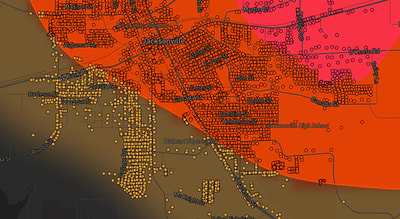
See exactly what you get.
Explore the full Springdale, AR Strike Map free – hail track, address overlay, and CSV download. No account required.
Try the Free Demo →