Wheatland, WY Hail Storm – July 2025
July 24, 2025 hail storm near Wheatland, WY. Radar-confirmed hail track and contractor lead lists available.
Max Hail
3.5"1.5" est.
confirmed
Zones
16
NWS alerts
Radar
914
dual-pol hits
Spotter
19
field reports
NWS WARNING AREA · Wheatland Metro · Jul 24, 2025
Intelligence Platform
StormSnipe Pro
$49/ mo
Cancel anytime · No contracts
›All 50 states
›No zone limits
›No per-event fees
Subscribe to Pro
Pro renews monthly until canceled · Cancel anytime in the billing portal
What's included
Instant delivery
Every storm published within hours of NOAA confirmation.
Interactive Strike Map
Full radar-confirmed hail track on an interactive map.
Address CSV export
Every affected residential address, export-ready.
Smart alerts
Notified when a storm hits your area. Set zones once.
Nationwide coverage
All 50 states. No zone restrictions. No geographic caps.
Live pipeline
NOAA NEXRAD processed and delivered 24/7.
Address data notice
Pro coverage in California, Vermont, and Oregon includes the confirmed hail track and Strike Map only — no address lists. State data-privacy law treats compiled address lists differently in those three states, so we exclude their addresses from extraction and delivery.
NWS WARNING AREAS · 16
This storm generated 16 NWS alert zones. Pro access covers the complete storm track and all addresses across every zone.
ZONE 1NWS CYS
Wheatland, WY
Dual-Pol Radar
69 addresses in warning area
Alert issued Thu, Jul 24 · 7:14 PM UTC
3"
confirmed
1.5"
est. (NWS)
ZONE 2NWS CYS
Lusk, WY
Dual-Pol Radar
Alert issued Thu, Jul 24 · 9:38 PM UTC
2"
confirmed
1"
est. (NWS)
ZONE 3NWS BOU
Platteville, CO
Dual-Pol Radar
3,641 addresses in warning area
Alert issued Thu, Jul 24 · 9:40 PM UTC
2.25"
confirmed
1"
est. (NWS)
ZONE 4NWS BOU
Greeley, CO
Dual-Pol Radar
27,033 addresses in warning area
Alert issued Thu, Jul 24 · 10:02 PM UTC
2.5"
confirmed
1"
est. (NWS)
ZONE 5NWS CYS
Cheyenne, WY
Dual-Pol Radar
62 addresses in warning area
Alert issued Thu, Jul 24 · 10:23 PM UTC
3"
confirmed
1.25"
est. (NWS)
ZONE 6NWS BOU
Hudson, CO
Dual-Pol Radar
8,702 addresses in warning area
Alert issued Thu, Jul 24 · 10:26 PM UTC
2.25"
confirmed
1"
est. (NWS)
ZONE 7NWS CYS
Alliance, NE
Dual-Pol Radar
45 addresses in warning area
Alert issued Thu, Jul 24 · 10:30 PM UTC
2.25"
confirmed
1"
est. (NWS)
ZONE 8NWS BOU
Roggen, CO
Dual-Pol Radar
530 addresses in warning area
Alert issued Thu, Jul 24 · 10:42 PM UTC
2.75"
confirmed
1"
est. (NWS)
ZONE 9NWS CYS
Carpenter, WY
Dual-Pol Radar
666 addresses in warning area
Alert issued Thu, Jul 24 · 10:54 PM UTC
3"
confirmed
1"
est. (NWS)
ZONE 10NWS BOU
Grover, CO
Dual-Pol Radar
56 addresses in warning area
Alert issued Thu, Jul 24 · 11:01 PM UTC
3.5"
confirmed
1"
est. (NWS)
ZONE 11NWS BOU
Wiggins, CO
Dual-Pol Radar
33 addresses in warning area
Alert issued Thu, Jul 24 · 11:12 PM UTC
3.5"
confirmed
1"
est. (NWS)
ZONE 12NWS BOU
Ault, CO
Dual-Pol Radar
26,009 addresses in warning area
Alert issued Thu, Jul 24 · 11:22 PM UTC
1.75"
confirmed
1"
est. (NWS)
ZONE 13NWS CYS
Gering, NE
Dual-Pol Radar
54 addresses in warning area
Alert issued Thu, Jul 24 · 11:22 PM UTC
2.25"
confirmed
1"
est. (NWS)
ZONE 14NWS CYS
Gering, NE
Dual-Pol Radar
1,527 addresses in warning area
Alert issued Thu, Jul 24 · 11:39 PM UTC
2.25"
confirmed
1"
est. (NWS)
ZONE 15NWS BOU
Deer Trail, CO
Dual-Pol Radar
968 addresses in warning area
Alert issued Fri, Jul 25 · 12:12 AM UTC
3.5"
confirmed
1"
est. (NWS)
ZONE 16NWS CYS
Harrisburg, NE
Dual-Pol Radar
71 addresses in warning area
Alert issued Fri, Jul 25 · 12:52 AM UTC
1.75"
confirmed
1"
est. (NWS)
What Happened
A severe hail storm moved through Wheatland, Wyoming, on July 24, 2025, producing 1.5-inch hail at peak intensity and multiple later hail bursts through the afternoon and evening. The storm remained active for hours, with eight hail alerts issued across the day.
The first alert came at 1:14 PM MDT with dual-polarization radar support for 1.5-inch hail. Later alerts repeated hail signals at 3:38 PM, 4:30 PM, 6:52 PM, and several times in the late afternoon and evening. Radar confidence varied between dual-polarization detections and radar plus spotter verification, which placed the storm on a repeated hail-producing track rather than a single short-lived burst.
At 5:00 PM MDT, a spotter-verified report relayed video sent to an emergency manager showing water flowing over a county road. The report listed 0.75-inch hail at the same time. That field report lines up with the period when the storm was still cycling through hail cores and heavier rainfall.
The sequence showed a storm that did not peak once and fade. It pulsed. It returned to hail several times as it moved across the Wheatland metro area and surrounding roads.
Damage Assessment
Field reports point to localized impacts tied to the strongest rain and hail core near county roads. The 5:00 PM MDT report of water running over a county road is the clearest ground observation in the event record. It came with spotter verification and video sent to an emergency manager, which gives the report added weight compared with radar alone.
The storm produced repeated hail alerts after the initial 1:14 PM MDT peak, including several 1-inch hail notices and one 1.25-inch hail report verified by radar and a spotter at 4:23 PM MDT. That pattern suggests intermittent surface impact rather than a single clean swath of damage. Vehicles, siding, gutters, and exposed roofing near the storm path would have faced repeated hail exposure during the afternoon cycle.
The field report did not describe widespread structural damage, tree loss, or roof punctures. It documented flooding across a county road, which indicates drainage problems and fast runoff where rain rates were strongest. In a storm like this, the first visible impact is often on pavement, roadside ditches, and low spots before broader property issues show up.
The storm record also includes two identical 5:00 PM MDT reports. Duplicate reporting of the same video suggests the same event reached multiple local channels. The important detail is the road flooding itself, not a separate damage type.
What Contractors Should Know
This event stayed active long enough to create more than one inspection window. Contractors working Wheatland and nearby roads should treat July 24 as a multi-pass hail event, not a one-time strike. The radar and spotter record shows repeated hail alerts from early afternoon into the evening, so roof and exterior checks should focus on properties that could have been hit more than once.
Storm Details
- Start Date
- Thursday, July 24, 2025
- Last Activity
- Thursday, July 24, 2025
- Location
- Wheatland, WY
- Warning Areas
- 16
- Dual-Pol Radar
- 914
- Spotter Reports
- 19
Preview Strike Map
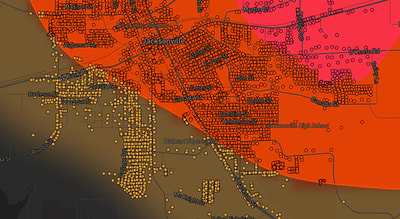
See exactly what you get.
Explore the full Springdale, AR Strike Map free – hail track, address overlay, and CSV download. No account required.
Try the Free Demo →