Colorado Springs, CO Hail Storm – July 2025
July 29, 2025 hail storm near Colorado Springs, CO. Radar-confirmed hail track and contractor lead lists available.
Max Hail
4"2.5" est.
confirmed
Zones
13
NWS alerts
Radar
362
dual-pol hits
Spotter
11
field reports
NWS WARNING AREA · Colorado Springs Metro · Jul 29, 2025
Intelligence Platform
StormSnipe Pro
$49/ mo
Cancel anytime · No contracts
›All 50 states
›No zone limits
›No per-event fees
Subscribe to Pro
Pro renews monthly until canceled · Cancel anytime in the billing portal
What's included
Instant delivery
Every storm published within hours of NOAA confirmation.
Interactive Strike Map
Full radar-confirmed hail track on an interactive map.
Address CSV export
Every affected residential address, export-ready.
Smart alerts
Notified when a storm hits your area. Set zones once.
Nationwide coverage
All 50 states. No zone restrictions. No geographic caps.
Live pipeline
NOAA NEXRAD processed and delivered 24/7.
Address data notice
Pro coverage in California, Vermont, and Oregon includes the confirmed hail track and Strike Map only — no address lists. State data-privacy law treats compiled address lists differently in those three states, so we exclude their addresses from extraction and delivery.
NWS WARNING AREAS · 13
This storm generated 13 NWS alert zones. Pro access covers the complete storm track and all addresses across every zone.
ZONE 1NWS PUB
Colorado Springs, CO
Dual-Pol Radar
6,705 addresses in warning area
Alert issued Tue, Jul 29 · 8:22 PM UTC
2"
confirmed
1"
est. (NWS)
ZONE 2NWS GLD
Parks, NE
Dual-Pol Radar
47 addresses in warning area
Alert issued Tue, Jul 29 · 8:37 PM UTC
1.5"
confirmed
1"
est. (NWS)
ZONE 3NWS GLD
Bethune, CO
Dual-Pol Radar
Alert issued Tue, Jul 29 · 8:50 PM UTC
2"
confirmed
1"
est. (NWS)
ZONE 4NWS GLD
Wray, CO
Dual-Pol Radar
Alert issued Tue, Jul 29 · 8:57 PM UTC
3"
confirmed
1.25"
est. (NWS)
ZONE 5NWS BOU
Ramah, CO
Dual-Pol Radar
59 addresses in warning area
Alert issued Tue, Jul 29 · 9:02 PM UTC
4"
confirmed
2.5"
est. (NWS)
ZONE 6NWS PUB
Boone, CO
Dual-Pol Radar
2 addresses in warning area
Alert issued Tue, Jul 29 · 9:16 PM UTC
0.75"
confirmed
1"
est. (NWS)
ZONE 7NWS BOU
Ramah, CO
Dual-Pol Radar
Alert issued Tue, Jul 29 · 9:40 PM UTC
4"
confirmed
2"
est. (NWS)
ZONE 8NWS PUB
Yoder, CO
Dual-Pol Radar
221 addresses in warning area
Alert issued Tue, Jul 29 · 10:02 PM UTC
1.75"
confirmed
1"
est. (NWS)
ZONE 9NWS BOU
Rush, CO
Dual-Pol Radar
15 addresses in warning area
Alert issued Tue, Jul 29 · 10:12 PM UTC
3.75"
confirmed
1.75"
est. (NWS)
ZONE 10NWS LBF
Wauneta, NE
Dual-Pol Radar
123 addresses in warning area
Alert issued Tue, Jul 29 · 10:18 PM UTC
2"
confirmed
1"
est. (NWS)
ZONE 11NWS GLD
Danbury, NE
Dual-Pol Radar
217 addresses in warning area
Alert issued Tue, Jul 29 · 10:42 PM UTC
3"
confirmed
1"
est. (NWS)
ZONE 12NWS BOU
Holyoke, CO
Dual-Pol Radar
Alert issued Tue, Jul 29 · 11:26 PM UTC
2"
confirmed
1.25"
est. (NWS)
ZONE 13NWS PUB
Arlington, CO
Dual-Pol Radar
Alert issued Tue, Jul 29 · 11:54 PM UTC
2.75"
confirmed
1"
est. (NWS)
What Happened
A severe hail storm moved through Colorado Springs, CO, on July 29, 2025, with peak verified hail reaching 2.5 inches in the afternoon. The storm produced multiple warning areas from 2:22 PM to 5:54 PM MDT and ended with a line of confirmed large hail reports across the metro.
The first warning area at 2:22 PM MDT called for 1-inch hail using dual-polarization radar confidence. At 3:02 PM MDT, the hail threat increased to 2.5 inches with radar and spotter verification. Additional warnings followed at 3:16 PM MDT for 1 inch, 3:40 PM MDT for 2 inches, 4:02 PM MDT for 1 inch, 4:12 PM MDT for 1.75 inches, 5:26 PM MDT for 1.25 inches, and 5:54 PM MDT for 1 inch.
Field reports lined up with the stronger mid-afternoon phase. Spotter-based reports at 3:36 PM MDT and 3:41 PM MDT described hen egg hail at 2.0 inches and baseball hail at 2.75 inches. Those reports place the most intense hail in the late afternoon, after the first round of 1-inch warnings had already been issued.
Damage Assessment
The field reports show a narrow window of more damaging hail in Colorado Springs, centered in the late afternoon. The 2.75-inch mPING reports at 3:41 PM MDT and the 2.0-inch report at 3:36 PM MDT confirm a brief but stronger hail core within the broader storm cluster.
The warning sequence also points to a storm that stayed active for several hours across the metro. Early warnings were smaller, then the hail threat rose sharply before easing back into a string of 1-inch to 1.75-inch alerts. That pattern fits a storm with repeated hail cores, not a single short burst.
For surface impact, the verified reports support the highest concern in areas that fell under the 3 PM to 4 PM warning areas. Vehicles, roof surfaces, gutters, soft metals, and exposed horizontal equipment in those zones are the first items to inspect. In Colorado Springs, that matters most where the heavier hail reports overlapped the main urban corridor and nearby commercial strips.
The report set does not indicate a broad wind-driven damage field. The issue here was hail size and repetition. Crews should focus on roof slopes, ridge lines, skylight lenses, condenser fins, and vehicle inventory that would have been exposed during the late-afternoon hail peak.
What Contractors Should Know
This was a metro-scale hail event with several rounds of warnings, not a single isolated strike. That means claim volume may be spread across multiple neighborhoods and job types, with the strongest demand likely tied to the areas that sat under the 3:02 PM, 3:40 PM, and 4:12 PM warning areas.
Start with the buildings that were most exposed during the afternoon commute window. Flat commercial roofs, apartment complexes, auto lots, and homes with older composition shingles deserve early canvassing. The verified 2.75-inch and 2.0-inch reports give you a clear threshold for prioritizing those addresses over the smaller-hail warning areas that came before and after.
Storm Details
- Start Date
- Tuesday, July 29, 2025
- Last Activity
- Tuesday, July 29, 2025
- Location
- Colorado Springs, CO
- Warning Areas
- 13
- Dual-Pol Radar
- 362
- Spotter Reports
- 11
Preview Strike Map
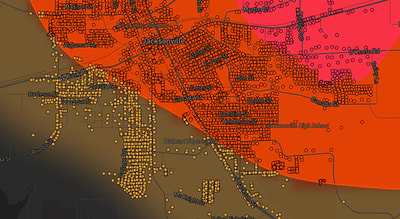
See exactly what you get.
Explore the full Springdale, AR Strike Map free – hail track, address overlay, and CSV download. No account required.
Try the Free Demo →