McLeod, MT Hail Storm – July 2025
July 31, 2025 hail storm near McLeod, MT. Radar-confirmed hail track and contractor lead lists available.
Max Hail
2.5"1.5" est.
confirmed
Zones
9
NWS alerts
Radar
170
dual-pol hits
Spotter
7
field reports
NWS WARNING AREA · McLeod Metro · Jul 31, 2025
Intelligence Platform
StormSnipe Pro
$49/ mo
Cancel anytime · No contracts
›All 50 states
›No zone limits
›No per-event fees
Subscribe to Pro
Pro renews monthly until canceled · Cancel anytime in the billing portal
What's included
Instant delivery
Every storm published within hours of NOAA confirmation.
Interactive Strike Map
Full radar-confirmed hail track on an interactive map.
Address CSV export
Every affected residential address, export-ready.
Smart alerts
Notified when a storm hits your area. Set zones once.
Nationwide coverage
All 50 states. No zone restrictions. No geographic caps.
Live pipeline
NOAA NEXRAD processed and delivered 24/7.
Address data notice
Pro coverage in California, Vermont, and Oregon includes the confirmed hail track and Strike Map only — no address lists. State data-privacy law treats compiled address lists differently in those three states, so we exclude their addresses from extraction and delivery.
NWS WARNING AREAS · 9
This storm generated 9 NWS alert zones. Pro access covers the complete storm track and all addresses across every zone.
ZONE 1NWS BYZ
McLeod, MT
Dual-Pol Radar
38 addresses in warning area
Alert issued Thu, Jul 31 · 9:57 PM UTC
1.25"
confirmed
1"
est. (NWS)
ZONE 2NWS MSO
Clinton, MT
Dual-Pol Radar
546 addresses in warning area
Alert issued Thu, Jul 31 · 11:28 PM UTC
1.75"
confirmed
1"
est. (NWS)
ZONE 3NWS TFX
White Sulphur Springs, MT
Dual-Pol Radar
15 addresses in warning area
Alert issued Thu, Jul 31 · 11:44 PM UTC
1.5"
confirmed
1"
est. (NWS)
ZONE 4NWS TFX
Helena, MT
Dual-Pol Radar
3,271 addresses in warning area
Alert issued Fri, Aug 1 · 1:22 AM UTC
2"
confirmed
1.25"
est. (NWS)
ZONE 5NWS BYZ
Clearmont, WY
Dual-Pol Radar
Alert issued Fri, Aug 1 · 2:04 AM UTC
2.5"
confirmed
1.5"
est. (NWS)
ZONE 6NWS BYZ
Broadus, MT
Dual-Pol Radar
21 addresses in warning area
Alert issued Fri, Aug 1 · 2:38 AM UTC
2"
confirmed
1"
est. (NWS)
ZONE 7NWS BYZ
Arvada, WY
Dual-Pol Radar
Alert issued Fri, Aug 1 · 2:42 AM UTC
2.5"
confirmed
1.5"
est. (NWS)
ZONE 8NWS TFX
Great Falls, MT
Dual-Pol Radar
9,936 addresses in warning area
Alert issued Fri, Aug 1 · 3:03 AM UTC
2.25"
confirmed
1"
est. (NWS)
ZONE 9NWS RIW
Buffalo, WY
Dual-Pol Radar
Alert issued Fri, Aug 1 · 3:18 AM UTC
2"
confirmed
1"
est. (NWS)
On July 31, 2025, McLeod, MT saw a concluded hail event with a maximum confirmed size of 1.5 inches. Four NWS alerts tracked the storm across the evening, with dual-polarization radar confidence on each detection.
What Happened
The storm first showed hail potential at 3:57 PM MDT, when radar confidence supported a 1-inch hail estimate. A stronger pulse followed at 8:04 PM MDT, when hail output reached 1.5 inches. The event then cycled again with a 1-inch estimate at 8:38 PM MDT, followed by another 1.5-inch detection at 8:42 PM MDT.
The sequence shows a repeating hail core rather than a single isolated burst. The alert set covered multiple zones within the McLeod, MT metro area over a span of several hours. The storm has concluded.
Damage Assessment
Hail in the 1-inch to 1.5-inch range can affect roofs, siding, vehicles, gutters, and soft metals. In the field, the most common findings are dented aluminum trim, impact marks on roof surfaces, broken window screens, and chipped paint on exposed exterior surfaces.
The shift from 1 inch to 1.5 inches matters for inspection priority. Roof slopes, ridge caps, vents, skylights, and older siding often show the clearest impact pattern first. Flat surfaces and vehicles can show dense strike patterns even where visible roof loss is limited. Interior leaks may not appear immediately after the event.
For contractors, the useful approach is zone by zone. Check the strongest reported corridor first, then move outward into the lower-size alerts. Compare roof-plane exposure, slope direction, and any visible collateral damage at ground level. Photos from drive-by inspections should include full elevations, not only close shots of isolated dents.
What Contractors Should Know
Schedule inspections with the hail size range in mind. A 1-inch alert and a 1.5-inch alert can produce different claim volumes, especially when the larger hail was brief and localized. Focus first on the properties nearest the later evening detections, since the 8:04 PM MDT and 8:42 PM MDT alerts carried the largest confirmed size.
Look for paired evidence. Match roof marks with siding hits, soft-metal dents, and screen damage before drawing conclusions from a single surface. In mixed-size storms, a property can sit near the edge of the stronger hail path and still show repairable roof damage even when neighbors report lighter impact. Keep inspection notes tied to time, location, and observed hail size.
For a precise hail track, use the Strike Map for radar-derived hail points across McLeod, MT.
Storm Details
- Start Date
- Thursday, July 31, 2025
- Last Activity
- Thursday, July 31, 2025
- Location
- McLeod, MT
- Warning Areas
- 9
- Dual-Pol Radar
- 170
- Spotter Reports
- 7
Preview Strike Map
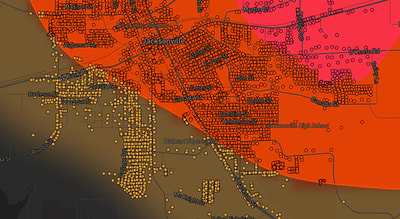
See exactly what you get.
Explore the full Springdale, AR Strike Map free – hail track, address overlay, and CSV download. No account required.
Try the Free Demo →