Cheyenne, WY Hail Storm – July 2025
July 31, 2025 hail storm near Cheyenne, WY. Radar-confirmed hail track and contractor lead lists available.
Max Hail
4"2.5" est.
confirmed
Zones
10
NWS alerts
Radar
488
dual-pol hits
Spotter
18
field reports
NWS WARNING AREA · Cheyenne Metro · Jul 31, 2025
Intelligence Platform
StormSnipe Pro
$49/ mo
Cancel anytime · No contracts
›All 50 states
›No zone limits
›No per-event fees
Subscribe to Pro
Pro renews monthly until canceled · Cancel anytime in the billing portal
What's included
Instant delivery
Every storm published within hours of NOAA confirmation.
Interactive Strike Map
Full radar-confirmed hail track on an interactive map.
Address CSV export
Every affected residential address, export-ready.
Smart alerts
Notified when a storm hits your area. Set zones once.
Nationwide coverage
All 50 states. No zone restrictions. No geographic caps.
Live pipeline
NOAA NEXRAD processed and delivered 24/7.
Address data notice
Pro coverage in California, Vermont, and Oregon includes the confirmed hail track and Strike Map only — no address lists. State data-privacy law treats compiled address lists differently in those three states, so we exclude their addresses from extraction and delivery.
NWS WARNING AREAS · 10
This storm generated 10 NWS alert zones. Pro access covers the complete storm track and all addresses across every zone.
ZONE 1NWS CYS
Cheyenne, WY
Dual-Pol Radar
27,473 addresses in warning area
Alert issued Thu, Jul 31 · 10:07 PM UTC
2"
confirmed
1.75"
est. (NWS)
ZONE 2NWS PUB
La Veta, CO
Dual-Pol Radar
430 addresses in warning area
Alert issued Thu, Jul 31 · 10:18 PM UTC
1.5"
confirmed
1"
est. (NWS)
ZONE 3NWS BOU
Kersey, CO
Dual-Pol Radar
22,738 addresses in warning area
Alert issued Thu, Jul 31 · 11:00 PM UTC
1.75"
confirmed
1"
est. (NWS)
ZONE 4NWS BOU
Grover, CO
Dual-Pol Radar
205 addresses in warning area
Alert issued Thu, Jul 31 · 11:10 PM UTC
3"
confirmed
1.25"
est. (NWS)
ZONE 5NWS BOU
Ault, CO
Dual-Pol Radar
82 addresses in warning area
Alert issued Thu, Jul 31 · 11:35 PM UTC
3"
confirmed
1.5"
est. (NWS)
ZONE 6NWS BOU
New Raymer, CO
Dual-Pol Radar
69 addresses in warning area
Alert issued Fri, Aug 1 · 12:25 AM UTC
1.5"
confirmed
1"
est. (NWS)
ZONE 7NWS PUB
Fort Carson, CO
Dual-Pol Radar
12,952 addresses in warning area
Alert issued Fri, Aug 1 · 1:20 AM UTC
2.25"
confirmed
1"
est. (NWS)
ZONE 8NWS PUB
Colorado Springs, CO
Dual-Pol Radar
226 addresses in warning area
Alert issued Fri, Aug 1 · 2:02 AM UTC
2.25"
confirmed
1"
est. (NWS)
ZONE 9NWS ABQ
Holman, NM
Dual-Pol Radar
432 addresses in warning area
Alert issued Fri, Aug 1 · 2:12 AM UTC
2.25"
confirmed
1"
est. (NWS)
ZONE 10NWS BOU
Byers, CO
Dual-Pol Radar
14 addresses in warning area
Alert issued Fri, Aug 1 · 2:29 AM UTC
4"
confirmed
2.5"
est. (NWS)
What Happened
A severe hail storm moved through Cheyenne, WY on July 31, 2025, with spotter-verified reports up to 1.75 inches and a radar plus spotter confidence alert at 4:07 PM MDT. The storm produced multiple ground reports within minutes of each other across the metro area.
The first verified report came in at 4:12 PM MDT, when mPING observers reported golf ball hail at 1.75 inches. Additional spotter reports followed at 4:16 PM MDT, 4:17 PM MDT, 4:21 PM MDT, and 4:25 PM MDT, with hail sizes ranging from 0.75 inches to 1.25 inches. The sequence points to a compact hail core that persisted through the late afternoon.
Radar and field reports lined up closely. The alert area issued at 4:07 PM MDT carried radar and spotter verification confidence, and the observed hail reports arrived within a short window after the alert. The report set includes repeated dime-size hail and one half-dollar report, showing a storm that dropped a mix of smaller stones around the larger core.
Damage Assessment
The field reports point to a localized hail swath across Cheyenne rather than a broad citywide impact zone. Golf ball hail at 1.75 inches is large enough to crack vehicle glass, dent metal roofing, and mark siding, while the smaller 0.75-inch and 1.25-inch reports suggest uneven hail loading along the storm path.
The report timing matters. The 4:12 PM MDT golf ball observation came first, followed by multiple smaller hail reports over the next 13 minutes. That pattern fits a storm with a peak core and a wider field of lesser hail around it. In practical terms, the hardest-hit properties were likely those closest to the strongest radar returns near the early part of the event.
For roof work, focus on exposed slopes, ridge caps, soft metal trim, vents, and garage doors. On vehicles, look for dense denting on horizontal panels and broken glass where the hail was largest. On homes in Cheyenne, the combination of 1.75-inch hail and repeated sub-inch reports calls for close inspection of impact marks rather than a quick drive-by check.
Do not assume every address in the warning area took the same hit. The reports show a storm with clear variation over a short time and likely over a short distance. The closest properties to the hail core may show concentrated damage while nearby homes only picked up cosmetic marks.
What Contractors Should Know
Cheyenne sits in a corridor where fast-moving high-plains storms can drop a tight hail core and leave a short cleanup window behind it. For this event, the most useful work area is the late-afternoon path through the metro where the 4:07 PM MDT alert was followed quickly by verified hail reports. That is the first place to prioritize roof checks, auto body surveys, and exterior trim inspections.
Look for mixed-size impacts. A roof that took 1.25-inch hail can show a different pattern from one exposed to the 1.75-inch core, even within the same neighborhood. Use that spread when you triage claims. Golf ball-size hail usually leaves more obvious bruising on asphalt shingles and more visible dents on metal, while dime-size reports help define the outer edge of the hail swath.
Storm Details
- Start Date
- Thursday, July 31, 2025
- Last Activity
- Thursday, July 31, 2025
- Location
- Cheyenne, WY
- Warning Areas
- 10
- Dual-Pol Radar
- 488
- Spotter Reports
- 18
Preview Strike Map
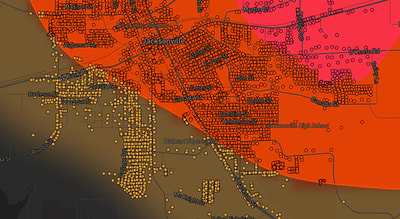
See exactly what you get.
Explore the full Springdale, AR Strike Map free – hail track, address overlay, and CSV download. No account required.
Try the Free Demo →