Stanford, MT Hail Storm – August 2025
August 1, 2025 hail storm near Stanford, MT. Radar-confirmed hail track and contractor lead lists available.
Max Hail
2.5"1.75" est.
confirmed
Zones
6
NWS alerts
Radar
135
dual-pol hits
Spotter
3
field reports
NWS WARNING AREA · Stanford Metro · Aug 1, 2025
Intelligence Platform
StormSnipe Pro
$49/ mo
Cancel anytime · No contracts
›All 50 states
›No zone limits
›No per-event fees
Subscribe to Pro
Pro renews monthly until canceled · Cancel anytime in the billing portal
What's included
Instant delivery
Every storm published within hours of NOAA confirmation.
Interactive Strike Map
Full radar-confirmed hail track on an interactive map.
Address CSV export
Every affected residential address, export-ready.
Smart alerts
Notified when a storm hits your area. Set zones once.
Nationwide coverage
All 50 states. No zone restrictions. No geographic caps.
Live pipeline
NOAA NEXRAD processed and delivered 24/7.
Address data notice
Pro coverage in California, Vermont, and Oregon includes the confirmed hail track and Strike Map only — no address lists. State data-privacy law treats compiled address lists differently in those three states, so we exclude their addresses from extraction and delivery.
NWS WARNING AREAS · 6
This storm generated 6 NWS alert zones. Pro access covers the complete storm track and all addresses across every zone.
ZONE 1NWS TFX
Stanford, MT
Dual-Pol Radar
172 addresses in warning area
Alert issued Fri, Aug 1 · 8:31 PM UTC
1.75"
confirmed
1"
est. (NWS)
ZONE 2NWS TFX
Moccasin, MT
Dual-Pol Radar
3,875 addresses in warning area
Alert issued Fri, Aug 1 · 9:42 PM UTC
1.75"
confirmed
1"
est. (NWS)
ZONE 3NWS TFX
Moore, MT
Dual-Pol Radar
461 addresses in warning area
Alert issued Fri, Aug 1 · 11:10 PM UTC
2.5"
confirmed
1.75"
est. (NWS)
ZONE 4NWS TFX
Lloyd, MT
Dual-Pol Radar
33 addresses in warning area
Alert issued Sat, Aug 2 · 3:34 AM UTC
2.5"
confirmed
1.25"
est. (NWS)
ZONE 5NWS GGW
Dodson, MT
Dual-Pol Radar
13 addresses in warning area
Alert issued Sat, Aug 2 · 3:39 AM UTC
1.5"
confirmed
1"
est. (NWS)
ZONE 6NWS TFX
Chinook, MT
Dual-Pol Radar
1 addresses in warning area
Alert issued Sat, Aug 2 · 3:56 AM UTC
2.5"
confirmed
1.25"
est. (NWS)
What Happened
A severe hail storm crossed the Stanford, MT area on August 1, 2025, with a peak verified hail size of 2 inches and multiple warning-area alerts through the afternoon and evening. The strongest ground report came from Buffalo at 5:05 PM MDT, where spotters reported two separate instances of golf ball to 2-inch hail.
The first alert came at 2:31 PM MDT with 1-inch hail and radar plus spotter verification. A second 1-inch hail alert followed at 3:42 PM MDT on dual-polarization radar. By 5:10 PM MDT, the storm had intensified enough to support a 1.75-inch hail alert with radar and spotter verification. Two later alerts at 9:34 PM MDT and 9:56 PM MDT carried 1.25-inch hail estimates from dual-polarization radar.
The timing shows a long-lived storm cluster, not a brief pulse. The Buffalo report arrived during the late-afternoon peak, between the earlier 1-inch alerts and the evening 1.25-inch detections. That sequence places the strongest hail core in the middle of the event window.
Damage Assessment
Field reports point to a sharp hail swath rather than scattered nuisance stones. The Buffalo spotter report of golf ball to 2-inch hail indicates large stones at the surface, not just radar-supported hail aloft. That report came from a populated point in the storm path and gives the event its clearest ground-truth signal.
The warning-area alerts were consistent with a storm that maintained hail production for several hours. The 1-inch reports in mid-afternoon, the 1.75-inch alert near 5 PM MDT, and the later 1.25-inch detections all point to repeated hail growth within the same system. For roofs, siding, vehicles, and exposed crops in and near the Buffalo area, the most important field note is the size and timing of the stronger hail core during the late-afternoon pass.
No separate damage survey was provided in the source material. The verified report remains the key public record for this event. It confirms that the storm produced larger hail at the surface than the earliest warning-area estimates suggested.
What Contractors Should Know
Contractors working Stanford and the surrounding Buffalo corridor should focus on late-afternoon impact points first. The strongest verified hail fell at 5:05 PM MDT, after two earlier 1-inch alerts and before the evening radar detections. That sequence suggests layered impact, with the most severe roof, screen, and exterior damage more likely along the middle portion of the storm path.
Start canvass work with homes, shops, and farm structures near Buffalo and then expand outward along the broader warning area. Check soft metal, ridge caps, vents, north-facing roof slopes, and vehicle surfaces. The report of golf ball to 2-inch hail supports a review for bruised shingles, cracked skylights, dented trim, and torn screens. Agricultural property near the path deserves the same attention, especially where fields and equipment sat exposed during the late-afternoon core.
Storm Details
- Start Date
- Friday, August 1, 2025
- Last Activity
- Friday, August 1, 2025
- Location
- Stanford, MT
- Warning Areas
- 6
- Dual-Pol Radar
- 135
- Spotter Reports
- 3
Preview Strike Map
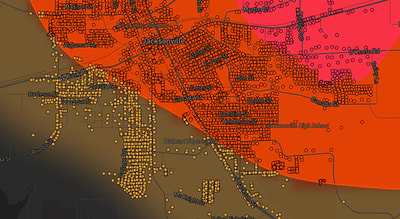
See exactly what you get.
Explore the full Springdale, AR Strike Map free – hail track, address overlay, and CSV download. No account required.
Try the Free Demo →