Hayfork, CA Hail Storm – August 2025
August 1, 2025 hail storm near Hayfork, CA. Radar-confirmed hail track and contractor lead lists available.
Max Hail
2.25"1.25" est.
confirmed
Zones
6
NWS alerts
Radar
158
dual-pol hits
Spotter
–
field reports
Dual-Pol Radar
Spotter Report
NWS Warning
NWS WARNING AREA · Hayfork Metro · Aug 1, 2025 · Click a zone to highlight
PURCHASE THIS STORM
Full storm data delivered to all buyers. No slot limit.
By purchasing, you agree to our Terms of Service and acknowledge the Data Accuracy Disclaimer. Address lists are derived from NOAA radar and federal databases; inclusion does not guarantee property damage.
Pro gets 1-hour priority access
From $49/mo · Auto-delivered leads
NWS WARNING AREAS · 6
This storm generated 6 NWS alert zones. One purchase covers the complete storm track and all addresses across every zone.
ZONE 1NWS EKA
Hayfork, CA
Dual-Pol Radar
Alert issued Fri, Aug 1 · 10:13 PM UTC
1.5"
confirmed
1"
est. (NWS)
ZONE 2NWS MFR
Oakridge, OR
Dual-Pol Radar
Alert issued Fri, Aug 1 · 11:32 PM UTC
1.5"
confirmed
1"
est. (NWS)
ZONE 3NWS MFR
Selma, OR
Dual-Pol Radar
Alert issued Fri, Aug 1 · 11:57 PM UTC
1.75"
confirmed
1"
est. (NWS)
ZONE 4NWS MFR
Fort Jones, CA
Dual-Pol Radar
Alert issued Sat, Aug 2 · 12:13 AM UTC
2.25"
confirmed
1"
est. (NWS)
ZONE 5NWS MFR
Happy Camp, CA
Dual-Pol Radar
Alert issued Sat, Aug 2 · 12:53 AM UTC
2.25"
confirmed
1.25"
est. (NWS)
ZONE 6NWS MFR
Prospect, OR
Dual-Pol Radar
Alert issued Sat, Aug 2 · 2:01 AM UTC
1.5"
confirmed
1"
est. (NWS)
On August 1, 2025, a severe hail storm moved through Hayfork, CA and produced confirmed hail up to 1 inch. The event concluded after a single severe thunderstorm alert at 3:13 PM PDT.
What Happened
The storm developed and moved through the Hayfork area on Friday afternoon, with the main alert issued at 3:13 PM PDT. The warning area covered the broader storm path near town, and dual-polarization radar supported the 1-inch hail call with a radar-derived confidence read.
This was a single-zone event. No additional hail alerts were issued for Hayfork after the 3:13 PM PDT warning, and the storm is now concluded.
The timing places the peak hail threat in the mid-afternoon window, when outdoor exposure is still common across residential, commercial, and roadside properties. The storm produced a brief but measurable hail episode rather than a long-lived hail core.
Damage Assessment
Hail near 1 inch can break soft roofing materials, dent metal surfaces, and leave impact marks on painted trim, siding, and window screens. Vehicles parked in the open can also show visible dents, depending on exposure and roof angle.
In a small community like Hayfork, the difference between isolated stones and a concentrated hail core often shows up in scattered reports. Roofs with older shingles, patched sections, or exposed flashing should be checked first. Skylights, gutters, and vent caps also warrant inspection after an event of this size.
Yard damage is usually lighter at this hail size, but gardens, tree leaves, and thin outdoor covers can still show strike marks. Contractors should document visible bruising, edge lift, and granule loss where present. Metal roofs and accessories may show the clearest impact patterns.
For insurance-related work, keep the focus on date, time, and location. The relevant window for this event is August 1, 2025, with the alert at 3:13 PM PDT and confirmed hail up to 1 inch in Hayfork.
What Contractors Should Know
Field checks in Hayfork should start with south- and west-facing slopes, roof transitions, and anything left exposed during the afternoon hour when the storm passed. Look for soft hits on asphalt shingles, dents on roof penetrations, and impact marks on siding and fascia. A quick exterior survey can separate cosmetic strikes from repair-level loss.
Photographs should include roof planes, gutters, downspouts, vehicle panels, fence tops, and any cracked or displaced accessories. Match each image to the property address and local time. If the site has older composition shingles, note granule disturbance and any lifted tabs near the ridge and eaves.
For production planning, this was a short-duration hail event with a clear time stamp and one alert cycle. That makes it suitable for targeted canvassing, especially in areas that were fully inside the warning area during the 3:13 PM PDT alert.
Storm Details
- Start Date
- Friday, August 1, 2025
- Last Activity
- Saturday, August 2, 2025
- Location
- Hayfork, CA
- Warning Areas
- 6
- Dual-Pol Radar
- 158
- Spotter Reports
- --
StormSnipe Pro
BEST VALUENever miss a storm in your market.
Auto-delivered leads with 1-hour priority access before shared buyers. Set it and close more jobs.
$49
/mo
1 Zone
POPULAR
$99
/mo
5 Zones
$199
/mo
Unlimited
- 1-hour priority access before public
- Auto-delivered every storm in your market
- Interactive Strike Map + hail track
Cancel anytime · No commitment
Try Before You Buy
See exactly what you get.
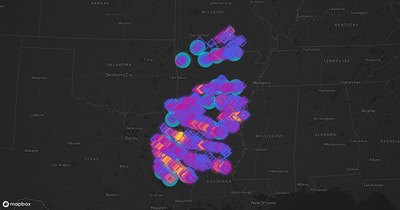
Explore the full Springdale, AR Strike Map free – hail track, address overlay, and CSV download. No account required.
Try the Free Demo →