Mullen, NE Hail Storm – August 2025
August 3, 2025 hail storm near Mullen, NE. Radar-confirmed hail track and contractor lead lists available.
Max Hail
3.5"1.75" est.
confirmed
Zones
13
NWS alerts
Radar
187
dual-pol hits
Spotter
11
field reports
NWS WARNING AREA · Mullen Metro · Aug 3, 2025
Intelligence Platform
StormSnipe Pro
$49/ mo
Cancel anytime · No contracts
›All 50 states
›No zone limits
›No per-event fees
Subscribe to Pro
Pro renews monthly until canceled · Cancel anytime in the billing portal
What's included
Instant delivery
Every storm published within hours of NOAA confirmation.
Interactive Strike Map
Full radar-confirmed hail track on an interactive map.
Address CSV export
Every affected residential address, export-ready.
Smart alerts
Notified when a storm hits your area. Set zones once.
Nationwide coverage
All 50 states. No zone restrictions. No geographic caps.
Live pipeline
NOAA NEXRAD processed and delivered 24/7.
Address data notice
Pro coverage in California, Vermont, and Oregon includes the confirmed hail track and Strike Map only — no address lists. State data-privacy law treats compiled address lists differently in those three states, so we exclude their addresses from extraction and delivery.
NWS WARNING AREAS · 13
This storm generated 13 NWS alert zones. Pro access covers the complete storm track and all addresses across every zone.
ZONE 1NWS LBF
Mullen, NE
Dual-Pol Radar
404 addresses in warning area
Alert issued Sun, Aug 3 · 8:50 PM UTC
3"
confirmed
1.75"
est. (NWS)
ZONE 2NWS LBF
Mullen, NE
Dual-Pol Radar
5 addresses in warning area
Alert issued Sun, Aug 3 · 9:13 PM UTC
2.25"
confirmed
1"
est. (NWS)
ZONE 3NWS LBF
Paxton, NE
Dual-Pol Radar
8 addresses in warning area
Alert issued Sun, Aug 3 · 9:28 PM UTC
2"
confirmed
1.25"
est. (NWS)
ZONE 4NWS FSD
Delmont, SD
Spotter Reported
Alert issued Sun, Aug 3 · 9:29 PM UTC
0.7"
confirmed
1.25"
est. (NWS)
ZONE 5NWS UNR
Oelrichs, SD
Dual-Pol Radar
5 addresses in warning area
Alert issued Sun, Aug 3 · 9:53 PM UTC
2.5"
confirmed
1"
est. (NWS)
ZONE 6NWS LBF
Springview, NE
Dual-Pol Radar
64 addresses in warning area
Alert issued Sun, Aug 3 · 10:25 PM UTC
2.5"
confirmed
1.5"
est. (NWS)
ZONE 7NWS LBF
Brule, NE
Dual-Pol Radar
373 addresses in warning area
Alert issued Sun, Aug 3 · 10:28 PM UTC
2"
confirmed
1"
est. (NWS)
ZONE 8NWS LBF
Ainsworth, NE
Dual-Pol Radar
156 addresses in warning area
Alert issued Sun, Aug 3 · 10:58 PM UTC
2.5"
confirmed
1.5"
est. (NWS)
ZONE 9NWS ABR
Chamberlain, SD
Dual-Pol Radar
Alert issued Mon, Aug 4 · 12:33 AM UTC
3.5"
confirmed
1.75"
est. (NWS)
ZONE 10NWS UNR
Hamill, SD
Dual-Pol Radar
25 addresses in warning area
Alert issued Mon, Aug 4 · 12:53 AM UTC
2.25"
confirmed
1.25"
est. (NWS)
ZONE 11NWS ABR
Kennebec, SD
Dual-Pol Radar
Alert issued Mon, Aug 4 · 1:02 AM UTC
2.5"
confirmed
1.25"
est. (NWS)
ZONE 12NWS ABR
Lower Brule, SD
Dual-Pol Radar
Alert issued Mon, Aug 4 · 1:39 AM UTC
1.75"
confirmed
1"
est. (NWS)
ZONE 13NWS UNR
Gillette, WY
Dual-Pol Radar
4,239 addresses in warning area
Alert issued Mon, Aug 4 · 6:24 AM UTC
1.5"
confirmed
1"
est. (NWS)
What Happened
A severe hail storm moved through the Mullen, NE area on August 3, 2025, with a peak confirmed hail size of 1.75 inches. The storm produced multiple rounds of hail from mid-afternoon into early evening, with radar and spotter verification on several alerts.
The first alert came at 3:50 PM CDT with 1.75-inch hail and radar plus spotter verification. At 4:03 PM CDT, a spotter reported, “There was a lot of hail with drifts,” and estimated 2.25 inches. A second alert followed at 4:13 PM CDT with 1-inch hail and the same verification level. By 4:28 PM CDT, dual-polarization radar showed 1.25-inch hail. Later alerts at 5:25 PM CDT and 5:58 PM CDT each carried 1.5-inch hail estimates from dual-polarization radar, with a 5:28 PM CDT alert in between reporting 1-inch hail with radar and spotter verification.
The ground reports showed hail accumulation in the open country around Mullen and a separate 5:26 PM CDT spotter report of hail in town in Brule, listed at 1 inch. The sequence points to a storm that kept producing hail across the late-afternoon window rather than a single brief burst.
Damage Assessment
The field reports show hail on the ground, drifted hail in at least one location, and a verified hail report in town in Brule. The 4:03 PM CDT report described hail drifts, which indicates enough volume for stones to pile up instead of melting quickly. The Brule report at 5:26 PM CDT placed 1-inch hail in town, showing the storm reached settled areas as it continued east or southeast through the broader warning area.
For property owners, the main concern is impact variation across the storm path. Reports ranged from 1 inch to 2.25 inches, with the larger spotter estimate coming from the same 4:03 PM CDT hail event that noted drifts. Roofs, gutters, soft metal trim, window screens, and exposed vehicle panels in the path of the storm should be checked for strike marks, bruising, and displaced granules.
The radar-confirmed alerts matched the field reports through the afternoon. That combination points to more than one hail core or a storm that rebuilt while moving through the area. The result is a patchwork impact pattern, with some locations seeing measurable accumulation and others seeing lighter but still damaging hail.
What Contractors Should Know
Work the Mullen area and the Brule report corridor as separate inspection targets. The storm produced multiple hail sizes over about two hours, so damage can vary sharply from one property to the next. A roof five miles from the hardest-hit spot may show little more than cosmetic loss, while another property closer to the 4:03 PM CDT report may have heavier surface impact and more obvious accumulation-related clues.
Start with roofs, then move to vents, flashing, gutters, downspouts, skylights, and north- and west-facing slopes where strike patterns often show first. Check soft metals for dents and fresh impact marks. On vehicles, look for broken mirrors, chipped glass, and body panel pitting. Ground-level inspection should include fences, siding, and outbuildings where hail can leave repeatable marks even when roof damage is limited.
Storm Details
- Start Date
- Sunday, August 3, 2025
- Last Activity
- Monday, August 4, 2025
- Location
- Mullen, NE
- Warning Areas
- 13
- Dual-Pol Radar
- 187
- Spotter Reports
- 11
Preview Strike Map
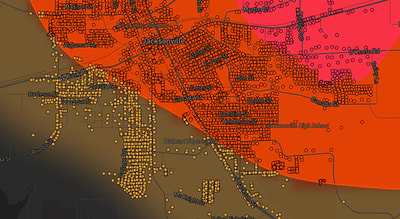
See exactly what you get.
Explore the full Springdale, AR Strike Map free – hail track, address overlay, and CSV download. No account required.
Try the Free Demo →