Gillette, WY Hail Storm – August 2025
August 5, 2025 hail storm near Gillette, WY. Radar-confirmed hail track and contractor lead lists available.
Max Hail
2.5"1.25" est.
confirmed
Zones
4
NWS alerts
Radar
60
dual-pol hits
Spotter
3
field reports
NWS WARNING AREA · Gillette Metro · Aug 5, 2025
Intelligence Platform
StormSnipe Pro
$49/ mo
Cancel anytime · No contracts
›All 50 states
›No zone limits
›No per-event fees
Subscribe to Pro
Pro renews monthly until canceled · Cancel anytime in the billing portal
What's included
Instant delivery
Every storm published within hours of NOAA confirmation.
Interactive Strike Map
Full radar-confirmed hail track on an interactive map.
Address CSV export
Every affected residential address, export-ready.
Smart alerts
Notified when a storm hits your area. Set zones once.
Nationwide coverage
All 50 states. No zone restrictions. No geographic caps.
Live pipeline
NOAA NEXRAD processed and delivered 24/7.
Address data notice
Pro coverage in California, Vermont, and Oregon includes the confirmed hail track and Strike Map only — no address lists. State data-privacy law treats compiled address lists differently in those three states, so we exclude their addresses from extraction and delivery.
NWS WARNING AREAS · 4
This storm generated 4 NWS alert zones. Pro access covers the complete storm track and all addresses across every zone.
ZONE 1NWS UNR
Gillette, WY
Dual-Pol Radar
128 addresses in warning area
Alert issued Tue, Aug 5 · 10:37 PM UTC
2.5"
confirmed
1"
est. (NWS)
ZONE 2NWS UNR
Custer, SD
Dual-Pol Radar
Alert issued Tue, Aug 5 · 10:57 PM UTC
2.25"
confirmed
1.25"
est. (NWS)
ZONE 3NWS UNR
Gillette, WY
Dual-Pol Radar
Alert issued Tue, Aug 5 · 10:58 PM UTC
2.25"
confirmed
1"
est. (NWS)
ZONE 4NWS UNR
Hot Springs, SD
Dual-Pol Radar
Alert issued Tue, Aug 5 · 11:41 PM UTC
1.75"
confirmed
1"
est. (NWS)
What Happened
A severe hail storm moved through the Gillette, WY area on August 5, 2025, producing verified 1.25-inch hail during the late afternoon. The storm remained active into early evening and produced multiple warning updates across the metro area.
The first NWS alert came at 4:37 PM MDT with a 1-inch hail threat tied to dual-polarization radar. The strongest alert followed at 4:57 PM MDT, when radar and spotter verification supported 1.25-inch hail. A second 1-inch hail alert followed one minute later at 4:58 PM MDT, also from dual-polarization radar. The final alert came at 5:41 PM MDT with spotter-verified 1-inch hail.
Ground reports lined up with the warning sequence. Two local storm reports at 6:00 PM MDT described dime to quarter hail and documented 1-inch stones. A separate mPING report at 6:16 PM MDT came in at 0.75 inch. The field reports placed the heaviest hail in the same storm period that drove the 4:57 PM MDT alert.
Damage Assessment
The ground truth points to a localized hail swath with enough size to affect roofs, soft metals, vehicles, and exposed surfaces in parts of the Gillette metro. The 6:00 PM MDT spotter reports of quarter-size hail support the higher-end radar and warning data, while the later 0.75-inch report shows the storm was not uniform across the full warning area.
The two 1-inch local storm reports are the clearest surface evidence in the event record. They came after the strongest alert and before the final spotter-verified warning update, which places the main hail core in the late-afternoon to early-evening window. The report mix suggests the heaviest impacts were concentrated rather than spread evenly across the full metro.
For contractors, that means the first pass should focus on the corridor where the storm verified at 1.25 inches and where 1-inch field reports followed shortly after. Roof slopes, gutters, downspouts, window screens, and vehicle lots in that path are the most likely inspection targets. Smaller hail reports elsewhere in the warning area do not rule out damage, but they point to weaker surface impact outside the main core.
What Contractors Should Know
Start with the parts of Gillette that were under the strongest late-afternoon warning updates. The verified 1.25-inch hail and the 1-inch spotter reports make this a roof-and-exterior inspection event, not just a wind claim follow-up. Focus on asphalt shingles, metal trim, HVAC fins, skylights, and siding with north- and west-facing exposure where hail damage often shows first.
Crews should expect mixed severity across short distances. The 0.75-inch report at 6:16 PM MDT shows the hail field trailed off in some locations, so a loss map built from one address will not fit the full metro. Set inspection routes by block, not by broad neighborhood labels, and check both residential and light commercial properties near the storm path.
Storm Details
- Start Date
- Tuesday, August 5, 2025
- Last Activity
- Tuesday, August 5, 2025
- Location
- Gillette, WY
- Warning Areas
- 4
- Dual-Pol Radar
- 60
- Spotter Reports
- 3
Preview Strike Map
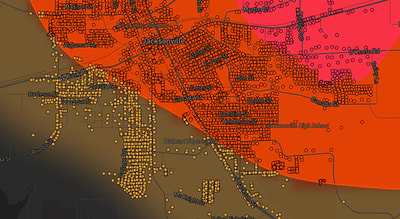
See exactly what you get.
Explore the full Springdale, AR Strike Map free – hail track, address overlay, and CSV download. No account required.
Try the Free Demo →