Aladdin, WY Hail Storm – August 2025
August 17, 2025 hail storm near Aladdin, WY. Radar-confirmed hail track and contractor lead lists available.
Max Hail
3.25"1.5" est.
confirmed
Zones
8
NWS alerts
Radar
484
dual-pol hits
Spotter
–
field reports
NWS WARNING AREA · Aladdin Metro · Aug 17, 2025
Intelligence Platform
StormSnipe Pro
$49/ mo
Cancel anytime · No contracts
›All 50 states
›No zone limits
›No per-event fees
Subscribe to Pro
Pro renews monthly until canceled · Cancel anytime in the billing portal
What's included
Instant delivery
Every storm published within hours of NOAA confirmation.
Interactive Strike Map
Full radar-confirmed hail track on an interactive map.
Address CSV export
Every affected residential address, export-ready.
Smart alerts
Notified when a storm hits your area. Set zones once.
Nationwide coverage
All 50 states. No zone restrictions. No geographic caps.
Live pipeline
NOAA NEXRAD processed and delivered 24/7.
Address data notice
Pro coverage in California, Vermont, and Oregon includes the confirmed hail track and Strike Map only — no address lists. State data-privacy law treats compiled address lists differently in those three states, so we exclude their addresses from extraction and delivery.
NWS WARNING AREAS · 8
This storm generated 8 NWS alert zones. Pro access covers the complete storm track and all addresses across every zone.
ZONE 1NWS UNR
Aladdin, WY
Dual-Pol Radar
116 addresses in warning area
Alert issued Sun, Aug 17 · 2:49 AM UTC
3.25"
confirmed
1.25"
est. (NWS)
ZONE 2NWS UNR
Upton, WY
Dual-Pol Radar
Alert issued Sun, Aug 17 · 3:00 AM UTC
2"
confirmed
1"
est. (NWS)
ZONE 3NWS UNR
Belle Fourche, SD
Dual-Pol Radar
Alert issued Sun, Aug 17 · 3:37 AM UTC
2.75"
confirmed
1.5"
est. (NWS)
ZONE 4NWS UNR
Belle Fourche, SD
Dual-Pol Radar
209 addresses in warning area
Alert issued Sun, Aug 17 · 4:00 AM UTC
3.25"
confirmed
1"
est. (NWS)
ZONE 5NWS UNR
Nisland, SD
Dual-Pol Radar
Alert issued Sun, Aug 17 · 4:17 AM UTC
3.25"
confirmed
1.5"
est. (NWS)
ZONE 6NWS UNR
Newell, SD
Dual-Pol Radar
Alert issued Sun, Aug 17 · 4:45 AM UTC
3.25"
confirmed
1.25"
est. (NWS)
ZONE 7NWS UNR
Newell, SD
Dual-Pol Radar
Alert issued Sun, Aug 17 · 4:45 AM UTC
3.25"
confirmed
1.25"
est. (NWS)
ZONE 8NWS UNR
Newell, SD
Dual-Pol Radar
Alert issued Sun, Aug 17 · 4:46 AM UTC
3.25"
confirmed
1.25"
est. (NWS)
What Happened
A concluded hail storm hit Aladdin, WY, on 2025-08-17 and produced a maximum confirmed hail size of 1.5 inches. The event was mapped across eight NWS alert areas through the evening.
The first alert came at 8:49 PM MDT with 1.25-inch hail in dual-polarization radar confidence data. A second alert followed at 9:00 PM MDT with 1-inch hail. Radar then supported a 1.5-inch hail alert at 9:37 PM MDT, followed by another 1-inch hail alert at 10:00 PM MDT.
The strongest radar-derived hail signal returned at 10:17 PM MDT with 1.5-inch hail. Three more alerts followed at 10:45 PM MDT, 10:45 PM MDT, and 10:46 PM MDT. Each showed 1.25-inch hail confidence from dual-polarization radar.
The sequence points to a storm that remained organized into late evening. The alert sizes moved between 1 inch, 1.25 inches, and 1.5 inches over roughly two hours.
Damage Assessment
Hail in the 1-inch to 1.5-inch range can break or crack skylights, dent soft metal, and damage roof coverings that were already worn. Vehicles parked in open areas can show roof and hood impacts. Vinyl siding, window screens, and exterior trim can also take hits when the storm stays over the same area.
In Aladdin, the repeated 1.25-inch and 1.5-inch readings suggest a hail core that held together through multiple warning areas. That supports inspection on roofs, gutters, downspouts, fence tops, and exposed HVAC units. Metal roofing can show impact marks that are easier to see from the ground line than from street level. Asphalt shingles can show bruising, granule loss, and isolated edge damage.
Properties on the north and east side of the hail track should be checked first if they sit near the alert corridor. Detached structures, outbuildings, and ag equipment stored outside can show the first visible impact. After a storm with repeated hail alerts, minor cosmetic damage and functional damage often appear on the same roof plane.
What Contractors Should Know
Start with the roof plane, then move to soft metals, penetrations, and perimeter structures. In a storm with 1-inch to 1.5-inch hail, the first field signs often appear on ridge caps, pipe boots, flashing, window wraps, and exposed condenser fins. Document slope direction, roof age, and any existing wear before opening a detailed inspection. That record helps separate storm marks from pre-existing conditions.
Use close-range photos of impact points, then step back for elevation shots that show the full structure. For siding claims, record the height of impact marks and the wind-facing side of the building. For vehicle work, photograph dents under consistent light and note panel location. In a multi-alert event like this one, hail size may vary by block. Contractors should verify each structure against the storm path rather than rely on a single point report.
Storm Details
- Start Date
- Saturday, August 16, 2025
- Last Activity
- Saturday, August 16, 2025
- Location
- Aladdin, WY
- Warning Areas
- 8
- Dual-Pol Radar
- 484
- Spotter Reports
- --
Preview Strike Map
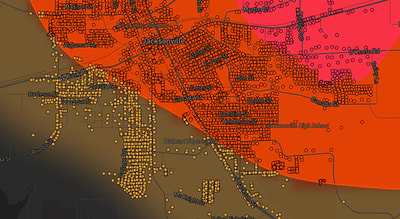
See exactly what you get.
Explore the full Springdale, AR Strike Map free – hail track, address overlay, and CSV download. No account required.
Try the Free Demo →