Hot Springs, SD Hail Storm – August 2025
August 17, 2025 hail storm near Hot Springs, SD. Radar-confirmed hail track and contractor lead lists available.
Max Hail
3.75"1.75" est.
confirmed
Zones
25
NWS alerts
Radar
466
dual-pol hits
Spotter
10
field reports
NWS WARNING AREA · Hot Springs Metro · Aug 17, 2025
Intelligence Platform
StormSnipe Pro
$49/ mo
Cancel anytime · No contracts
›All 50 states
›No zone limits
›No per-event fees
Subscribe to Pro
Pro renews monthly until canceled · Cancel anytime in the billing portal
What's included
Instant delivery
Every storm published within hours of NOAA confirmation.
Interactive Strike Map
Full radar-confirmed hail track on an interactive map.
Address CSV export
Every affected residential address, export-ready.
Smart alerts
Notified when a storm hits your area. Set zones once.
Nationwide coverage
All 50 states. No zone restrictions. No geographic caps.
Live pipeline
NOAA NEXRAD processed and delivered 24/7.
Address data notice
Pro coverage in California, Vermont, and Oregon includes the confirmed hail track and Strike Map only — no address lists. State data-privacy law treats compiled address lists differently in those three states, so we exclude their addresses from extraction and delivery.
NWS WARNING AREAS · 25
This storm generated 25 NWS alert zones. Pro access covers the complete storm track and all addresses across every zone.
ZONE 1NWS UNR
Hot Springs, SD
Dual-Pol Radar
Alert issued Sun, Aug 17 · 7:36 PM UTC
2.5"
confirmed
1.5"
est. (NWS)
ZONE 2NWS UNR
Buffalo Gap, SD
Dual-Pol Radar
Alert issued Sun, Aug 17 · 8:13 PM UTC
2.5"
confirmed
1"
est. (NWS)
ZONE 3NWS UNR
Sturgis, SD
Dual-Pol Radar
Alert issued Sun, Aug 17 · 9:47 PM UTC
2.75"
confirmed
1"
est. (NWS)
ZONE 4NWS UNR
Deadwood, SD
Dual-Pol Radar
Alert issued Sun, Aug 17 · 10:37 PM UTC
2"
confirmed
1"
est. (NWS)
ZONE 5NWS LBF
Valentine, NE
Dual-Pol Radar
28 addresses in warning area
Alert issued Sun, Aug 17 · 11:46 PM UTC
2.5"
confirmed
1"
est. (NWS)
ZONE 6NWS LBF
Rushville, NE
Dual-Pol Radar
143 addresses in warning area
Alert issued Sun, Aug 17 · 11:52 PM UTC
3.75"
confirmed
1"
est. (NWS)
ZONE 7NWS LBF
Gordon, NE
Dual-Pol Radar
96 addresses in warning area
Alert issued Mon, Aug 18 · 12:21 AM UTC
3.75"
confirmed
1.75"
est. (NWS)
ZONE 8NWS LBF
Rushville, NE
Dual-Pol Radar
379 addresses in warning area
Alert issued Mon, Aug 18 · 12:29 AM UTC
2.75"
confirmed
1.5"
est. (NWS)
ZONE 9NWS UNR
Edgemont, SD
Dual-Pol Radar
Alert issued Mon, Aug 18 · 12:44 AM UTC
2.25"
confirmed
1"
est. (NWS)
ZONE 10NWS UNR
Winner, SD
Dual-Pol Radar
3 addresses in warning area
Alert issued Mon, Aug 18 · 1:12 AM UTC
1.5"
confirmed
1"
est. (NWS)
ZONE 11NWS LBF
Ashby, NE
Dual-Pol Radar
9 addresses in warning area
Alert issued Mon, Aug 18 · 1:12 AM UTC
3.25"
confirmed
1"
est. (NWS)
ZONE 12NWS LBF
Johnstown, NE
Dual-Pol Radar
1,270 addresses in warning area
Alert issued Mon, Aug 18 · 1:27 AM UTC
2.75"
confirmed
1.25"
est. (NWS)
ZONE 13NWS LBF
Valentine, NE
Dual-Pol Radar
61 addresses in warning area
Alert issued Mon, Aug 18 · 1:29 AM UTC
2.5"
confirmed
1"
est. (NWS)
ZONE 14NWS UNR
Winner, SD
Dual-Pol Radar
23 addresses in warning area
Alert issued Mon, Aug 18 · 1:50 AM UTC
2.5"
confirmed
1"
est. (NWS)
ZONE 15NWS UNR
Winner, SD
Dual-Pol Radar
52 addresses in warning area
Alert issued Mon, Aug 18 · 2:21 AM UTC
1.5"
confirmed
1"
est. (NWS)
ZONE 16NWS UNR
Winner, SD
Dual-Pol Radar
1 addresses in warning area
Alert issued Mon, Aug 18 · 2:37 AM UTC
2"
confirmed
1"
est. (NWS)
ZONE 17NWS LBF
Ainsworth, NE
Dual-Pol Radar
472 addresses in warning area
Alert issued Mon, Aug 18 · 2:44 AM UTC
2.5"
confirmed
1.75"
est. (NWS)
ZONE 18NWS UNR
Hamill, SD
Dual-Pol Radar
Alert issued Mon, Aug 18 · 2:57 AM UTC
1.5"
confirmed
1"
est. (NWS)
ZONE 19NWS LBF
Bassett, NE
Dual-Pol Radar
810 addresses in warning area
Alert issued Mon, Aug 18 · 3:17 AM UTC
1.75"
confirmed
1"
est. (NWS)
ZONE 20NWS FSD
Platte, SD
Dual-Pol Radar
Alert issued Mon, Aug 18 · 3:19 AM UTC
1.5"
confirmed
1.25"
est. (NWS)
ZONE 21NWS LBF
Stuart, NE
Dual-Pol Radar
12 addresses in warning area
Alert issued Mon, Aug 18 · 3:27 AM UTC
1.5"
confirmed
1"
est. (NWS)
ZONE 22NWS LBF
Spencer, NE
Dual-Pol Radar
91 addresses in warning area
Alert issued Mon, Aug 18 · 4:02 AM UTC
1.5"
confirmed
1"
est. (NWS)
ZONE 23NWS LBF
Bassett, NE
Dual-Pol Radar
143 addresses in warning area
Alert issued Mon, Aug 18 · 4:26 AM UTC
1.75"
confirmed
1.25"
est. (NWS)
ZONE 24NWS FSD
Plankinton, SD
Dual-Pol Radar
Alert issued Mon, Aug 18 · 4:37 AM UTC
1.75"
confirmed
1.25"
est. (NWS)
ZONE 25NWS FSD
Mitchell, SD
Dual-Pol Radar
Alert issued Mon, Aug 18 · 5:11 AM UTC
1.75"
confirmed
1"
est. (NWS)
What Happened
A severe hail storm moved through Hot Springs, SD on August 17, 2025, producing a peak hail size of 1.5 inches and a cluster of verified alerts through the afternoon and evening. The earliest field reports came in at 2:36 PM CDT, when spotters submitted two mPING reports of 1-inch hail.
The first alert in the storm sequence was issued at 2:36 PM CDT with 1.5-inch hail tied to radar and spotter verification. Additional alerts followed at 3:13 PM CDT, 4:47 PM CDT, and 5:37 PM CDT, each carrying a 1-inch hail estimate with radar and spotter confidence. The storm then continued into the evening with a series of dual-polarization radar detections at 7:44 PM CDT, 8:12 PM CDT, 8:50 PM CDT, 9:21 PM CDT, 9:37 PM CDT, and 9:57 PM CDT, all centered on 1-inch hail.
That sequence shows a prolonged hail-producing storm over the Hot Springs metro area rather than a single isolated burst. The verified ground reports matched the first warning period and then the radar detections held the threat in place for several more hours.
Damage Assessment
The field reports point to a concentrated hail impact window around mid-afternoon, with spotters confirming 1-inch hail at 2:36 PM CDT in and near Hot Springs. The repeated radar detections later in the day show that hail remained on the table after the first verified reports, with multiple warning updates carrying 1-inch hail estimates into the evening.
For a storm of this type, the first places to check are roofs, gutters, soft metal trim, window screens, and exposed vehicle surfaces along the path of the verified reports. In Hot Springs, that means looking at the core area first, then extending the inspection to nearby neighborhoods that sat under the later warning periods. The pattern here supports a narrow but repeated hail corridor rather than a single pass.
Photographs, spotter notes, and roof-level observations matter more than generic storm labels. The two 2:36 PM CDT reports give the cleanest ground-truth anchor in this event. Contractors should treat that time stamp as the start of the most credible surface-impact window and work outward from there.
What Contractors Should Know
Hot Springs is not a large metro, but this storm produced multiple rounds of hail confidence across the afternoon and evening. Crews should not assume the first verified hail report ended the event. The warning stream stayed active through 9:57 PM CDT, which means a field route should account for more than one exposure period.
Start with the areas closest to the spotter-verified reports at 2:36 PM CDT. Then check structures and vehicles in the broader warning area that were under later dual-polarization detections. On the ground, that usually means separating the first impact zone from the later hail swath and documenting each property by time window. Keep photos tied to address, roof slope, and any observable spatter on siding, vents, or soft metal.
Storm Details
- Start Date
- Sunday, August 17, 2025
- Last Activity
- Monday, August 18, 2025
- Location
- Hot Springs, SD
- Warning Areas
- 25
- Dual-Pol Radar
- 466
- Spotter Reports
- 10
Preview Strike Map
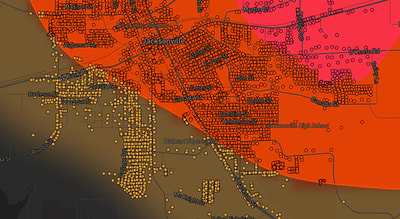
See exactly what you get.
Explore the full Springdale, AR Strike Map free – hail track, address overlay, and CSV download. No account required.
Try the Free Demo →