Genoa, CO Hail Storm – August 2025
August 18, 2025 hail storm near Genoa, CO. Radar-confirmed hail track and contractor lead lists available.
Max Hail
3.75"1.75" est.
confirmed
Zones
15
NWS alerts
Radar
742
dual-pol hits
Spotter
11
field reports
NWS WARNING AREA · Genoa Metro · Aug 18, 2025
Intelligence Platform
StormSnipe Pro
$49/ mo
Cancel anytime · No contracts
›All 50 states
›No zone limits
›No per-event fees
Subscribe to Pro
Pro renews monthly until canceled · Cancel anytime in the billing portal
What's included
Instant delivery
Every storm published within hours of NOAA confirmation.
Interactive Strike Map
Full radar-confirmed hail track on an interactive map.
Address CSV export
Every affected residential address, export-ready.
Smart alerts
Notified when a storm hits your area. Set zones once.
Nationwide coverage
All 50 states. No zone restrictions. No geographic caps.
Live pipeline
NOAA NEXRAD processed and delivered 24/7.
Address data notice
Pro coverage in California, Vermont, and Oregon includes the confirmed hail track and Strike Map only — no address lists. State data-privacy law treats compiled address lists differently in those three states, so we exclude their addresses from extraction and delivery.
NWS WARNING AREAS · 15
This storm generated 15 NWS alert zones. Pro access covers the complete storm track and all addresses across every zone.
ZONE 1NWS BOU
Genoa, CO
Dual-Pol Radar
Alert issued Mon, Aug 18 · 8:16 PM UTC
2.25"
confirmed
1.5"
est. (NWS)
ZONE 2NWS BOU
Arriba, CO
Dual-Pol Radar
Alert issued Mon, Aug 18 · 9:02 PM UTC
3.75"
confirmed
1.75"
est. (NWS)
ZONE 3NWS BOU
Strasburg, CO
Dual-Pol Radar
1,374 addresses in warning area
Alert issued Mon, Aug 18 · 9:10 PM UTC
1.75"
confirmed
1"
est. (NWS)
ZONE 4NWS BOU
Arriba, CO
Dual-Pol Radar
Alert issued Mon, Aug 18 · 9:50 PM UTC
3.75"
confirmed
1"
est. (NWS)
ZONE 5NWS GID
Osborne, KS
Dual-Pol Radar
Alert issued Mon, Aug 18 · 10:02 PM UTC
3.5"
confirmed
1.25"
est. (NWS)
ZONE 6NWS GLD
Atwood, KS
Dual-Pol Radar
Alert issued Mon, Aug 18 · 10:05 PM UTC
2.75"
confirmed
1.5"
est. (NWS)
ZONE 7NWS GID
Natoma, KS
Dual-Pol Radar
470 addresses in warning area
Alert issued Mon, Aug 18 · 10:17 PM UTC
3.5"
confirmed
1.75"
est. (NWS)
ZONE 8NWS GLD
Quinter, KS
Dual-Pol Radar
746 addresses in warning area
Alert issued Mon, Aug 18 · 10:27 PM UTC
2"
confirmed
1"
est. (NWS)
ZONE 9NWS GLD
Atwood, KS
Dual-Pol Radar
Alert issued Mon, Aug 18 · 10:28 PM UTC
2.75"
confirmed
1"
est. (NWS)
ZONE 10NWS GLD
Vona, CO
Dual-Pol Radar
4 addresses in warning area
Alert issued Mon, Aug 18 · 10:29 PM UTC
2"
confirmed
1"
est. (NWS)
ZONE 11NWS GLD
Goodland, KS
Dual-Pol Radar
2,396 addresses in warning area
Alert issued Mon, Aug 18 · 10:33 PM UTC
2.25"
confirmed
1"
est. (NWS)
ZONE 12NWS GID
Natoma, KS
Dual-Pol Radar
7 addresses in warning area
Alert issued Mon, Aug 18 · 10:40 PM UTC
3.5"
confirmed
1.5"
est. (NWS)
ZONE 13NWS GLD
Kanorado, KS
Dual-Pol Radar
158 addresses in warning area
Alert issued Mon, Aug 18 · 10:42 PM UTC
1.75"
confirmed
1"
est. (NWS)
ZONE 14NWS BOU
Akron, CO
Dual-Pol Radar
453 addresses in warning area
Alert issued Mon, Aug 18 · 11:05 PM UTC
1.5"
confirmed
1"
est. (NWS)
ZONE 15NWS GLD
Colby, KS
Dual-Pol Radar
Alert issued Tue, Aug 19 · 12:24 AM UTC
2"
confirmed
1"
est. (NWS)
Genoa, CO saw a concluded hailstorm on August 18, 2025, with verified hail up to 1.75 inches. The storm produced multiple rounds of hail across the afternoon and into early evening.
What Happened
The first hail alert came at 2:16 PM MDT with radar confidence for 1.5-inch hail. A stronger signal followed at 3:02 PM MDT, when dual-polarization radar supported a 1.75-inch hail estimate. Two more alerts came at 3:10 PM MDT and 3:50 PM MDT, both tied to 1-inch hail. The final alert arrived at 5:05 PM MDT with another 1-inch hail estimate.
The alert sequence shows a storm that maintained hail production for several hours. The largest verified hail size in the event was 1.75 inches.
Damage Assessment
Hail in the 1.5-inch to 1.75-inch range is large enough to drive calls for roof and exterior inspections across the warning area. In Genoa, that size can leave bruising on asphalt shingles, crack softer roof components, and mark painted siding, trim, vents, and window screens. Metal surfaces can show denting, especially on gutters, downspouts, and flashing.
The repeated 1-inch hail alerts later in the event point to a broader hail swath, not a single short burst. Properties in the path may show mixed impact levels. One roof can carry visible strikes on one slope and limited wear on another. Vehicles parked outdoors may show dents on horizontal panels, mirrors, and roof lines.
Contractors should expect the highest concentration of visible damage on exposed slopes, ridgelines, ridge caps, skylights, soft metal fixtures, and unprotected exterior equipment. Check for collateral issues around roof edges and penetrations. Look closely at debris fields, gutter deformation, and impact marks on siding at the upper wall line.
What Contractors Should Know
Field crews working Genoa after this storm should prioritize steep-slope roof checks, chimney flashings, vents, pipe boots, and skylights. The 1.75-inch peak size supports close inspection of aging asphalt shingles, where bruising and granule loss can be uneven across a property. Inspect north and west exposures as well as the first impact side of each structure.
Start with the warning area, then narrow to the addresses with the most direct hail exposure. Expect variation across short distances. Some structures may show clear strike patterns while nearby homes show lighter surface scuffing or isolated dents. That mix is common in multi-alert hail events with repeated radar-confirmed hail cores.
For contractors, the practical task is to separate cosmetic impact from functional damage and document both with location-specific photos. Pay attention to metal oxidation points, vent caps, downspout seams, and soft metals that reveal strikes more clearly than shingles. Vehicle lots, light poles, and exterior HVAC units may also provide useful field evidence when roof access is limited.
Storm Details
- Start Date
- Monday, August 18, 2025
- Last Activity
- Monday, August 18, 2025
- Location
- Genoa, CO
- Warning Areas
- 15
- Dual-Pol Radar
- 742
- Spotter Reports
- 11
Preview Strike Map
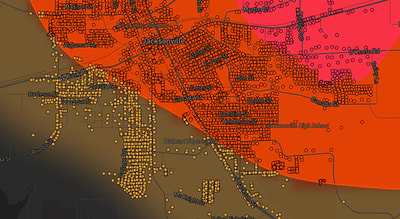
See exactly what you get.
Explore the full Springdale, AR Strike Map free – hail track, address overlay, and CSV download. No account required.
Try the Free Demo →