Fay, OK Hail Storm – August 2025
August 19, 2025 hail storm near Fay, OK. Radar-confirmed hail track and contractor lead lists available.
Max Hail
2.5"1" est.
confirmed
Zones
12
NWS alerts
Radar
288
dual-pol hits
Spotter
10
field reports
NWS WARNING AREA · Fay Metro · Aug 19, 2025
Intelligence Platform
StormSnipe Pro
$49/ mo
Cancel anytime · No contracts
›All 50 states
›No zone limits
›No per-event fees
Subscribe to Pro
Pro renews monthly until canceled · Cancel anytime in the billing portal
What's included
Instant delivery
Every storm published within hours of NOAA confirmation.
Interactive Strike Map
Full radar-confirmed hail track on an interactive map.
Address CSV export
Every affected residential address, export-ready.
Smart alerts
Notified when a storm hits your area. Set zones once.
Nationwide coverage
All 50 states. No zone restrictions. No geographic caps.
Live pipeline
NOAA NEXRAD processed and delivered 24/7.
Address data notice
Pro coverage in California, Vermont, and Oregon includes the confirmed hail track and Strike Map only — no address lists. State data-privacy law treats compiled address lists differently in those three states, so we exclude their addresses from extraction and delivery.
NWS WARNING AREAS · 12
This storm generated 12 NWS alert zones. Pro access covers the complete storm track and all addresses across every zone.
ZONE 1NWS OUN
Fay, OK
Dual-Pol Radar
50 addresses in warning area
Alert issued Tue, Aug 19 · 7:11 PM UTC
1.75"
confirmed
1"
est. (NWS)
ZONE 2NWS OUN
Lawton, OK
Dual-Pol Radar
Alert issued Tue, Aug 19 · 7:32 PM UTC
1"
confirmed
1"
est. (NWS)
ZONE 3NWS ICT
El Dorado, KS
Dual-Pol Radar
32,483 addresses in warning area
Alert issued Tue, Aug 19 · 7:44 PM UTC
2.5"
confirmed
1"
est. (NWS)
ZONE 4NWS ICT
Hutchinson, KS
Dual-Pol Radar
5,364 addresses in warning area
Alert issued Tue, Aug 19 · 8:19 PM UTC
2.5"
confirmed
1"
est. (NWS)
ZONE 5NWS ICT
Augusta, KS
Dual-Pol Radar
86,288 addresses in warning area
Alert issued Tue, Aug 19 · 8:21 PM UTC
2"
confirmed
1"
est. (NWS)
ZONE 6NWS OUN
Hydro, OK
Dual-Pol Radar
62 addresses in warning area
Alert issued Tue, Aug 19 · 8:34 PM UTC
1.5"
confirmed
1"
est. (NWS)
ZONE 7NWS OUN
Douglas, OK
Dual-Pol Radar
80 addresses in warning area
Alert issued Tue, Aug 19 · 9:34 PM UTC
2"
confirmed
1"
est. (NWS)
ZONE 8NWS OUN
Medford, OK
Dual-Pol Radar
14 addresses in warning area
Alert issued Tue, Aug 19 · 10:08 PM UTC
2.25"
confirmed
1"
est. (NWS)
ZONE 9NWS OUN
Enid, OK
Dual-Pol Radar
537 addresses in warning area
Alert issued Tue, Aug 19 · 10:23 PM UTC
1"
confirmed
1"
est. (NWS)
ZONE 10NWS OUN
Guthrie, OK
Dual-Pol Radar
Alert issued Tue, Aug 19 · 10:30 PM UTC
1.5"
confirmed
1"
est. (NWS)
ZONE 11NWS OUN
Kremlin, OK
Dual-Pol Radar
966 addresses in warning area
Alert issued Tue, Aug 19 · 10:43 PM UTC
2"
confirmed
1"
est. (NWS)
ZONE 12NWS OUN
Durham, OK
Dual-Pol Radar
Alert issued Wed, Aug 20 · 12:13 AM UTC
1"
confirmed
1"
est. (NWS)
What Happened
A hail storm moved through Fay, OK on August 19, 2025, with confirmed 1-inch hail reported across multiple alerts through the afternoon and evening. The storm remained active from 2:11 PM CDT through 7:13 PM CDT, with radar confidence holding steady and one spotter-verified report later in the day.
The first alert came at 2:11 PM CDT, followed by another at 2:32 PM CDT. A third alert followed at 3:34 PM CDT, all tied to dual-polarization radar hail detection. By 4:34 PM CDT, the signal was paired with a spotter-verified report, and the storm continued to produce additional alerts at 5:08 PM, 5:23 PM, 5:30 PM, and 5:43 PM CDT. A final alert came at 7:13 PM CDT, extending the hail threat into the evening.
The field report at 6:10 PM CDT described downed power lines and noted the time was estimated. That report listed 0.75-inch hail and matched the broader storm track through the Fay area.
Damage Assessment
The ground reports point to localized surface impact rather than widespread structural damage. The clearest verified field note was the downed power lines reported at 6:10 PM CDT. The report did not describe a larger damage field, but it did place measurable impact inside the storm corridor.
The radar sequence showed repeated hail signatures through the afternoon, then a spotter-verified alert later in the event. That combination supports a storm that maintained hail-producing strength across several hours rather than a short-lived burst. The observed 0.75-inch hail in the report was below the 1-inch hail size carried in the alert stream, but it still confirms a hail-producing core reached the ground in the Fay area.
For a multi-zone event like this, the field picture is usually uneven. One segment can show only hail and minor line impacts while another area nearby sees little more than heavy rain and gusty winds. The report material available here only confirms the power line issue and the hail measurement tied to that spotter entry.
What Contractors Should Know
Fay saw a long-lived hail event with repeated alerting from mid-afternoon into early evening. That kind of timeline calls for a broad canvass across the warning area, not just the first reported spot. Roof, gutter, siding, and soft metal checks should focus on the time window from 2 PM to after 7 PM CDT, when the storm kept producing verified hail signals.
The best first pass is along the storm path where utility and exterior impacts are easiest to document. Downed power lines reported at 6:10 PM CDT give a concrete anchor point for field work. Near that report location, look for impact marks on exposed roofing, detached trims, bent flashing, and strike patterns on vehicles and horizontal surfaces. Keep notes tied to address-level observations, not broad assumptions about the whole town.
Storm Details
- Start Date
- Tuesday, August 19, 2025
- Last Activity
- Tuesday, August 19, 2025
- Location
- Fay, OK
- Warning Areas
- 12
- Dual-Pol Radar
- 288
- Spotter Reports
- 10
Preview Strike Map
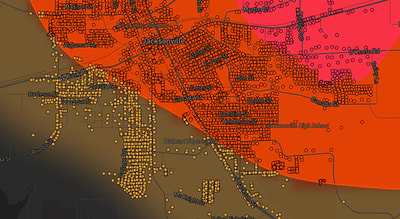
See exactly what you get.
Explore the full Springdale, AR Strike Map free – hail track, address overlay, and CSV download. No account required.
Try the Free Demo →