Fairmount, ND Hail Storm – August 2025
August 21, 2025 hail storm near Fairmount, ND. Radar-confirmed hail track and contractor lead lists available.
Max Hail
3.75"2" est.
confirmed
Zones
16
NWS alerts
Radar
628
dual-pol hits
Spotter
21
field reports
NWS WARNING AREA · Fairmount Metro · Aug 21, 2025
Intelligence Platform
StormSnipe Pro
$49/ mo
Cancel anytime · No contracts
›All 50 states
›No zone limits
›No per-event fees
Subscribe to Pro
Pro renews monthly until canceled · Cancel anytime in the billing portal
What's included
Instant delivery
Every storm published within hours of NOAA confirmation.
Interactive Strike Map
Full radar-confirmed hail track on an interactive map.
Address CSV export
Every affected residential address, export-ready.
Smart alerts
Notified when a storm hits your area. Set zones once.
Nationwide coverage
All 50 states. No zone restrictions. No geographic caps.
Live pipeline
NOAA NEXRAD processed and delivered 24/7.
Address data notice
Pro coverage in California, Vermont, and Oregon includes the confirmed hail track and Strike Map only — no address lists. State data-privacy law treats compiled address lists differently in those three states, so we exclude their addresses from extraction and delivery.
NWS WARNING AREAS · 16
This storm generated 16 NWS alert zones. Pro access covers the complete storm track and all addresses across every zone.
ZONE 1NWS FGF
Fairmount, ND
Dual-Pol Radar
5 addresses in warning area
Alert issued Thu, Aug 21 · 10:26 PM UTC
1.75"
confirmed
1.25"
est. (NWS)
ZONE 2NWS ABR
Wheaton, MN
Dual-Pol Radar
22 addresses in warning area
Alert issued Thu, Aug 21 · 10:28 PM UTC
1.75"
confirmed
1"
est. (NWS)
ZONE 3NWS FGF
Fairmount, ND
Dual-Pol Radar
53 addresses in warning area
Alert issued Thu, Aug 21 · 10:43 PM UTC
1.75"
confirmed
1.25"
est. (NWS)
ZONE 4NWS ABR
Wheaton, MN
Dual-Pol Radar
36 addresses in warning area
Alert issued Thu, Aug 21 · 11:15 PM UTC
1.75"
confirmed
1"
est. (NWS)
ZONE 5NWS ABR
Graceville, MN
Dual-Pol Radar
Alert issued Thu, Aug 21 · 11:38 PM UTC
2.25"
confirmed
1.5"
est. (NWS)
ZONE 6NWS ABR
Odessa, MN
Dual-Pol Radar
Alert issued Fri, Aug 22 · 12:07 AM UTC
2.75"
confirmed
1.5"
est. (NWS)
ZONE 7NWS ABR
Clinton, MN
Dual-Pol Radar
12 addresses in warning area
Alert issued Fri, Aug 22 · 12:24 AM UTC
2.75"
confirmed
1.5"
est. (NWS)
ZONE 8NWS ABR
Ortonville, MN
Dual-Pol Radar
Alert issued Fri, Aug 22 · 12:49 AM UTC
2.75"
confirmed
1.25"
est. (NWS)
ZONE 9NWS FGF
Thief River Falls, MN
Dual-Pol Radar
Alert issued Fri, Aug 22 · 12:55 AM UTC
2"
confirmed
1.5"
est. (NWS)
ZONE 10NWS ABR
Odessa, MN
Dual-Pol Radar
Alert issued Fri, Aug 22 · 12:58 AM UTC
2.75"
confirmed
1.25"
est. (NWS)
ZONE 11NWS ABR
Ortonville, MN
Dual-Pol Radar
351 addresses in warning area
Alert issued Fri, Aug 22 · 1:12 AM UTC
2.75"
confirmed
1.25"
est. (NWS)
ZONE 12NWS MPX
Bellingham, MN
Dual-Pol Radar
403 addresses in warning area
Alert issued Fri, Aug 22 · 1:20 AM UTC
1.75"
confirmed
1.5"
est. (NWS)
ZONE 13NWS ABR
Correll, MN
Dual-Pol Radar
74 addresses in warning area
Alert issued Fri, Aug 22 · 1:22 AM UTC
2.5"
confirmed
1.25"
est. (NWS)
ZONE 14NWS ABR
Miller, SD
Dual-Pol Radar
Alert issued Fri, Aug 22 · 5:17 AM UTC
2"
confirmed
2"
est. (NWS)
ZONE 15NWS ABR
Pierre, SD
Dual-Pol Radar
Alert issued Fri, Aug 22 · 8:28 AM UTC
3.75"
confirmed
2"
est. (NWS)
ZONE 16NWS ABR
Harrold, SD
Dual-Pol Radar
Alert issued Fri, Aug 22 · 8:51 AM UTC
1.5"
confirmed
1.75"
est. (NWS)
What Happened
A severe hail storm moved through Fairmount, North Dakota, on Aug. 21, 2025, with spotter-verified hail reaching 1.5 inches in the early evening. Three NWS alerts marked the storm path between 5:26 PM CDT and 7:55 PM CDT, with radar and spotter confirmation on each report.
The first two alerts, issued at 5:26 PM CDT and 5:43 PM CDT, both carried a 1.25-inch hail threat with radar and spotter verification. The final alert at 7:55 PM CDT upgraded to 1.5-inch hail as the storm continued east through the Fairmount area. The sequence shows repeated hail production over more than two hours.
Ground reports came in around 5:29 PM CDT and 5:50 PM CDT. One spotter reported an observed tornado riding the North Dakota and South Dakota state line. Another report described snapped trees and a visible track, with time and location estimated from nearby reports. At 5:50 PM CDT, a Dakota Magic Casino skycam showed a tornado, with the location estimated by radar.
Damage Assessment
The field reports point to more than hail on the ground. They show a storm capable of producing a tornado signature and visible tree damage near Fairmount during the same event window. The snapped trees and track report place surface impacts along the border area south of the town, while the skycam report adds a second confirmed tornado observation later in the evening.
The hail reports were consistent across the event. Radar and spotter verification appeared in all three alerts, and the alert sequence escalated from 1.25-inch hail to 1.5-inch hail by late evening. The reports do not show a single isolated burst. They show a storm that maintained severe hail potential through multiple cycles.
For contractors, the first pass should focus on roof slopes, ridge caps, soft metals, and north- and west-facing elevations in the Fairmount area and along the state line corridor. The combination of repeated hail alerts and tornado-field reports raises the odds of mixed loss types on the same property. Search for bruised shingles, creased tabs, impact marks on vents, and tree-related collateral damage around the same addresses.
Pay close attention to outbuildings, window screens, gutters, downspouts, and vehicle exposure in open lots. A storm with this kind of hail and wind history can leave uneven damage patterns across a short drive radius. One roof may show concentrated impact marks while a nearby structure carries mostly trim, metal, or tree contact damage.
What Contractors Should Know
Use the timing to narrow canvass windows. The first hail alert came at 5:26 PM CDT, and the last came at 7:55 PM CDT. That puts the main inspection window in the late afternoon and early evening, with damage reports arriving in the same span. Teams should prioritize the border area around Fairmount first, then work outward along the storm path.
Storm Details
- Start Date
- Thursday, August 21, 2025
- Last Activity
- Friday, August 22, 2025
- Location
- Fairmount, ND
- Warning Areas
- 16
- Dual-Pol Radar
- 628
- Spotter Reports
- 21
Preview Strike Map
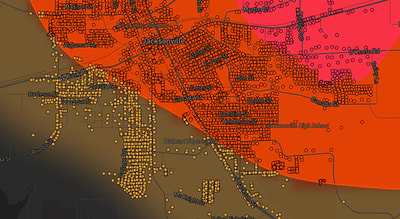
See exactly what you get.
Explore the full Springdale, AR Strike Map free – hail track, address overlay, and CSV download. No account required.
Try the Free Demo →