Bluff, UT Hail Storm – August 2025
August 26, 2025 hail storm near Bluff, UT. Radar-confirmed hail track and contractor lead lists available.
Max Hail
2"1" est.
confirmed
Zones
5
NWS alerts
Radar
14
dual-pol hits
Spotter
2
field reports
NWS WARNING AREA · Bluff Metro · Aug 26, 2025
Intelligence Platform
StormSnipe Pro
$49/ mo
Cancel anytime · No contracts
›All 50 states
›No zone limits
›No per-event fees
Subscribe to Pro
Pro renews monthly until canceled · Cancel anytime in the billing portal
What's included
Instant delivery
Every storm published within hours of NOAA confirmation.
Interactive Strike Map
Full radar-confirmed hail track on an interactive map.
Address CSV export
Every affected residential address, export-ready.
Smart alerts
Notified when a storm hits your area. Set zones once.
Nationwide coverage
All 50 states. No zone restrictions. No geographic caps.
Live pipeline
NOAA NEXRAD processed and delivered 24/7.
Address data notice
Pro coverage in California, Vermont, and Oregon includes the confirmed hail track and Strike Map only — no address lists. State data-privacy law treats compiled address lists differently in those three states, so we exclude their addresses from extraction and delivery.
NWS WARNING AREAS · 5
This storm generated 5 NWS alert zones. Pro access covers the complete storm track and all addresses across every zone.
ZONE 1NWS GJT
Bluff, UT
NWS Warning
Alert issued Tue, Aug 26 · 9:07 PM UTC
1"
est. (NWS)
ZONE 2NWS GJT
Moab, UT
Dual-Pol Radar
1 addresses in warning area
Alert issued Tue, Aug 26 · 9:17 PM UTC
1.75"
confirmed
1"
est. (NWS)
ZONE 3NWS GJT
Bluff, UT
NWS Warning
Alert issued Tue, Aug 26 · 9:23 PM UTC
1"
est. (NWS)
ZONE 4NWS SLC
Huntington, UT
Dual-Pol Radar
Alert issued Tue, Aug 26 · 10:13 PM UTC
2"
confirmed
1"
est. (NWS)
ZONE 5NWS GJT
Nucla, CO
Dual-Pol Radar
56 addresses in warning area
Alert issued Tue, Aug 26 · 11:54 PM UTC
1.5"
confirmed
1"
est. (NWS)
What Happened
Bluff, UT was hit by a hail-producing storm on 2025-08-26. The event delivered 1-inch hail in the warning area and ended with spotter-verified hail by late afternoon.
The storm moved through in several rounds. An initial NWS warning came in at 3:07 PM MDT with 1-inch hail confidence. A radar-derived alert followed at 3:17 PM MDT, also tied to 1-inch hail. Another warning-only alert came at 3:23 PM MDT with the same hail size. By 5:54 PM MDT, the event was carrying radar and spotter-verified confidence.
Field reports put the surface impact in clearer focus. At 5:38 PM MDT, a spotter reported heavy rain and hail lasting about 20 minutes and measured hail at 0.7 inch. That report fits a storm that kept producing hail over a broad part of the warning area, with size held near the 1-inch mark while intensity varied by location and time.
The sequence shows a storm that did not arrive as a single short burst. It built, refreshed, and continued into the late afternoon. The radar and warning timeline tracked that persistence. The ground report added a direct account from the field, with hail and heavy rain lasting long enough to affect exposed surfaces.
Damage Assessment
The available reports point to a moderate hail event with limited but real surface impact. The spotter note of 0.7-inch hail and 20 minutes of hail and heavy rain indicates enough accumulation and pounding to affect unprotected roofs, soft metals, and vehicle surfaces in the storm path.
No widespread damage report was included in the field data, but the mix of warning-only, radar-derived, and spotter-verified alerts shows a storm that was not just model-driven. It produced hail that was observed on the ground and confirmed by more than one source. In Bluff, that usually means the first check should focus on vehicles parked outdoors, roof openings, gutters, downspouts, and any north- or west-facing siding that took direct exposure during the late-afternoon passage.
The strongest ground evidence in this event comes from the spotter report at 5:38 PM MDT. Heavy rain and hail for 20 minutes can drive water under loose trim and stress older roof penetrations, even when hail size stays below severe threshold levels in some locations. In a small community like Bluff, damage can remain scattered and easy to miss until a close inspection finds bruised shingles, dented metal accents, and chipped paint on exposed equipment.
What Contractors Should Know
This storm is a good field check for mixed hail and rain exposure in a compact area. The hail size ranged from 0.7 inch in the spotter report to 1 inch in the warning and radar alerts, so inspection crews should not assume uniform impact across the community. Roofs, vehicles, and exterior finishes may show different results block to block, especially where the storm core shifted during the afternoon.
Storm Details
- Start Date
- Tuesday, August 26, 2025
- Last Activity
- Tuesday, August 26, 2025
- Location
- Bluff, UT
- Warning Areas
- 5
- Dual-Pol Radar
- 14
- Spotter Reports
- 2
Preview Strike Map
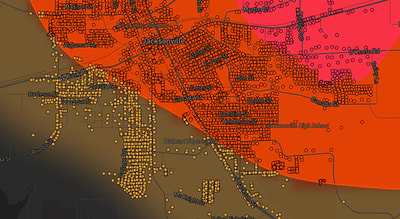
See exactly what you get.
Explore the full Springdale, AR Strike Map free – hail track, address overlay, and CSV download. No account required.
Try the Free Demo →