Grover, CO Hail Storm – September 2025
September 11, 2025 hail storm near Grover, CO. Radar-confirmed hail track and contractor lead lists available.
Max Hail
2.25"1.75" est.
confirmed
Zones
6
NWS alerts
Radar
166
dual-pol hits
Spotter
2
field reports
NWS WARNING AREA · Grover Metro · Sep 11, 2025
Intelligence Platform
StormSnipe Pro
$49/ mo
Cancel anytime · No contracts
›All 50 states
›No zone limits
›No per-event fees
Subscribe to Pro
Pro renews monthly until canceled · Cancel anytime in the billing portal
What's included
Instant delivery
Every storm published within hours of NOAA confirmation.
Interactive Strike Map
Full radar-confirmed hail track on an interactive map.
Address CSV export
Every affected residential address, export-ready.
Smart alerts
Notified when a storm hits your area. Set zones once.
Nationwide coverage
All 50 states. No zone restrictions. No geographic caps.
Live pipeline
NOAA NEXRAD processed and delivered 24/7.
Address data notice
Pro coverage in California, Vermont, and Oregon includes the confirmed hail track and Strike Map only — no address lists. State data-privacy law treats compiled address lists differently in those three states, so we exclude their addresses from extraction and delivery.
NWS WARNING AREAS · 6
This storm generated 6 NWS alert zones. Pro access covers the complete storm track and all addresses across every zone.
ZONE 1NWS BOU
Grover, CO
Dual-Pol Radar
160 addresses in warning area
Alert issued Thu, Sep 11 · 10:53 PM UTC
2.25"
confirmed
1.5"
est. (NWS)
ZONE 2NWS CYS
Harrison, NE
Dual-Pol Radar
Alert issued Thu, Sep 11 · 11:18 PM UTC
2.25"
confirmed
1.5"
est. (NWS)
ZONE 3NWS CYS
Kimball, NE
Dual-Pol Radar
16 addresses in warning area
Alert issued Thu, Sep 11 · 11:20 PM UTC
1.25"
confirmed
1.75"
est. (NWS)
ZONE 4NWS CYS
Crawford, NE
Dual-Pol Radar
74 addresses in warning area
Alert issued Thu, Sep 11 · 11:42 PM UTC
2.25"
confirmed
1.5"
est. (NWS)
ZONE 5NWS CYS
Harrison, NE
Dual-Pol Radar
1 addresses in warning area
Alert issued Fri, Sep 12 · 12:17 AM UTC
2"
confirmed
1"
est. (NWS)
ZONE 6NWS CYS
Crawford, NE
Dual-Pol Radar
Alert issued Fri, Sep 12 · 12:27 AM UTC
2.25"
confirmed
1"
est. (NWS)
What Happened
A severe hail storm moved through Grover, Colorado, on September 11, 2025, producing 1.5-inch hail in the late afternoon. The storm had one NWS alert attached to it, issued at 4:53 PM MDT with radar and spotter verification.
The field report came in six minutes later. At 4:59 PM MDT, a mPING observation from the Grover area reported quarter-size hail at 1.00 inch. That report matched a spotter-verified observation inside the warning area, while radar held confidence high enough to support the larger hail estimate in the alert. The sequence points to a short-lived but organized hail core moving through the area during the late-afternoon storm window.
Grover sits in open country east of the Front Range, where hail exposure can be direct and fast-moving storms leave little time for visual confirmation. The alert time and the nearby ground report place the hail core over the area during the final minutes of the event.
Damage Assessment
The surface impact appears to have been localized and hail-driven rather than wind-driven. The only field report tied to the storm documented quarter-size hail in Grover at 4:59 PM MDT, and the radar-backed alert indicated larger stones in the same storm path. No separate damage report was included in the ground-truth set, which keeps the assessment focused on hail exposure rather than broader storm impacts.
For contractors, the most useful signal is the timing gap between the alert and the spotter report. The storm was active in the area for a narrow window, which usually means impact checks should start with roofs, soft metal, gutters, window screens, and exposed vehicles rather than widespread structural damage claims. In a place like Grover, a single hail core can affect a small cluster of properties quickly and then move on.
The available reports do not indicate a long-duration hail event. That limits the likely footprint, but it does not remove the need for close inspection on first-pass roofs and any structures with older shingles or previous wear. A 1-inch field report inside the same storm track supports a mix of hail sizes across the path, with the highest-end stone size captured by radar and the lower-end size captured at the surface.
What Contractors Should Know
Work the Grover area as a tight hail response, not a broad wind-and-hail mobilization. Start with properties nearest the reported path and expand outward only if roof findings support more than one impact zone. Open-country communities often have fewer structures per mile, so the job is less about volume and more about precision in locating the few roofs that took the direct hit.
Bring the usual hail inspection checklist, but keep the focus on impact marks, bruising, and collateral damage around penetrations and edges. The 4:53 PM MDT alert and the 4:59 PM MDT ground report place the main event in a short late-afternoon window, which helps narrow canvass timing for adjuster coordination and homeowner outreach.
Storm Details
- Start Date
- Thursday, September 11, 2025
- Last Activity
- Thursday, September 11, 2025
- Location
- Grover, CO
- Warning Areas
- 6
- Dual-Pol Radar
- 166
- Spotter Reports
- 2
Preview Strike Map
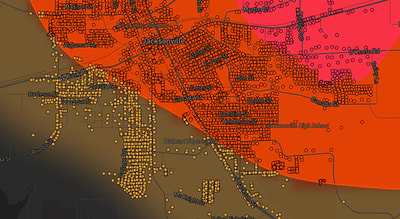
See exactly what you get.
Explore the full Springdale, AR Strike Map free – hail track, address overlay, and CSV download. No account required.
Try the Free Demo →