Moab, UT Hail Storm – September 2025
September 13, 2025 hail storm near Moab, UT. Radar-confirmed hail track and contractor lead lists available.
Max Hail
1.75"1" est.
confirmed
Zones
16
NWS alerts
Radar
88
dual-pol hits
Spotter
5
field reports
NWS WARNING AREA · Moab Metro · Sep 13, 2025
Intelligence Platform
StormSnipe Pro
$49/ mo
Cancel anytime · No contracts
›All 50 states
›No zone limits
›No per-event fees
Subscribe to Pro
Pro renews monthly until canceled · Cancel anytime in the billing portal
What's included
Instant delivery
Every storm published within hours of NOAA confirmation.
Interactive Strike Map
Full radar-confirmed hail track on an interactive map.
Address CSV export
Every affected residential address, export-ready.
Smart alerts
Notified when a storm hits your area. Set zones once.
Nationwide coverage
All 50 states. No zone restrictions. No geographic caps.
Live pipeline
NOAA NEXRAD processed and delivered 24/7.
Address data notice
Pro coverage in California, Vermont, and Oregon includes the confirmed hail track and Strike Map only — no address lists. State data-privacy law treats compiled address lists differently in those three states, so we exclude their addresses from extraction and delivery.
NWS WARNING AREAS · 16
This storm generated 16 NWS alert zones. Pro access covers the complete storm track and all addresses across every zone.
ZONE 1NWS GJT
Moab, UT
Dual-Pol Radar
1 addresses in warning area
Alert issued Sat, Sep 13 · 1:07 PM UTC
1.25"
confirmed
1"
est. (NWS)
ZONE 2NWS ABQ
Datil, NM
NWS Warning
Alert issued Sat, Sep 13 · 5:44 PM UTC
1"
est. (NWS)
ZONE 3NWS GJT
Gateway, CO
Dual-Pol Radar
94 addresses in warning area
Alert issued Sat, Sep 13 · 5:46 PM UTC
1.25"
confirmed
1"
est. (NWS)
ZONE 4NWS GJT
Gateway, CO
Dual-Pol Radar
2 addresses in warning area
Alert issued Sat, Sep 13 · 6:32 PM UTC
1.25"
confirmed
1"
est. (NWS)
ZONE 5NWS ABQ
Magdalena, NM
NWS Warning
Alert issued Sat, Sep 13 · 6:32 PM UTC
1"
est. (NWS)
ZONE 6NWS GJT
Monticello, UT
Dual-Pol Radar
80 addresses in warning area
Alert issued Sat, Sep 13 · 6:42 PM UTC
1.5"
confirmed
1"
est. (NWS)
ZONE 7NWS GJT
Bluff, UT
NWS Warning
Alert issued Sat, Sep 13 · 6:52 PM UTC
1"
est. (NWS)
ZONE 8NWS ABQ
Waterflow, NM
Dual-Pol Radar
478 addresses in warning area
Alert issued Sat, Sep 13 · 7:01 PM UTC
0.75"
confirmed
1"
est. (NWS)
ZONE 9NWS GJT
Palisade, CO
Dual-Pol Radar
36,700 addresses in warning area
Alert issued Sat, Sep 13 · 7:34 PM UTC
0.75"
confirmed
1"
est. (NWS)
ZONE 10NWS ABQ
La Plata, NM
Dual-Pol Radar
1 addresses in warning area
Alert issued Sat, Sep 13 · 7:44 PM UTC
0.75"
confirmed
1"
est. (NWS)
ZONE 11NWS GJT
Moab, UT
Dual-Pol Radar
Alert issued Sat, Sep 13 · 7:54 PM UTC
1"
confirmed
1"
est. (NWS)
ZONE 12NWS GJT
Nucla, CO
Dual-Pol Radar
1 addresses in warning area
Alert issued Sat, Sep 13 · 7:58 PM UTC
1.25"
confirmed
1"
est. (NWS)
ZONE 13NWS ABQ
Magdalena, NM
Dual-Pol Radar
10 addresses in warning area
Alert issued Sat, Sep 13 · 8:59 PM UTC
1.5"
confirmed
1"
est. (NWS)
ZONE 14NWS ABQ
Watrous, NM
Dual-Pol Radar
22 addresses in warning area
Alert issued Sat, Sep 13 · 9:40 PM UTC
1.25"
confirmed
1"
est. (NWS)
ZONE 15NWS ABQ
Datil, NM
Dual-Pol Radar
45 addresses in warning area
Alert issued Sat, Sep 13 · 10:16 PM UTC
1.25"
confirmed
1"
est. (NWS)
ZONE 16NWS ABQ
Artesia, NM
Dual-Pol Radar
14 addresses in warning area
Alert issued Sun, Sep 14 · 1:41 AM UTC
1.75"
confirmed
1"
est. (NWS)
What Happened
A severe hail storm moved through the Moab, UT area on September 13, 2025, with 1-inch hail detected in multiple warning periods and a spotter report of storm-related power outage at 1:50 PM MDT. The event began with radar confidence early in the morning and continued into early afternoon.
The first hail alert came at 7:07 AM MDT, when dual-polarization radar showed 1-inch hail potential over the Moab area. Another radar-derived alert followed at 11:46 AM MDT. By 12:32 PM MDT, hail confidence remained at 1 inch again. The storm intensified around midday, and at 12:42 PM MDT the hail signal was paired with spotter verification. A fourth mid-afternoon alert came at 12:52 PM MDT with warning-level confidence only.
Field reports placed a spotter-verified 0.75-inch hail report at 1:50 PM MDT, along with a power outage tied to the storm. That report came between two later hail alerts. At 1:34 PM MDT, radar and spotter verification again supported 1-inch hail. Two final radar-derived alerts followed at 1:54 PM MDT and 1:58 PM MDT.
The sequence shows a long-lived hail threat across the Moab warning area, with repeated detections through the morning and into early afternoon. The strongest confidence came from a mix of dual-polarization radar and spotter input.
Damage Assessment
The clearest ground impact in this event was a spotter-verified power outage reported at 1:50 PM MDT near Moab, along with 0.75-inch hail. No widespread structural damage report was listed in the ground-truth field data provided, but the storm did produce enough local impact to interrupt service.
The field report sits inside a cluster of hail alerts that remained active through the early afternoon. That pattern points to repeated hail cores passing through the same general area rather than a single brief burst. The confirmed hail size stayed at 1 inch in the warning record, while the ground report documented a slightly smaller measured stone size near the outage location.
For contractors, the useful detail is the timing. The event was not confined to one short window. It extended from early morning radar detection to late-afternoon follow-up alerts. In Moab, that means roof, gutter, and exterior checks should not be limited to one neighborhood or one hour of impact.
The report of storm-related power loss also raises the chance of localized electrical interruption, equipment reset issues, and downed service complaints in affected pockets. Crews should expect calls that begin with power problems and later turn into roof, vehicle, and soft-surface hail claims as residents notice damage after the storm passes.
What Contractors Should Know
Moab sits in terrain where storm coverage can be uneven across short distances. A hail event like this one can leave one block with a verified report and the next block with only radar evidence. Crews should work the warning area in passes and not assume the full neighborhood took the same hit.
Storm Details
- Start Date
- Saturday, September 13, 2025
- Last Activity
- Saturday, September 13, 2025
- Location
- Moab, UT
- Warning Areas
- 16
- Dual-Pol Radar
- 88
- Spotter Reports
- 5
Preview Strike Map
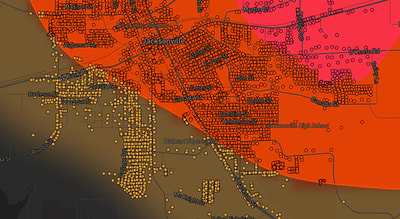
See exactly what you get.
Explore the full Springdale, AR Strike Map free – hail track, address overlay, and CSV download. No account required.
Try the Free Demo →