Beaver, OK Hail Storm – September 2025
September 20, 2025 hail storm near Beaver, OK. Radar-confirmed hail track and contractor lead lists available.
Max Hail
4"1.75" est.
confirmed
Zones
16
NWS alerts
Radar
1,128
dual-pol hits
Spotter
8
field reports
NWS WARNING AREA · Beaver Metro · Sep 20, 2025
Intelligence Platform
StormSnipe Pro
$49/ mo
Cancel anytime · No contracts
›All 50 states
›No zone limits
›No per-event fees
Subscribe to Pro
Pro renews monthly until canceled · Cancel anytime in the billing portal
What's included
Instant delivery
Every storm published within hours of NOAA confirmation.
Interactive Strike Map
Full radar-confirmed hail track on an interactive map.
Address CSV export
Every affected residential address, export-ready.
Smart alerts
Notified when a storm hits your area. Set zones once.
Nationwide coverage
All 50 states. No zone restrictions. No geographic caps.
Live pipeline
NOAA NEXRAD processed and delivered 24/7.
Address data notice
Pro coverage in California, Vermont, and Oregon includes the confirmed hail track and Strike Map only — no address lists. State data-privacy law treats compiled address lists differently in those three states, so we exclude their addresses from extraction and delivery.
NWS WARNING AREAS · 16
This storm generated 16 NWS alert zones. Pro access covers the complete storm track and all addresses across every zone.
ZONE 1NWS AMA
Beaver, OK
Dual-Pol Radar
66 addresses in warning area
Alert issued Sat, Sep 20 · 8:24 PM UTC
2.5"
confirmed
1"
est. (NWS)
ZONE 2NWS AMA
Gate, OK
Dual-Pol Radar
96 addresses in warning area
Alert issued Sat, Sep 20 · 8:37 PM UTC
2.5"
confirmed
1.5"
est. (NWS)
ZONE 3NWS OUN
Freedom, OK
Dual-Pol Radar
338 addresses in warning area
Alert issued Sat, Sep 20 · 9:56 PM UTC
1.5"
confirmed
1"
est. (NWS)
ZONE 4NWS OUN
Marshall, OK
Dual-Pol Radar
54 addresses in warning area
Alert issued Sat, Sep 20 · 10:30 PM UTC
1.25"
confirmed
1"
est. (NWS)
ZONE 5NWS OUN
Fairmont, OK
Dual-Pol Radar
805 addresses in warning area
Alert issued Sat, Sep 20 · 10:30 PM UTC
2"
confirmed
1"
est. (NWS)
ZONE 6NWS OUN
Perry, OK
Dual-Pol Radar
4 addresses in warning area
Alert issued Sat, Sep 20 · 10:44 PM UTC
1.75"
confirmed
1"
est. (NWS)
ZONE 7NWS OUN
Covington, OK
Dual-Pol Radar
3,776 addresses in warning area
Alert issued Sat, Sep 20 · 11:04 PM UTC
2.25"
confirmed
1"
est. (NWS)
ZONE 8NWS AMA
Perryton, TX
Dual-Pol Radar
176 addresses in warning area
Alert issued Sat, Sep 20 · 11:10 PM UTC
2.25"
confirmed
1.5"
est. (NWS)
ZONE 9NWS OUN
Cache, OK
Dual-Pol Radar
Alert issued Sat, Sep 20 · 11:17 PM UTC
2.25"
confirmed
1"
est. (NWS)
ZONE 10NWS OUN
Perry, OK
Dual-Pol Radar
627 addresses in warning area
Alert issued Sat, Sep 20 · 11:41 PM UTC
2.25"
confirmed
1"
est. (NWS)
ZONE 11NWS OUN
Ponca City, OK
Dual-Pol Radar
1,507 addresses in warning area
Alert issued Sun, Sep 21 · 12:20 AM UTC
1.75"
confirmed
1"
est. (NWS)
ZONE 12NWS OUN
Medford, OK
Dual-Pol Radar
244 addresses in warning area
Alert issued Sun, Sep 21 · 12:39 AM UTC
1.75"
confirmed
1"
est. (NWS)
ZONE 13NWS AMA
Claude, TX
Dual-Pol Radar
1,834 addresses in warning area
Alert issued Sun, Sep 21 · 12:52 AM UTC
4"
confirmed
1.5"
est. (NWS)
ZONE 14NWS OUN
Alva, OK
Dual-Pol Radar
4,004 addresses in warning area
Alert issued Sun, Sep 21 · 1:42 AM UTC
2.5"
confirmed
1.25"
est. (NWS)
ZONE 15NWS AMA
Claude, TX
Dual-Pol Radar
35 addresses in warning area
Alert issued Sun, Sep 21 · 1:44 AM UTC
4"
confirmed
1.75"
est. (NWS)
ZONE 16NWS AMA
Groom, TX
Dual-Pol Radar
592 addresses in warning area
Alert issued Sun, Sep 21 · 4:43 AM UTC
2"
confirmed
1"
est. (NWS)
Beaver, OK saw a concluded hail storm on 2025-09-20 with a peak verified hail size of 1.75 inches. The event unfolded through the afternoon and evening across multiple NWS alert areas.
What Happened
The first hail alert came at 3:24 PM CDT with 1-inch hail detected by dual-polarization radar. A second alert followed at 3:37 PM CDT with 1.5-inch hail. A later round of storm activity produced another 1.5-inch hail alert at 6:10 PM CDT.
By 7:52 PM CDT, the storm had a 1.5-inch hail alert backed by radar and spotter verification. The highest hail size in the event was issued at 8:44 PM CDT, when dual-polarization radar supported a 1.75-inch hail alert. A final alert came at 11:43 PM CDT with 1-inch hail detected by dual-polarization radar.
The alert sequence shows repeated hail production over a long window from mid-afternoon into late night. The storm was not a single short-lived pulse. It produced several hail cores as it crossed the Beaver area.
Damage Assessment
Hail in the 1-inch to 1.75-inch range can damage roofs, siding, windows, vents, gutters, and exposed vehicles. In a multi-alert event like this one, the repeated hail size changes point to more than one impact window across the warning area.
The 1-inch alerts support minor to moderate cosmetic impact on metal surfaces, shingles, and soft materials. The 1.5-inch and 1.75-inch alerts raise the likelihood of bruised roofing, shattered skylights, cracked window screens, dented AC fins, and field damage on vehicles left outside. Where the 1.75-inch hail passed, contractors should expect more concentrated impact marks and more frequent loss claims than in the smaller hail segments.
Damage can vary block to block. Roof slope, building age, exposure, and storm timing all affect what crews find on site. Older asphalt shingles, thin gauge metal, and parked vehicles are the first places to inspect after a hail event with this size range.
What Contractors Should Know
Start with roof and perimeter assessments in the earliest hail corridors, then expand outward to structures that sat inside later alert areas. Look for strike patterns on slopes facing the storm approach, broken ridge vents, damaged soft metal, and loss of protective granules. Check trim, fascia, and downspouts for concentrated impact marks. On commercial sites, inspect HVAC units, membrane edges, and skylight assemblies.
Document each address with timestamped photos and note the highest hail size tied to that location. A multi-stage event like this one can produce different damage levels within the same town. Crews should separate properties exposed to the 1-inch alerts from those reached during the 1.75-inch peak. That keeps estimates tied to the actual field conditions rather than the broad warning area.
Use local weather logs, inspection notes, and roof geometry together when triaging canvass zones. Prioritize homes with aging shingles, prior repairs, or visible metal impact. For vehicle claims, focus on hood, roof, mirror, and windshield edge checks. For retail and industrial properties, add sign faces, gutters, downspouts, and rooftop mechanicals to the inspection list.
Storm Details
- Start Date
- Saturday, September 20, 2025
- Last Activity
- Saturday, September 20, 2025
- Location
- Beaver, OK
- Warning Areas
- 16
- Dual-Pol Radar
- 1,128
- Spotter Reports
- 8
Preview Strike Map
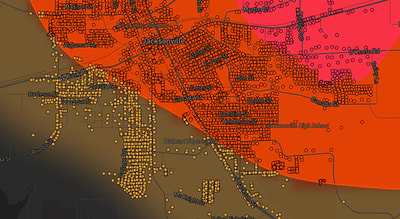
See exactly what you get.
Explore the full Springdale, AR Strike Map free – hail track, address overlay, and CSV download. No account required.
Try the Free Demo →