Ardmore, OK Hail Storm – September 2025
September 21, 2025 hail storm near Ardmore, OK. Radar-confirmed hail track and contractor lead lists available.
Max Hail
4"2" est.
confirmed
Zones
16
NWS alerts
Radar
762
dual-pol hits
Spotter
65
field reports
NWS WARNING AREA · Ardmore Metro · Sep 21, 2025
Intelligence Platform
StormSnipe Pro
$49/ mo
Cancel anytime · No contracts
›All 50 states
›No zone limits
›No per-event fees
Subscribe to Pro
Pro renews monthly until canceled · Cancel anytime in the billing portal
What's included
Instant delivery
Every storm published within hours of NOAA confirmation.
Interactive Strike Map
Full radar-confirmed hail track on an interactive map.
Address CSV export
Every affected residential address, export-ready.
Smart alerts
Notified when a storm hits your area. Set zones once.
Nationwide coverage
All 50 states. No zone restrictions. No geographic caps.
Live pipeline
NOAA NEXRAD processed and delivered 24/7.
Address data notice
Pro coverage in California, Vermont, and Oregon includes the confirmed hail track and Strike Map only — no address lists. State data-privacy law treats compiled address lists differently in those three states, so we exclude their addresses from extraction and delivery.
NWS WARNING AREAS · 16
This storm generated 16 NWS alert zones. Pro access covers the complete storm track and all addresses across every zone.
ZONE 1NWS OUN
Ardmore, OK
Dual-Pol Radar
16,178 addresses in warning area
Alert issued Sun, Sep 21 · 8:26 PM UTC
2.25"
confirmed
1"
est. (NWS)
ZONE 2NWS OUN
Holliday, TX
Dual-Pol Radar
74 addresses in warning area
Alert issued Sun, Sep 21 · 8:40 PM UTC
3.75"
confirmed
1"
est. (NWS)
ZONE 3NWS OUN
Olney, TX
Dual-Pol Radar
67 addresses in warning area
Alert issued Sun, Sep 21 · 9:06 PM UTC
3.75"
confirmed
1.75"
est. (NWS)
ZONE 4NWS FWD
Olney, TX
Dual-Pol Radar
2,564 addresses in warning area
Alert issued Sun, Sep 21 · 9:16 PM UTC
3.5"
confirmed
1.75"
est. (NWS)
ZONE 5NWS FWD
Valley View, TX
Dual-Pol Radar
1,091 addresses in warning area
Alert issued Sun, Sep 21 · 10:03 PM UTC
4"
confirmed
2"
est. (NWS)
ZONE 6NWS FWD
Denison, TX
Dual-Pol Radar
37,464 addresses in warning area
Alert issued Sun, Sep 21 · 10:05 PM UTC
4"
confirmed
2"
est. (NWS)
ZONE 7NWS FWD
Graham, TX
Dual-Pol Radar
1,092 addresses in warning area
Alert issued Sun, Sep 21 · 10:10 PM UTC
3.5"
confirmed
1.5"
est. (NWS)
ZONE 8NWS FWD
Sunset, TX
Dual-Pol Radar
4,277 addresses in warning area
Alert issued Sun, Sep 21 · 10:15 PM UTC
1.5"
confirmed
1"
est. (NWS)
ZONE 9NWS FWD
Nocona, TX
Dual-Pol Radar
325 addresses in warning area
Alert issued Sun, Sep 21 · 10:25 PM UTC
1.5"
confirmed
1"
est. (NWS)
ZONE 10NWS FWD
Howe, TX
Dual-Pol Radar
Alert issued Sun, Sep 21 · 10:28 PM UTC
4"
confirmed
1.5"
est. (NWS)
ZONE 11NWS FWD
Corinth, TX
Dual-Pol Radar
70,085 addresses in warning area
Alert issued Sun, Sep 21 · 10:46 PM UTC
4"
confirmed
2"
est. (NWS)
ZONE 12NWS FWD
Anna, TX
Dual-Pol Radar
482 addresses in warning area
Alert issued Sun, Sep 21 · 10:51 PM UTC
4"
confirmed
1.75"
est. (NWS)
ZONE 13NWS FWD
Dublin, TX
Dual-Pol Radar
371 addresses in warning area
Alert issued Sun, Sep 21 · 11:35 PM UTC
3.5"
confirmed
1.5"
est. (NWS)
ZONE 14NWS FWD
Flower Mound, TX
Dual-Pol Radar
Alert issued Sun, Sep 21 · 11:41 PM UTC
1.75"
confirmed
1"
est. (NWS)
ZONE 15NWS FWD
Farmersville, TX
Dual-Pol Radar
30,721 addresses in warning area
Alert issued Sun, Sep 21 · 11:44 PM UTC
4"
confirmed
1.25"
est. (NWS)
ZONE 16NWS FWD
Gordon, TX
Dual-Pol Radar
1,880 addresses in warning area
Alert issued Mon, Sep 22 · 12:42 AM UTC
3"
confirmed
1.25"
est. (NWS)
Ardmore, OK was hit by a concluded hail storm on 2025-09-21 that produced a maximum confirmed hail size of 1.75 inches. The storm generated three NWS alert areas with dual-polarization radar support across the afternoon.
What Happened
The first alert came at 3:26 PM CDT with 1-inch hail confidence from dual-polarization radar. A second alert followed at 3:40 PM CDT with the same 1-inch hail estimate. The strongest alert arrived at 4:06 PM CDT, when radar confidence increased to 1.75-inch hail.
The alert sequence tracked a late-afternoon hail core moving through the Ardmore metro. All three alerts were issued on 2025-09-21 and are included in this multi-zone storm report. The storm has concluded.
Damage Assessment
Hail in the 1-inch to 1.75-inch range can produce a mixed damage pattern across roofs, soft metals, windows, and exterior trim. The lower end of that range often leaves impact marks on shingles, gutters, and siding. The upper end can add broken seals on windows, dented vents, and heavier losses on exposed roof slopes, skylights, and HVAC fins.
In Ardmore, the three-alert sequence points to more than one hail pulse across the event. Properties near the later 1.75-inch alert area should be checked first. Homes and commercial buildings with older asphalt shingles, thin gauge metal, or flat roof edges are more likely to show visible strike points and cosmetic denting. Vehicles parked outdoors during the late-afternoon core should also be inspected for windshield chips and body damage.
Crews should document roof planes separately. A single storm can leave one side of a structure with light impact marks and another with concentrated hail scarring. Soft metal, ridge caps, flashing, turbine vents, and downspouts are common field targets in this size range. On commercial sites, rooftop mechanical units and parapet metals often show the cleanest hail signatures.
What Contractors Should Know
This event supports a focused canvass in the Ardmore metro, with priority given to the later alert area around 4:06 PM CDT. Start with steep-slope roofs that face the storm path, then move to low-slope and accessory structures. Check for granular loss, bruising, cracked sealant, punctures in membranes, and impact marks on flashing and vents. Photograph each slope before and after close inspection. Keep roof, elevations, and exterior metals separated in the claim record.
Use the 1-inch alerts as a boundary check, not a finish line. The first two alerts may show lighter but still relevant damage, especially where the storm produced repeated hail cores. Contractors should compare field findings across the full path through Ardmore instead of assuming uniform loss. The best early indicators are roof accessories, gutter faces, window screens, and exposed vehicle lots near the alert corridor.
Storm Details
- Start Date
- Sunday, September 21, 2025
- Last Activity
- Sunday, September 21, 2025
- Location
- Ardmore, OK
- Warning Areas
- 16
- Dual-Pol Radar
- 762
- Spotter Reports
- 65
Preview Strike Map
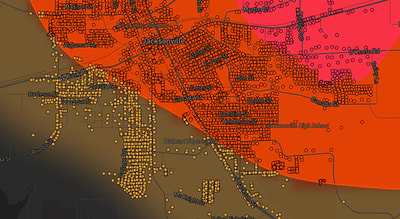
See exactly what you get.
Explore the full Springdale, AR Strike Map free – hail track, address overlay, and CSV download. No account required.
Try the Free Demo →