Kanab, UT Hail Storm – October 2025
October 11, 2025 hail storm near Kanab, UT. Radar-confirmed hail track and contractor lead lists available.
Max Hail
2.75"2" est.
confirmed
Zones
7
NWS alerts
Radar
18
dual-pol hits
Spotter
–
field reports
NWS WARNING AREA · Kanab Metro · Oct 11, 2025
Intelligence Platform
StormSnipe Pro
$49/ mo
Cancel anytime · No contracts
›All 50 states
›No zone limits
›No per-event fees
Subscribe to Pro
Pro renews monthly until canceled · Cancel anytime in the billing portal
What's included
Instant delivery
Every storm published within hours of NOAA confirmation.
Interactive Strike Map
Full radar-confirmed hail track on an interactive map.
Address CSV export
Every affected residential address, export-ready.
Smart alerts
Notified when a storm hits your area. Set zones once.
Nationwide coverage
All 50 states. No zone restrictions. No geographic caps.
Live pipeline
NOAA NEXRAD processed and delivered 24/7.
Address data notice
Pro coverage in California, Vermont, and Oregon includes the confirmed hail track and Strike Map only — no address lists. State data-privacy law treats compiled address lists differently in those three states, so we exclude their addresses from extraction and delivery.
NWS WARNING AREAS · 7
This storm generated 7 NWS alert zones. Pro access covers the complete storm track and all addresses across every zone.
ZONE 1NWS SLC
Kanab, UT
Dual-Pol Radar
Alert issued Sat, Oct 11 · 10:14 PM UTC
2"
confirmed
1.5"
est. (NWS)
ZONE 2NWS SLC
Kanab, UT
Dual-Pol Radar
Alert issued Sat, Oct 11 · 10:43 PM UTC
2.75"
confirmed
2"
est. (NWS)
ZONE 3NWS SLC
Kanab, UT
Dual-Pol Radar
Alert issued Sat, Oct 11 · 11:13 PM UTC
2.75"
confirmed
2"
est. (NWS)
ZONE 4NWS SLC
Kanab, UT
Dual-Pol Radar
Alert issued Sun, Oct 12 · 12:05 AM UTC
2.25"
confirmed
2"
est. (NWS)
ZONE 5NWS SLC
Bluff, UT
Dual-Pol Radar
Alert issued Sun, Oct 12 · 12:28 AM UTC
2.25"
confirmed
2"
est. (NWS)
ZONE 6NWS GJT
Bluff, UT
Dual-Pol Radar
Alert issued Sun, Oct 12 · 12:34 AM UTC
2.25"
confirmed
1.5"
est. (NWS)
ZONE 7NWS GJT
Blanding, UT
Dual-Pol Radar
Alert issued Sun, Oct 12 · 1:59 AM UTC
1.5"
confirmed
1.25"
est. (NWS)
Kanab, UT was struck by a concluded hail storm on 2025-10-11 with verified hail up to 2 inches. Five NWS alerts tracked the storm from mid-afternoon into early evening.
What Happened
The hail event in Kanab began in the late afternoon and continued into the early evening. The first alert came at 4:14 PM MDT with 1.5-inch hail detected by dual-polarization radar. The storm then intensified. Additional alerts followed at 4:43 PM MDT, 5:13 PM MDT, 6:05 PM MDT, and 6:28 PM MDT, each with 2-inch hail confidence from NEXRAD dual-polarization radar.
The alert sequence shows a sustained hail-producing storm over the Kanab area. The maximum confirmed hail size reached 2 inches. The storm is concluded.
Damage Assessment
Two-inch hail can break roof coverings, dent gutters, split soft metal, and damage vents, skylights, and vehicle surfaces. Homes with older shingles, lightweight patio covers, and exposed rooftop equipment are the most exposed.
The earlier 1.5-inch alert points to a hail core that produced damaging stones before the larger sizes were detected. In a multi-zone storm like this, different neighborhoods can see different impacts even within the same warning area. Contractors should expect scattered roof claims rather than a uniform field of damage.
Inspection teams should check ridge caps, roof penetrations, window trim, AC fins, and painted metal surfaces. On commercial properties, look closely at flat roof membranes, condensers, HVAC housings, and skylight frames. Vehicle lots near the storm path may show mixed loss patterns, with some units taking heavier impact than others.
What Contractors Should Know
The working window is strongest on the first visit. Document roof slope, shingle type, age indicators, and impact counts before temporary repairs begin. Photograph collateral items too, including vents, gutters, soft metals, and screen enclosures. In a storm that reached 2 inches, claims may extend beyond obvious roof hits and include damaged trim, mechanical units, and vehicle exposure.
Use the alert timing to guide canvass priority. The first hail signal arrived at 4:14 PM MDT, and the storm continued to produce 2-inch hail through 6:28 PM MDT. That spread suggests multiple inspection zones across Kanab rather than a single isolated strike. Crews should verify roofs by block, then expand outward to adjacent addresses that sit inside the warning area.
For restoration scheduling, pair roof inspections with exterior package documentation. Property managers often need one field pass that covers roofing, elevations, and mechanical systems. Keep notes on access issues, tarping needs, and any visible punctures or fractured components. Consistent photo sets speed estimate reviews and reduce back-and-forth on scope.
The Strike Map provides precise hail track data for Kanab, UT.
Storm Details
- Start Date
- Saturday, October 11, 2025
- Last Activity
- Saturday, October 11, 2025
- Location
- Kanab, UT
- Warning Areas
- 7
- Dual-Pol Radar
- 18
- Spotter Reports
- --
Preview Strike Map
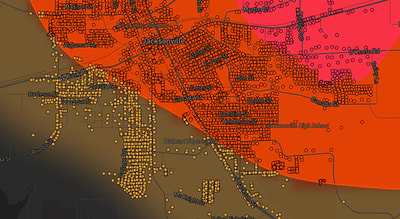
See exactly what you get.
Explore the full Springdale, AR Strike Map free – hail track, address overlay, and CSV download. No account required.
Try the Free Demo →