Kelly, NC Hail Warning – November 2025
November 10, 2025 severe thunderstorm warning near Kelly, NC. NWS warning area data available.
Max Hail
1"NWS Est.
Zones
2
NWS alerts
Radar
–
dual-pol hits
Spotter
–
field reports
Map requires hardware acceleration
NWS WARNING AREA · Kelly Metro · Nov 10, 2025 · Click a zone to highlight
Intelligence Platform
StormSnipe Pro
$49/ mo
Cancel anytime · No contracts
›All 50 states
›No zone limits
›No per-event fees
Subscribe to Pro
Billed monthly · Cancel anytime
What's included
Instant delivery
Every storm published within hours of NOAA confirmation.
Interactive Strike Map
Full radar-confirmed hail track on an interactive map.
Address CSV export
Every affected residential address, export-ready.
Smart alerts
Notified when a storm hits your area. Set zones once.
Nationwide coverage
All 50 states. No zone restrictions. No geographic caps.
Live pipeline
NOAA NEXRAD processed and delivered 24/7.
NWS WARNING AREAS · 2
This storm generated 2 NWS alert zones. Pro access covers the complete storm track and all addresses across every zone.
ZONE 1NWS ILM
Kelly, NC
NWS Warning
Alert issued Mon, Nov 10 · 1:14 AM UTC
1"
est. (NWS)
ZONE 2NWS ILM
Georgetown, SC
NWS Warning
Alert issued Mon, Nov 10 · 4:13 AM UTC
1"
est. (NWS)
Kelly, NC was under two NWS hail warnings on November 10, 2025. The storm sequence carried a 1-inch hail threat in the evening and late evening across the warning area.
What Happened
The first NWS hail warning came at 8:14 PM EST, with 1-inch hail mentioned for the warning area. A second warning followed at 11:13 PM EST, also carrying a 1-inch hail threat.
Both alerts were NWS warning only. No radar or spotter confirmation of hail was included in the storm data. The event was concluded on November 10.
The timing places the hail threat through the evening and into late night hours for Kelly and nearby parts of the warning polygon. The two warnings show a repeated hail concern within the same storm period.
Damage Assessment
A 1-inch hail threat is large enough to put roofing, siding, vents, and soft metal surfaces under watch in exposed parts of the warning area. Vehicles parked outside can take minor impact damage if stones reach the ground in stronger cores.
For contractors, the key point is not the warning text alone but the storm path through the area. Even without radar or spotter confirmation, a 1-inch hail warning justifies targeted roof checks, exterior trim inspections, and a look at north-facing or wind-exposed elevations where hail and wind often strike first.
The warning area should be treated as a broad alert zone, not a precision damage footprint. Conditions can vary across a town and across a single subdivision. One roof may show no marks while another block over carries a more obvious impact pattern.
If you are documenting loss, separate hail-related findings from wind, tree impact, and pre-existing wear. Contractors should photograph each elevation, note soft-metal strikes, and check shingles, flashing, gutters, and HVAC fins before any cleanup changes the scene.
What Contractors Should Know
Use the evening and late-evening warning times to narrow canvass priorities. Start with properties that sit closest to the storm path through Kelly, then move outward through the broader alert area. Focus first on roofs with older asphalt shingles, light-gauge metal components, and exposed accessories such as skylights, exhaust caps, and gutter runs.
On site, look for scattered impact marks rather than relying on one visible defect. Small hail events often leave limited but uneven evidence. Document granule loss, spatter marks on siding, denting on soft metal, and any cracked or displaced fixture components. If the roof surface shows no clear hail marks, record that result and move on. Do not assume the warning area carried uniform damage.
Schedule inspections in daylight when possible. Early photos are more useful than late-day cleanup or temporary patching. Keep notes tied to the specific address, the warning time, and the observed condition of each building surface. That record is cleaner for adjusters and for follow-up visits if additional storm reports surface later.
Storm Details
- Start Date
- Sunday, November 9, 2025
- Last Activity
- Sunday, November 9, 2025
- Location
- Kelly, NC
- Warning Areas
- 2
- Dual-Pol Radar
- --
- Spotter Reports
- --
Preview Strike Map
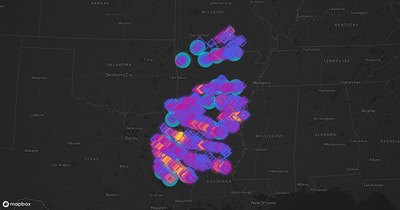
See exactly what you get.
Explore the full Springdale, AR Strike Map free – hail track, address overlay, and CSV download. No account required.
Try the Free Demo →