Amarillo, TX Hail Storm – March 2026
March 30, 2026 hail storm near Amarillo, TX. Radar-confirmed hail track and contractor lead lists available.
Max Hail
3.25"3.25" est.
confirmed
Zones
11
NWS alerts
Radar
574
dual-pol hits
Spotter
16
field reports
NWS WARNING AREA · Amarillo Metro · Mar 30, 2026
Intelligence Platform
StormSnipe Pro
$49/ mo
Cancel anytime · No contracts
›All 50 states
›No zone limits
›No per-event fees
Subscribe to Pro
Pro renews monthly until canceled · Cancel anytime in the billing portal
What's included
Instant delivery
Every storm published within hours of NOAA confirmation.
Interactive Strike Map
Full radar-confirmed hail track on an interactive map.
Address CSV export
Every affected residential address, export-ready.
Smart alerts
Notified when a storm hits your area. Set zones once.
Nationwide coverage
All 50 states. No zone restrictions. No geographic caps.
Live pipeline
NOAA NEXRAD processed and delivered 24/7.
Address data notice
Pro coverage in California, Vermont, and Oregon includes the confirmed hail track and Strike Map only — no address lists. State data-privacy law treats compiled address lists differently in those three states, so we exclude their addresses from extraction and delivery.
NWS WARNING AREAS · 11
This storm generated 11 NWS alert zones. Pro access covers the complete storm track and all addresses across every zone.
ZONE 1NWS AMA
Amarillo, TX
Dual-Pol Radar
527 addresses in warning area
Alert issued Mon, Mar 30 · 10:23 PM UTC
2.75"
confirmed
1.5"
est. (NWS)
ZONE 2NWS AMA
Amarillo, TX
Dual-Pol Radar
2,795 addresses in warning area
Alert issued Mon, Mar 30 · 11:28 PM UTC
3"
confirmed
1.25"
est. (NWS)
ZONE 3NWS TXC087
Memphis, TX
Dual-Pol Radar
3,255 addresses in warning area
Alert issued Mon, Mar 30 · 11:28 PM UTC
3"
confirmed
3"
est. (NWS)
ZONE 4NWS LUB
Lubbock, TX
Dual-Pol Radar
1,143 addresses in warning area
Alert issued Mon, Mar 30 · 11:42 PM UTC
3.25"
confirmed
1"
est. (NWS)
ZONE 5NWS TXC191
Memphis, TX
Alert issued Mon, Mar 30 · 11:42 PM UTC
3.25"
confirmed
3.25"
est. (NWS)
Map Generation In Progress
Strike Map is being generated. Interactive maps and supplementary data are typically ready within 4 hours of storm confirmation.
Set up storm notifications →ZONE 6NWS AMA
Amarillo, TX
Dual-Pol Radar
Alert issued Tue, Mar 31 · 12:27 AM UTC
2.5"
confirmed
1.25"
est. (NWS)
ZONE 7NWS TXC087
Hedley, TX
Alert issued Tue, Mar 31 · 12:27 AM UTC
3"
confirmed
3.25"
est. (NWS)
Map Generation In Progress
Strike Map is being generated. Interactive maps and supplementary data are typically ready within 4 hours of storm confirmation.
Set up storm notifications →ZONE 8NWS TXC191
Memphis, TX
Dual-Pol Radar
1,374 addresses in warning area
Alert issued Tue, Mar 31 · 1:17 AM UTC
3.25"
confirmed
3.25"
est. (NWS)
ZONE 9NWS LUB
Lubbock, TX
Dual-Pol Radar
Alert issued Tue, Mar 31 · 1:17 AM UTC
3.25"
confirmed
1.75"
est. (NWS)
ZONE 10NWS TXC087
Memphis, TX
Dual-Pol Radar
1,390 addresses in warning area
Alert issued Tue, Mar 31 · 1:28 AM UTC
3"
confirmed
3.25"
est. (NWS)
ZONE 11NWS AMA
Amarillo, TX
Dual-Pol Radar
Alert issued Tue, Mar 31 · 1:28 AM UTC
3"
confirmed
1.75"
est. (NWS)
Amarillo, TX saw a concluded hail event on March 30, 2026, with spotter-verified hail reaching 1.75 inches. The storm produced multiple hail alerts across the metro through the evening.
What Happened
The first spotter report came at 5:23 PM CDT with 1.5-inch hail. A second report followed at 6:28 PM CDT with 1.25-inch hail. Another 1.25-inch report came in at 7:27 PM CDT, then the peak size increased to 1.75 inches at 8:28 PM CDT.
All four alerts carried spotter-reported confidence. The sequence shows a sustained hail-producing storm with repeated reports over a roughly three-hour span. The event was contained within the Amarillo metro warning area and later concluded.
The peak hail size was 1.75 inches. Earlier reports held at 1.25 to 1.5 inches before the larger hail was observed late in the event.
Damage Assessment
Hail in the 1.25-inch to 1.75-inch range can affect vehicles, roof systems, siding, and soft metals. In Amarillo, the 1.5-inch and 1.75-inch reports point to a storm capable of producing concentrated roof and exterior impacts in the most affected corridors.
On residential property, this size range can produce visible dents on metal roof components, bruising on asphalt shingles, cracked vinyl trim, and broken screens. Vehicles parked outdoors during the later phase of the storm had the greatest exposure when the larger hail was reported.
For commercial sites, flat roofs, HVAC fins, skylights, and gutter runs are the main field checks. Metal awnings, fence caps, and exterior signage should also be documented in the field after a storm with repeated spotter-verified hail.
Damage exposure was not uniform across the Amarillo metro warning area. The later reports suggest a changing hail core rather than a single brief burst. Crews should expect pockets of heavier impact near the final report time and lighter, more scattered impact near the earlier alert locations.
What Contractors Should Know
Treat this as a multi-alert hail event with a late peak. The report sequence started at 5:23 PM CDT and continued through 8:28 PM CDT, so field calls may cluster across several neighborhoods rather than one compact line. Start with roof and exterior inspections where the last alert was reported and move outward to earlier report areas.
Document first-pass conditions before opening any roof system. Look for collateral indicators tied to hail exposure, including clogged gutters, fractured downspout elbows, soft metal strikes, and denting on vents and ridge accessories. On retail and light industrial jobs, check membrane seams, rooftop units, and parapet caps for impact marks and displaced debris.
Match inspection timing to the local report sequence. The 1.75-inch report at 8:28 PM CDT marks the strongest part of the event, while the earlier 1.25-inch and 1.5-inch reports help define the broader hail swath across Amarillo. Use that order to prioritize canvass routes and inspection scheduling.
Storm Details
- Start Date
- Monday, March 30, 2026
- Last Activity
- Monday, March 30, 2026
- Location
- Amarillo, TX
- Warning Areas
- 11
- Dual-Pol Radar
- 574
- Spotter Reports
- 16
Preview Strike Map
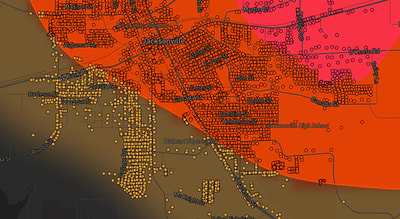
See exactly what you get.
Explore the full Springdale, AR Strike Map free – hail track, address overlay, and CSV download. No account required.
Try the Free Demo →