Miami-Dade, FL Hail Storm – April 2026
April 7, 2026 hail storm near Miami-Dade, FL. Radar-confirmed hail track and contractor lead lists available.
Max Hail
2.25"2.25" est.
confirmed
Zones
2
NWS alerts
Radar
14
dual-pol hits
Spotter
–
field reports
Dual-Pol Radar
Spotter Report
NWS Warning
NWS WARNING AREA · Miami-Dade Metro · Apr 7, 2026 · Click a zone to highlight
PURCHASE THIS STORM
Full storm data delivered to all buyers. No slot limit.
By purchasing, you agree to our Terms of Service and acknowledge the Data Accuracy Disclaimer. Address lists are derived from NOAA radar and federal databases; inclusion does not guarantee property damage.
Pro gets 1-hour priority access
From $49/mo · Auto-delivered leads
NWS WARNING AREAS · 2
This storm generated 2 NWS alert zones. One purchase covers the complete storm track and all addresses across every zone.
ZONE 1NWS FLC086
Miami-Dade, FL
Dual-Pol Radar
Alert issued Tue, Apr 7 · 7:17 PM UTC
2.25"
confirmed
2.25"
est. (NWS)
ZONE 2NWS FLC011
Miami Gardens, FL
Dual-Pol Radar
Alert issued Tue, Apr 7 · 8:47 PM UTC
1.25"
confirmed
1"
est. (NWS)
What Happened
Miami-Dade County, Florida, is tracking through a hail-producing storm on 2026-04-07, with the peak radar-detected hail size reaching 2.25 inches near Miami Gardens. The storm remains active and may still be developing.
Two NWS alert areas were issued during the afternoon. The first came around 3:17 PM EDT with dual-polarization radar support for 2.25-inch hail. A second alert followed at 4:47 PM EDT with 1-inch hail detection. The sequence shows a hail core that held together across multiple warning periods.
The larger hail signal came first, then a smaller hail signature followed later in the day. The storm continued tracking through the Miami-Dade metro during the late afternoon, with radar showing repeated hail potential in the same general corridor.
Damage Assessment
Hail near 2.25 inches can break roof coverings, crack soft metal trim, dent gutters, and damage vehicles parked outdoors. It can also leave impact marks on siding, screened enclosures, and pool equipment. Around 1 inch, damage often shifts toward roof shingle bruising, gutter dents, window screen tears, and scattered vehicle impacts.
For Miami-Dade properties, the main field concern is not just the peak hail size but the repeat signal. A storm that produces a larger hail core and then a second hail alert later can leave multiple hit areas across a neighborhood, especially where the warning area overlaps dense residential blocks, apartment roofs, and commercial flat roofs.
Contractors should expect mixed roof findings. Some homes may show visible hail marks on shingles or tile edges while nearby structures report only cosmetic dents on vents, flashing, and downspouts. Vehicle damage can also be uneven, with one street taking hard impacts and another seeing little beyond light dings.
Storms in this size range should be checked with roof-level inspections, attic review where access allows, and exterior scans of soft metals and siding. Use time-stamped photos from the afternoon window, especially around the first 3:17 PM EDT alert and the later 4:47 PM EDT alert, to separate earlier hail hits from any new damage in the same event.
What Contractors Should Know
This storm is still moving through the area, so crews should treat current field reports as a live snapshot. Focus first on roof slopes, ridge caps, vents, skylights, and the north- and west-facing sides of structures where wind-driven hail often leaves the most visible marks. On tile roofs, look for chipped edges, cracked corners, and displaced pieces. On shingle roofs, check for granule loss, bruising, and impact points around penetrations.
For commercial work, inspect flat roofs, HVAC units, condensers, gutters, and sheet metal cladding. Document dents on mechanical equipment and soft metals with close-range photos and wide shots that show building context. In residential neighborhoods, note whether damage clusters near the same streets or spreads across several blocks inside the warning area. Keep site notes tied to local time so later inspections can separate the first hail burst from the later 1-inch alert.
Storm Details
- Start Date
- Tuesday, April 7, 2026
- Last Activity
- Tuesday, April 7, 2026
- Location
- Miami-Dade, FL
- Warning Areas
- 2
- Dual-Pol Radar
- 14
- Spotter Reports
- --
StormSnipe Pro
BEST VALUENever miss a storm in your market.
Auto-delivered leads with 1-hour priority access before shared buyers. Set it and close more jobs.
$49
/mo
1 Zone
POPULAR
$99
/mo
5 Zones
$199
/mo
Unlimited
- 1-hour priority access before public
- Auto-delivered every storm in your market
- Interactive Strike Map + hail track
Cancel anytime · No commitment
Try Before You Buy
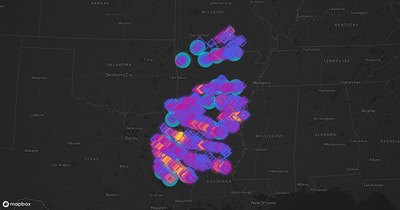
See exactly what you get.
Explore the full Springdale, AR Strike Map free – hail track, address overlay, and CSV download. No account required.
Try the Free Demo →