Gatesville, TX Hail Storm – April 2026
April 12, 2026 hail storm near Gatesville, TX. Radar-confirmed hail track and contractor lead lists available.
Max Hail
3.25"2" est.
confirmed
Zones
11
NWS alerts
Radar
893
dual-pol hits
Spotter
4
field reports
Map requires hardware acceleration
NWS WARNING AREA · Gatesville Metro · Apr 12, 2026 · Click a zone to highlight
Intelligence Platform
StormSnipe Pro
$49/ mo
Cancel anytime · No contracts
›All 50 states
›No zone limits
›No per-event fees
Subscribe to Pro
Billed monthly · Cancel anytime
What's included
Instant delivery
Every storm published within hours of NOAA confirmation.
Interactive Strike Map
Full radar-confirmed hail track on an interactive map.
Address CSV export
Every affected residential address, export-ready.
Smart alerts
Notified when a storm hits your area. Set zones once.
Nationwide coverage
All 50 states. No zone restrictions. No geographic caps.
Live pipeline
NOAA NEXRAD processed and delivered 24/7.
NWS WARNING AREAS · 11
This storm generated 11 NWS alert zones. Pro access covers the complete storm track and all addresses across every zone.
ZONE 1NWS TXC099
Gatesville, TX
Dual-Pol Radar
19,493 addresses in warning area
Alert issued Sun, Apr 12 · 7:57 PM UTC
2.25"
confirmed
1"
est. (NWS)
ZONE 2NWS TXC411
San Saba, TX
Dual-Pol Radar
Alert issued Sun, Apr 12 · 11:50 PM UTC
2"
confirmed
1"
est. (NWS)
ZONE 3NWS TXC333
Goldthwaite, TX
Dual-Pol Radar
27 addresses in warning area
Alert issued Mon, Apr 13 · 12:07 AM UTC
2"
confirmed
2"
est. (NWS)
ZONE 4NWS TXC411
San Saba, TX
Dual-Pol Radar
296 addresses in warning area
Alert issued Mon, Apr 13 · 12:21 AM UTC
2"
confirmed
1.25"
est. (NWS)
ZONE 5NWS TXC299
Pontotoc, TX
Dual-Pol Radar
84 addresses in warning area
Alert issued Mon, Apr 13 · 1:09 AM UTC
1"
confirmed
1"
est. (NWS)
ZONE 6NWS TXC411
San Saba, TX
Dual-Pol Radar
1,343 addresses in warning area
Alert issued Mon, Apr 13 · 1:14 AM UTC
3.25"
confirmed
1.5"
est. (NWS)
ZONE 7NWS TXC411
San Saba, TX
Dual-Pol Radar
2 addresses in warning area
Alert issued Mon, Apr 13 · 2:11 AM UTC
3.25"
confirmed
1.75"
est. (NWS)
ZONE 8NWS TXC053
Lampasas, TX
Dual-Pol Radar
587 addresses in warning area
Alert issued Mon, Apr 13 · 2:27 AM UTC
3.25"
confirmed
1.75"
est. (NWS)
ZONE 9NWS TXC053
Burnet, TX
Dual-Pol Radar
390 addresses in warning area
Alert issued Mon, Apr 13 · 3:11 AM UTC
2.75"
confirmed
1.5"
est. (NWS)
ZONE 10NWS TXC319
Cherokee, TX
Dual-Pol Radar
146 addresses in warning area
Alert issued Mon, Apr 13 · 3:13 AM UTC
2.75"
confirmed
1"
est. (NWS)
ZONE 11NWS TXC411
San Saba, TX
Dual-Pol Radar
Alert issued Mon, Apr 13 · 3:46 AM UTC
2.5"
confirmed
1.75"
est. (NWS)
What Happened
A severe hail storm moved through Gatesville, TX on April 12, 2026, producing a peak hail size of 3.25 inches. The event included multiple NWS warning areas and repeated radar-detected hail signatures through the afternoon and evening.
The first alert came at 2:57 PM CDT with 1-inch hail tied to a spotter report. By 3:26 PM CDT, mPING had a quarter-size report, or 1.00 inch, which matched the early storm history in and around Gatesville. Later in the day, dual-polarization radar detected renewed hail growth at 6:50 PM CDT with 1-inch hail, then 2-inch hail at 7:07 PM CDT, followed by 1.25-inch hail at 7:21 PM CDT.
The storm remained active into the evening. Radar continued to map hail at 8:09 PM CDT with 1-inch hail, then a spotter report at 8:14 PM CDT placed 1.5-inch hail in the field. Additional radar detections followed at 9:11 PM CDT and 9:27 PM CDT with 1.75-inch hail, then 1.5-inch hail at 10:11 PM CDT, 1-inch hail at 10:13 PM CDT, and 1.75-inch hail at 10:46 PM CDT.
This was a multi-cycle hail event. The field report at 3:26 PM CDT and the later spotter report at 8:14 PM CDT gave the storm ground truth at different stages of its life cycle. Radar showed the hail core rebuilding and persisting across several hours.
Damage Assessment
The surface report trail in Gatesville shows hail reaching the ground in more than one burst, with spotter verification at both 3:26 PM CDT and 8:14 PM CDT. That pattern points to repeated impacts across the city rather than a single brief pass.
The early 1-inch hail report arrived before the stronger evening radar detections. The later 1.5-inch spotter report lined up with the radar trend toward larger stones during the evening hours. The progression from 1 inch to 2 inches, then back through several 1.75-inch and 1.5-inch radar estimates, shows a storm that stayed organized long enough to keep producing damaging hail over time.
For Gatesville properties, the most practical concern is roof and exterior exposure from repeated hail strikes. Single-story roofs, older shingles, soft metal surfaces, skylights, gutters, and vehicle glass are the first places to check. The longer duration of the storm also raises the chance that more than one side of a structure took hits as the hail core shifted.
Crews should expect mixed damage reports in the same town. Some properties may show only light impacts from the 1-inch phase, while others in the later hail path may show heavier exterior damage from the larger evening stones. Siding bruises, dented fence caps, and granular loss on asphalt roofs are all plausible in a storm with this kind of repeated hail history.
What Contractors Should Know
This is the kind of Gatesville event that calls for careful block-by-block inspection. The storm did not peak once and fade. It produced several radar-backed hail cycles and at least two spotter-verified reports separated by hours. Roof claims may cluster along the later evening path, while earlier reports may be tied to lighter but still serviceable hail impacts.
Storm Details
- Start Date
- Sunday, April 12, 2026
- Last Activity
- Sunday, April 12, 2026
- Location
- Gatesville, TX
- Warning Areas
- 11
- Dual-Pol Radar
- 893
- Spotter Reports
- 4
Preview Strike Map
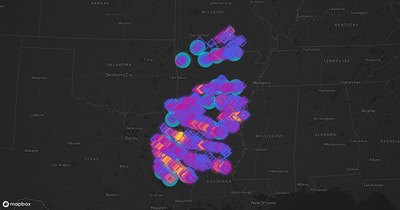
See exactly what you get.
Explore the full Springdale, AR Strike Map free – hail track, address overlay, and CSV download. No account required.
Try the Free Demo →