Norman, OK Hail Storm – April 2026
April 11, 2026 hail storm near Norman, OK. Radar-confirmed hail track and contractor lead lists available.
Max Hail
1.75"2" est.
confirmed
Zones
28
NWS alerts
Radar
45
dual-pol hits
Spotter
7
field reports
NWS WARNING AREA · Norman Metro · Apr 11, 2026
Intelligence Platform
StormSnipe Pro
$49/ mo
Cancel anytime · No contracts
›All 50 states
›No zone limits
›No per-event fees
Subscribe to Pro
Pro renews monthly until canceled · Cancel anytime in the billing portal
What's included
Instant delivery
Every storm published within hours of NOAA confirmation.
Interactive Strike Map
Full radar-confirmed hail track on an interactive map.
Address CSV export
Every affected residential address, export-ready.
Smart alerts
Notified when a storm hits your area. Set zones once.
Nationwide coverage
All 50 states. No zone restrictions. No geographic caps.
Live pipeline
NOAA NEXRAD processed and delivered 24/7.
Address data notice
Pro coverage in California, Vermont, and Oregon includes the confirmed hail track and Strike Map only — no address lists. State data-privacy law treats compiled address lists differently in those three states, so we exclude their addresses from extraction and delivery.
NWS WARNING AREAS · 28
This storm generated 28 NWS alert zones. Pro access covers the complete storm track and all addresses across every zone.
ZONE 1NWS TXC335
Colorado City, TX
NWS Warning
Alert issued Sat, Apr 11 · 8:52 PM UTC
1"
est. (NWS)
ZONE 2NWS TXC433
Aspermont, TX
Dual-Pol Radar
205 addresses in warning area
Alert issued Tue, Apr 14 · 12:49 AM UTC
1.5"
confirmed
1"
est. (NWS)
ZONE 3NWS TXC023
Seymour, TX
Dual-Pol Radar
86 addresses in warning area
Alert issued Tue, Apr 14 · 7:58 PM UTC
1.75"
confirmed
1"
est. (NWS)
ZONE 4NWS TXC023
Electra, TX
Dual-Pol Radar
Alert issued Tue, Apr 14 · 8:42 PM UTC
1.75"
confirmed
1"
est. (NWS)
ZONE 5NWS OKC033
Electra, TX
Spotter Reported
Alert issued Tue, Apr 14 · 8:58 PM UTC
1"
confirmed
1.5"
est. (NWS)
ZONE 6NWS TXC155
Truscott, TX
NWS Warning
Alert issued Tue, Apr 14 · 9:41 PM UTC
1"
est. (NWS)
ZONE 7NWS TXC125
Guthrie, TX
NWS Warning
Alert issued Tue, Apr 14 · 9:51 PM UTC
1"
est. (NWS)
ZONE 8NWS OKC033
Randlett, OK
NWS Warning
Alert issued Tue, Apr 14 · 10:12 PM UTC
1"
est. (NWS)
ZONE 9NWS OKC055
Granite, OK
NWS Warning
Alert issued Tue, Apr 14 · 10:36 PM UTC
1"
est. (NWS)
ZONE 10NWS OKC033
Comanche, OK
NWS Warning
Alert issued Tue, Apr 14 · 10:41 PM UTC
1"
est. (NWS)
ZONE 11NWS TXC125
Guthrie, TX
NWS Warning
Alert issued Tue, Apr 14 · 10:48 PM UTC
1"
est. (NWS)
ZONE 12NWS TXC487
Oklaunion, TX
NWS Warning
Alert issued Tue, Apr 14 · 10:55 PM UTC
2"
est. (NWS)
ZONE 13NWS OKC055
Blair, OK
NWS Warning
Alert issued Tue, Apr 14 · 10:57 PM UTC
1"
est. (NWS)
ZONE 14NWS TXC155
Truscott, TX
Spotter Reported
Alert issued Tue, Apr 14 · 11:10 PM UTC
1.5"
confirmed
1"
est. (NWS)
ZONE 15NWS OKC049
Marlow, OK
NWS Warning
Alert issued Tue, Apr 14 · 11:19 PM UTC
1.25"
est. (NWS)
ZONE 16NWS OKC011
Weatherford, OK
Spotter Reported
Alert issued Tue, Apr 14 · 11:19 PM UTC
1"
confirmed
1.25"
est. (NWS)
ZONE 17NWS OKC065
Blair, OK
NWS Warning
Alert issued Tue, Apr 14 · 11:27 PM UTC
1"
est. (NWS)
ZONE 18NWS TXC023
Vernon, TX
NWS Warning
Alert issued Tue, Apr 14 · 11:40 PM UTC
0.88"
est. (NWS)
ZONE 19NWS OKC065
Davidson, OK
NWS Warning
Alert issued Wed, Apr 15 · 12:13 AM UTC
0.88"
est. (NWS)
ZONE 20NWS OKC031
Lawton, OK
NWS Warning
Alert issued Wed, Apr 15 · 12:21 AM UTC
0.88"
est. (NWS)
ZONE 21NWS OKC031
Walters, OK
NWS Warning
Alert issued Wed, Apr 15 · 12:52 AM UTC
0.88"
est. (NWS)
ZONE 22NWS OKC015
Walters, OK
NWS Warning
Alert issued Wed, Apr 15 · 1:25 AM UTC
0.75"
est. (NWS)
ZONE 23NWS OKC019
Foster, OK
NWS Warning
139 addresses in warning area
Alert issued Wed, Apr 15 · 2:01 AM UTC
0.75"
est. (NWS)
ZONE 24NWS OKC027
Asher, OK
NWS Warning
72 addresses in warning area
Alert issued Wed, Apr 15 · 2:29 AM UTC
0.75"
est. (NWS)
ZONE 25NWS OKC037
Mounds, OK
NWS Warning
Alert issued Wed, Apr 15 · 2:31 AM UTC
0.75"
est. (NWS)
ZONE 26NWS OKC063
Lamar, OK
NWS Warning
4,575 addresses in warning area
Alert issued Wed, Apr 15 · 3:00 AM UTC
0.75"
est. (NWS)
ZONE 27NWS OKC027
Blanchard, OK
NWS Warning
8,556 addresses in warning area
Alert issued Wed, Apr 15 · 6:14 AM UTC
1"
est. (NWS)
ZONE 28NWS OKC027
Norman, OK
NWS Warning
15,178 addresses in warning area
Alert issued Wed, Apr 15 · 6:56 AM UTC
0.75"
est. (NWS)
What Happened
A severe hail storm crossed the Norman, OK metro on April 11, 2026, producing 1.5-inch hail and a long run of NWS warning areas through the afternoon and evening. The storm was active from mid-afternoon into the early overnight hours, with the strongest hail signal arriving near 3:58 PM CDT.
Storm alerts began at 2:58 PM CDT with 1-inch hail in the warning area, then repeated through the afternoon as the system strengthened and shifted east. The largest hail size in the alert stream reached 2 inches at 5:55 PM CDT, followed by multiple 1.25-inch and 1-inch hail alerts through the evening. Later alerts after 8 PM CDT trended smaller, but they continued into the night and into early April 12, including 1-inch hail at 1:14 AM CDT and 0.75-inch hail at 1:56 AM CDT.
Field reports were limited but useful. At 4:43 PM CDT, a spotter report from Grandfield described quarter-sized hail. At 5:46 PM CDT, an mPING report again described quarter-sized hail, matching the broader hail threat that moved through the region during the late afternoon. The storm carried 28 NWS alerts in total.
Damage Assessment
The surface impact was consistent with a hail-producing storm that held onto severe size for several hours, but the public reports did not show a broad cluster of major damage claims in the Norman metro. The verified reports point to quarter-sized hail in the path, while the NWS alert sequence showed a wider range of hail estimates, including 1.25-inch, 1.5-inch, and 2-inch calls in the warning area.
That mix suggests hail cores moved through more than one part of the metro over time rather than a single compact burst. The hail threat was not confined to one short window. It stretched from late afternoon into the night, with smaller hail readings after the largest early-evening estimates.
For property managers and homeowners in Norman, the main concern is roof, screen, and gutter exposure where the heavier cores passed. Vehicles parked outside during the late-afternoon and early-evening windows were also exposed to repeated hail bursts. Reports from Grandfield and the mPING spotter line up with the broader hail field, but the public record here does not show widespread catastrophic loss.
What Contractors Should Know
This event covered a long time window and multiple hail sizes, which means inspection routes should not assume a single impact zone. Crews working Norman should focus first on roofs, soft metals, HVAC fins, window screens, and fence caps in the areas that took repeated afternoon and evening hits. Check slopes and accessories separately. A roof can show mixed impact patterns when hail size changed over the course of the storm.
Pay attention to delays between the first alert and the larger hail estimates. The storm began with 1-inch hail warnings at 2:58 PM CDT and later reached 2 inches by 5:55 PM CDT. Properties that looked minor during the first pass may still have taken stronger impacts later. Afternoon-to-night events often leave uneven loss patterns across a metro, especially when the storm keeps recycling through the same general corridor.
Storm Details
- Start Date
- Saturday, April 11, 2026
- Last Activity
- Wednesday, April 15, 2026
- Location
- Norman, OK
- Warning Areas
- 28
- Dual-Pol Radar
- 45
- Spotter Reports
- 7
Preview Strike Map
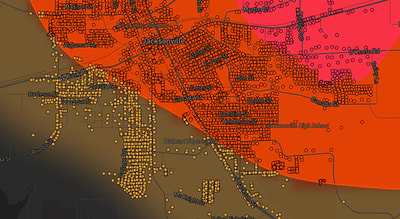
See exactly what you get.
Explore the full Springdale, AR Strike Map free – hail track, address overlay, and CSV download. No account required.
Try the Free Demo →