Cherokee, TX Hail Storm – April 2026
April 30, 2026 hail storm near Cherokee, TX. Radar-confirmed hail track and contractor lead lists available.
Max Hail
1.44"1.33" est.
confirmed
Zones
5
NWS alerts
Radar
359
dual-pol hits
Spotter
6
field reports
Map requires hardware acceleration
NWS WARNING AREA · Cherokee Metro · Apr 30, 2026 · Click a zone to highlight
Intelligence Platform
StormSnipe Pro
$49/ mo
Cancel anytime · No contracts
›All 50 states
›No zone limits
›No per-event fees
Subscribe to Pro
Billed monthly · Cancel anytime
What's included
Instant delivery
Every storm published within hours of NOAA confirmation.
Interactive Strike Map
Full radar-confirmed hail track on an interactive map.
Address CSV export
Every affected residential address, export-ready.
Smart alerts
Notified when a storm hits your area. Set zones once.
Nationwide coverage
All 50 states. No zone restrictions. No geographic caps.
Live pipeline
NOAA NEXRAD processed and delivered 24/7.
NWS WARNING AREAS · 5
This storm generated 5 NWS alert zones. Pro access covers the complete storm track and all addresses across every zone.
ZONE 1NWS TXC319
Cherokee, TX
Dual-Pol Radar
218 addresses in warning area
Alert issued Thu, Apr 30 · 3:44 PM UTC
1.01"
confirmed
1.25"
est. (NWS)
ZONE 2NWS TXC299
Llano, TX
Dual-Pol Radar
390 addresses in warning area
Alert issued Thu, Apr 30 · 5:17 PM UTC
1.44"
confirmed
1"
est. (NWS)
ZONE 3NWS TXC031
Cypress Mill, TX
Dual-Pol Radar
1,958 addresses in warning area
Alert issued Thu, Apr 30 · 5:57 PM UTC
1.38"
confirmed
1.02"
est. (NWS)
ZONE 4NWS TXC021
Austin, TX
Dual-Pol Radar
21,481 addresses in warning area
Alert issued Thu, Apr 30 · 6:38 PM UTC
1.25"
confirmed
1"
est. (NWS)
ZONE 5NWS TXC267
Doss, TX
Dual-Pol Radar
64 addresses in warning area
Alert issued Thu, Apr 30 · 8:49 PM UTC
1.39"
confirmed
1.33"
est. (NWS)
A hail-producing storm moved through Cherokee, TX on April 30, 2026, producing stones up to 1.44 inches and a sequence of radar detections and spotter reports in mid- to late afternoon.
What Happened
Dual-polarization radar first detected significant hail signatures near Cherokee in mid-morning and continued to register hail echoes through the afternoon. Radar-detected hail calls included a 1.25-inch detection at 10:44 AM CDT, an approximately 1.02-inch detection at 12:57 PM CDT, and a 1.33-inch detection at 3:49 PM CDT. Two NWS warning-only alerts were issued at 12:17 PM CDT and 1:38 PM CDT covering the storm's path.
Spotter submissions and local storm reports align with those radar signals during the midday and early afternoon period. A trained spotter reported 1.00-inch hail at 1:54 PM CDT, and an mPING submission at 2:04 PM CDT also recorded 1.00-inch stones. An observer at 1:46 PM CDT described mostly pea-size hail with some nickel-size stones and brief 50 mph winds. A separate mPING report at 2:00 PM CDT noted half-inch hail. The radar detections and the series of spotter-verified and public submissions show a multi-wave event with localized pockets of larger hail amid generally smaller stones.
Damage Assessment
Field reports indicate localized surface impacts rather than widespread structural failures. The spotter-verified 1.00-inch reports at 1:54 PM CDT and 2:04 PM CDT mark the largest surface-observed hail in the available ground-truth. Other eyewitnesses described mainly pea-size hail with occasional nickel-size stones and a brief observation of 50 mph wind gusts at 1:46 PM CDT. No Local Storm Report in the supplied dataset explicitly documented roof loss, vehicle crush, or major structural failure.
Radar hail detections extended from mid-morning into the late afternoon, but the ground submissions suggest the most significant surface impacts occurred in the early afternoon window around 1:45–2:05 PM CDT. Reports of half-inch to nickel-size hail imply likely cosmetic damage to soft metals, vehicle paint, and unshielded rooftop equipment in the specific locations where 1.00-inch hail was reported. Where observers noted 50 mph winds concurrent with hail, expect localized limb breakage and displaced small debris rather than wholesale tree uprooting in the reported areas.
What Contractors Should Know
Prioritize inspections in Cherokee neighborhoods and properties with timestamped spotter reports around 1:54 PM CDT and 2:04 PM CDT. Start with photographic documentation of roofing shingles, gutters, HVAC condensers, exposed siding, and vehicle panels. For roofs, check for bruising, granule loss, and split or rounded shingle edges consistent with quarter- to one-inch impacts. Use close-up photos with scale and time metadata. Note that some locations reported mainly pea to nickel hail; in those areas focus on cosmetic and seal integrity issues rather than immediate structural replacement.
Storm Details
- Start Date
- Thursday, April 30, 2026
- Last Activity
- Thursday, April 30, 2026
- Location
- Cherokee, TX
- Warning Areas
- 5
- Dual-Pol Radar
- 359
- Spotter Reports
- 6
Preview Strike Map
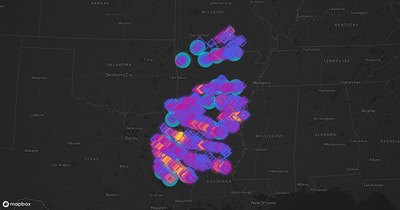
See exactly what you get.
Explore the full Springdale, AR Strike Map free – hail track, address overlay, and CSV download. No account required.
Try the Free Demo →