Middletown, MO Hail Storm – May 2026
May 3, 2026 hail storm near Middletown, MO. Radar-confirmed hail track and contractor lead lists available.
Max Hail
2"1.5" est.
confirmed
Zones
6
NWS alerts
Radar
1,710
dual-pol hits
Spotter
18
field reports
Map requires hardware acceleration
NWS WARNING AREA · Middletown Metro · May 4, 2026 · Click a zone to highlight
Intelligence Platform
StormSnipe Pro
$49/ mo
Cancel anytime · No contracts
›All 50 states
›No zone limits
›No per-event fees
Subscribe to Pro
Billed monthly · Cancel anytime
What's included
Instant delivery
Every storm published within hours of NOAA confirmation.
Interactive Strike Map
Full radar-confirmed hail track on an interactive map.
Address CSV export
Every affected residential address, export-ready.
Smart alerts
Notified when a storm hits your area. Set zones once.
Nationwide coverage
All 50 states. No zone restrictions. No geographic caps.
Live pipeline
NOAA NEXRAD processed and delivered 24/7.
NWS WARNING AREAS · 6
This storm generated 6 NWS alert zones. Pro access covers the complete storm track and all addresses across every zone.
ZONE 1NWS MOC113
Middletown, MO
Dual-Pol Radar
3,537 addresses in warning area
Alert issued Mon, May 4 · 2:38 AM UTC
1.82"
confirmed
1"
est. (NWS)
ZONE 2NWS ILC013
Winfield, MO
Dual-Pol Radar
3,952 addresses in warning area
Alert issued Mon, May 4 · 3:15 AM UTC
1.84"
confirmed
1"
est. (NWS)
ZONE 3NWS ILC083
West Alton, MO
Dual-Pol Radar
43,539 addresses in warning area
Alert issued Mon, May 4 · 3:38 AM UTC
2"
confirmed
1.5"
est. (NWS)
ZONE 4NWS ILC021
Assumption, IL
Dual-Pol Radar
7,269 addresses in warning area
Alert issued Mon, May 4 · 3:45 AM UTC
0.91"
confirmed
1"
est. (NWS)
ZONE 5NWS ILC021
Moweaqua, IL
Dual-Pol Radar
168 addresses in warning area
Alert issued Mon, May 4 · 4:52 AM UTC
1.22"
confirmed
1"
est. (NWS)
ZONE 6NWS ILC117
Gillespie, IL
Dual-Pol Radar
2,937 addresses in warning area
Alert issued Mon, May 4 · 5:01 AM UTC
1.64"
confirmed
1"
est. (NWS)
A late-evening hail storm tracked through Middletown, MO on May 3, 2026, producing the largest collected stone and multiple radar and spotter reports between 9:38 PM and 12:01 AM CDT. The event produced repeated radar hail detections and several observer submissions across the town.
What Happened
Dual-polarization NEXRAD hail detections first flagged hail near Middletown at 9:38 PM CDT. The radar indicated smaller stones during that initial detection. A second radar-derived detection followed at 10:15 PM CDT over adjacent neighborhoods. An NWS severe thunderstorm warning at 10:38 PM CDT reported larger returns along the storm core. The warning remained in effect and the NWS issued a follow-up warning at 10:45 PM CDT.
Later radar detections resumed around 11:52 PM CDT and continued into a final detection at 12:01 AM CDT on May 4. Those later radar returns again indicated hail within the warning area as the storm exited local jurisdiction.
Observers submitted multiple ground-level reports during the event. An mPING report at 9:55 PM CDT documented a ping-pong ball–sized stone. At 10:58 PM CDT an mPING entry described a golf-ball–sized strike. Shortly after, at 11:00 PM CDT, an emailed photo showed a measured stone placed next to a tape measure. A later emailed field entry at 11:42 PM CDT recorded additional smaller samples. All observer reports were logged to the NWS Local Storm Report system or mPING feed and were time-stamped against the radar timeline.
Damage Assessment
Observer submissions and radar returns indicate concentrated surface impact across central and western Middletown during the late evening window. The largest photographed sample was collected near a residential block and submitted by email at 11:00 PM CDT; earlier mobile reports placed sizable stones in neighborhoods to the north and west of that location. Multiple mPING entries show consistent storm intensity across a roughly 90-minute span that aligns with NWS warning intervals.
Local storm reports did not list widespread structural failures. Field photos and submitted descriptions show intact yard samples and measured stones at individual properties. Vehicle inspections in the areas where observers submitted samples should prioritize hood, roof, and windshield checks. Property-level inspections should focus on exposed siding, skylights, and vulnerable roof flashings in the immediate track of the storm.
What Contractors Should Know
Work teams should prioritize visual surveys in the areas where observers submitted measured samples and where radar detections clustered between 9:38 PM and 12:01 AM CDT. Start with photographic documentation of all damage and of any collected stones placed beside a ruler or tape measure. Record exact addresses and the local observation time for each sample. These timestamps will match the radar timeline and support loss documentation.
Storm Details
- Start Date
- Sunday, May 3, 2026
- Last Activity
- Monday, May 4, 2026
- Location
- Middletown, MO
- Warning Areas
- 6
- Dual-Pol Radar
- 1,710
- Spotter Reports
- 18
Preview Strike Map
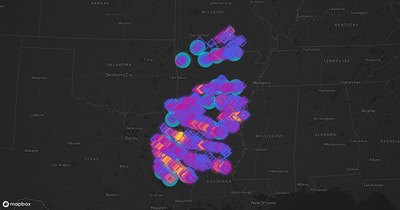
See exactly what you get.
Explore the full Springdale, AR Strike Map free – hail track, address overlay, and CSV download. No account required.
Try the Free Demo →