Sandy Hook, KY Hail Storm – May 2026
May 20, 2026 hail storm near Sandy Hook, KY. Radar-confirmed hail track and contractor lead lists available.
Max Hail
1.99"1.99" est.
confirmed
Zones
23
NWS alerts
Radar
223
dual-pol hits
Spotter
–
field reports
NWS WARNING AREA · Sandy Hook Metro · May 20, 2026
Intelligence Platform
StormSnipe Pro
$49/ mo
Cancel anytime · No contracts
›All 50 states
›No zone limits
›No per-event fees
Subscribe to Pro
Billed monthly · Cancel anytime
What's included
Instant delivery
Every storm published within hours of NOAA confirmation.
Interactive Strike Map
Full radar-confirmed hail track on an interactive map.
Address CSV export
Every affected residential address, export-ready.
Smart alerts
Notified when a storm hits your area. Set zones once.
Nationwide coverage
All 50 states. No zone restrictions. No geographic caps.
Live pipeline
NOAA NEXRAD processed and delivered 24/7.
NWS WARNING AREAS · 23
This storm generated 23 NWS alert zones. Pro access covers the complete storm track and all addresses across every zone.
ZONE 1NWS KYC063
Sandy Hook, KY
Dual-Pol Radar
208 addresses in warning area
Alert issued Wed, May 20 · 7:04 PM UTC
0.99"
confirmed
0.75"
est. (NWS)
ZONE 2NWS KYC043
Sandy Hook, KY
NWS Warning
Alert issued Wed, May 20 · 7:13 PM UTC
0.99"
est. (NWS)
ZONE 3NWS OHC087
Huntington, WV
NWS Warning
Alert issued Wed, May 20 · 7:20 PM UTC
1"
est. (NWS)
ZONE 4NWS WVC011
Salt Rock, WV
NWS Warning
Alert issued Wed, May 20 · 7:41 PM UTC
1"
est. (NWS)
ZONE 5NWS WVC011
Hurricane, WV
Spotter Reported
1,111 addresses in warning area
Alert issued Wed, May 20 · 7:49 PM UTC
1"
confirmed
1"
est. (NWS)
ZONE 6NWS KYC127
Prichard, WV
NWS Warning
Alert issued Wed, May 20 · 7:57 PM UTC
1"
est. (NWS)
ZONE 7NWS WVC035
Charleston, WV
Dual-Pol Radar
4,306 addresses in warning area
Alert issued Wed, May 20 · 8:05 PM UTC
1.25"
confirmed
1.25"
est. (NWS)
ZONE 8NWS KYC127
Louisa, KY
NWS Warning
Alert issued Wed, May 20 · 8:06 PM UTC
1"
est. (NWS)
ZONE 9NWS WVC039
Charleston, WV
Spotter Reported
261 addresses in warning area
Alert issued Wed, May 20 · 8:09 PM UTC
1.25"
confirmed
0.75"
est. (NWS)
ZONE 10NWS WVC043
Dunlow, WV
NWS Warning
Alert issued Wed, May 20 · 8:30 PM UTC
0.88"
est. (NWS)
ZONE 11NWS WVC015
Elkview, WV
Dual-Pol Radar
2,773 addresses in warning area
Alert issued Wed, May 20 · 8:39 PM UTC
1.89"
confirmed
1.75"
est. (NWS)
ZONE 12NWS WVC005
Branchland, WV
NWS Warning
Alert issued Wed, May 20 · 8:56 PM UTC
0.75"
est. (NWS)
ZONE 13NWS WVC007
Napier, WV
NWS Warning
Alert issued Wed, May 20 · 9:00 PM UTC
0.88"
est. (NWS)
ZONE 14NWS WVC005
Chapmanville, WV
Spotter Reported
747 addresses in warning area
Alert issued Wed, May 20 · 9:15 PM UTC
1"
confirmed
1"
est. (NWS)
ZONE 15NWS WVC007
Ivydale, WV
Dual-Pol Radar
1,242 addresses in warning area
Alert issued Wed, May 20 · 9:18 PM UTC
1.99"
confirmed
1.99"
est. (NWS)
ZONE 16NWS WVC007
Ireland, WV
NWS Warning
Alert issued Wed, May 20 · 9:34 PM UTC
0.88"
est. (NWS)
ZONE 17NWS WVC041
Tallmansville, WV
NWS Warning
Alert issued Wed, May 20 · 9:54 PM UTC
1"
est. (NWS)
ZONE 18NWS WVC007
Gassaway, WV
NWS Warning
Alert issued Wed, May 20 · 9:56 PM UTC
1"
est. (NWS)
ZONE 19NWS WVC005
Montcoal, WV
Dual-Pol Radar
569 addresses in warning area
Alert issued Wed, May 20 · 10:12 PM UTC
0.53"
confirmed
1"
est. (NWS)
ZONE 20NWS WVC007
Hacker Valley, WV
NWS Warning
Alert issued Wed, May 20 · 10:39 PM UTC
0.75"
est. (NWS)
ZONE 21NWS WVC001
Buckhannon, WV
NWS Warning
Alert issued Wed, May 20 · 11:31 PM UTC
0.75"
est. (NWS)
ZONE 22NWS WVC001
Montrose, WV
NWS Warning
Alert issued Thu, May 21 · 12:12 AM UTC
1"
est. (NWS)
ZONE 23NWS WVC077
Thomas, WV
NWS Warning
Alert issued Thu, May 21 · 12:19 AM UTC
1"
est. (NWS)
A severe hail storm tracked through Sandy Hook, Kentucky on May 20, 2026, producing 1.99-inch hail and a sequence of NWS warnings and radar detections. The event unfolded in the late afternoon into early evening, with multiple spotter-verified reports and social media photos documenting surface impacts.
What Happened
Convective cells redeveloped over eastern Kentucky in the late afternoon. NWS warning-only alerts began around 3:04 PM EDT and continued in pulses through the evening, ending after 8:19 PM EDT. Dual-polarization NEXRAD hail detection flagged elevated hail returns at 3:13 PM EDT and strengthened later in the period, with radar-derived detections of larger hail late in the cycle, including a peak radar detection at 5:18 PM EDT.
Field observers reported hail along the storm track. Two spotters posted social media photos at 5:06 PM EDT showing larger stones near Sandy Hook. mPING submissions around 4:42 PM EDT logged half-dollar size hail in two separate locations. Multiple mPING and public reports between about 4:05 PM EDT and 4:45 PM EDT recorded quarter-size to one-inch stones, and video posted near Sandy Hook at 4:45 PM EDT showed quarter-size hail. NWS warnings and radar-derived hail detections repeated as the line translated east and southeast, producing pockets of larger hail identified by dual-polarization radar later in the event.
Damage Assessment
Field reports and photos indicate concentrated surface impacts in and immediately around Sandy Hook and nearby corridor towns. Two social media photos submitted at 5:06 PM EDT show stones large enough to produce visible pavement impacts and potential vehicle denting in those photo locations. mPING reports at 4:42 PM EDT and multiple public reports between 4:05 PM EDT and 4:45 PM EDT indicate frequent quarter- to half-dollar-size hail across residential areas west and north of Sandy Hook.
Local storm reports did not include verified widespread structural collapse or large-scale roof loss. Available spotter-verified items are photographic and observational: repeated quarter-size to 1.25-inch measurements, two identical social media photographs of larger stones at 5:06 PM EDT, and a cluster of smaller reports (dime to quarter) near Chapmanville, West Virginia with time estimates aligned to the radar track. Observers also reported half-inch accumulations in limited pockets during the most active echoes. Photographs and videos show hail accumulation on lawns and vehicle surfaces in the reported locations.
What Contractors Should Know
Prioritize inspections along the radar-derived track and the locations with spotter-verified photos at and just after 5:06 PM EDT. Start with vehicle fleets, exposed HVAC units, and metal roofing in the Sandy Hook area and the immediate approach path toward Chapmanville, WV, where dime-to-quarter-size reports were logged. Look for circular dent patterns on metal panels and rounded pitting on asphalt shingle surfaces concentrated on windward exposures.
Storm Details
- Start Date
- Wednesday, May 20, 2026
- Last Activity
- Wednesday, May 20, 2026
- Location
- Sandy Hook, KY
- Warning Areas
- 23
- Dual-Pol Radar
- 223
- Spotter Reports
- --
Preview Strike Map
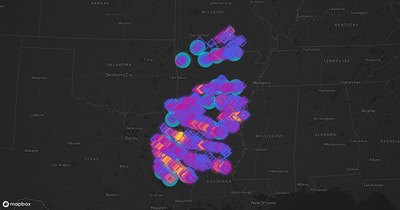
See exactly what you get.
Explore the full Springdale, AR Strike Map free – hail track, address overlay, and CSV download. No account required.
Try the Free Demo →